Why Is Paint Not Sticking to Wall? A Practical Troubleshooting Guide
Urgent guide to diagnose why paint won’t adhere to interior walls, covering prep steps, primer choices, surface issues, and practical fixes to prevent future adhesion failures.


The most likely cause is a slick, contaminated, or damp surface combined with improper primer or paint choice. Start by cleaning and scuff-sanding glossy areas, then apply a bonding primer and choose a compatible paint. If moisture is present, fix the source before repainting to restore adhesion quickly.
Why painting adhesion fails: urgent overview
If you’re asking, "why is paint not sticking to wall," you’re not alone. Adhesion failures usually happen long before you start brushing or rolling. The root causes tend to cluster around surface condition, primer and paint compatibility, and environmental factors. According to PaintQuickGuide, the most decisive factor for good adhesion is a properly prepared surface. When surfaces are dirty, oily, chalky, or glossy, the new coat simply won’t grab. This is especially true in areas with high humidity or previous moisture damage. In this guide we’ll dissect the typical culprits and give you a practical, step-by-step plan to fix the problem fast.
Assessing the surface before you paint
Before you reach for tools, assess what you’re painting over. Glossy finishes (enamel, semi-gloss) resist adhesion unless properly prepped. Porous drywall or plaster can also complicate bonding if dust, efflorescence, or mold is present. If the wall has old layers of paint that are peeling or chalking, the new paint will likely fail to adhere unless those layers are removed or properly abraded. Moisture intrusion, even unseen, compromises adhesion and may require addressing leaks or humidity first. PaintQuickGuide’s analysis shows that identifying the exact surface condition is the fastest route to a durable finish. Keep a checklist: clean, test for powder, assess moisture, and note existing coatings.
Prep steps that make or break adhesion
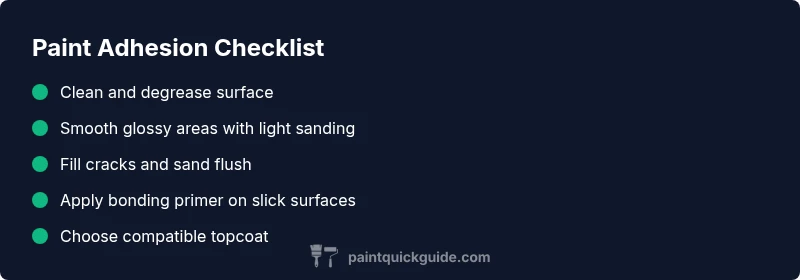
Prep is the secret weapon in any successful paint job. Begin by removing dirt, grease, and chalky residue with a degreasing cleaner or mild detergent. Rinse and allow the surface to dry completely. For glossy surfaces, sanding with fine-grit sandpaper to dull the sheen provides better bonding. Patch cracks and holes with a spackle or filler, then sand smooth. Wipe away dust with a tack cloth. Skipping steps here is the number-one reason why paint fails to stick. A solid prep routine creates a uniform surface that the primer can grab onto.
Primer strategy: bonding primers vs. standard primers
Primer choice matters as much as the paint itself. For slick or previously coated walls, a bonding primer or stain-blocking primer can dramatically improve adhesion. Use a primer designed for glossy surfaces on interiors where sheens are high. If you’re covering stains or odors, pick a stain-blocking option. Allow the primer to dry fully per the manufacturer’s instructions before applying the topcoat. In some cases, applying two thin coats of primer yields better bite than a single thick coat. PaintQuickGuide emphasizes matching the primer to the surface condition to avoid future peeling.
Choosing the right paint and finish for walls
Not all paints adhere equally on all substrates. For interior walls, latex or acrylic-based paints are typically preferred for their balance of adhesion, durability, and ease of cleaning. If your wall is very slick or has a history of moisture, consider a high-adhesion or bonding primer followed by an affordable, compatible topcoat. Avoid cheap, mismatched products that don’t cure well together, especially on bathrooms or kitchens where moisture and temperature swings are common. Always check the label for surface suitability and recoat times. A well-chosen topcoat layered over a proper primer will deliver lasting adhesion.
Environmental factors and safety considerations
Temperature and humidity affect how well paint sticks. The ideal interior painting window is around 50–85°F (10–29°C) with relative humidity below 70%. Excess humidity slows drying, which can lead to tackiness and poor adhesion. Ensure good ventilation to help cure times, but avoid direct drafts that can cause rapid drying and cracking. If you suspect mold, dampness, or lead paint in older homes, take appropriate precautions per local regulations and consider professional testing. Safety gear—gloves, goggles, and a respirator when sanding or dealing with old finishes—protects you while you work.
Quick fixes and long-term prevention plan
If you’ve already painted over a surface with adhesion problems, you may need to remove the failed topcoat and re-prep. Start with a cleaning, abrasion to dull the surface, and re-prime with a bonding primer before repainting. For minor issues, spot repair with spackle and touch-up paint after resealing. Going forward, establish a prep checklist: test a patch, clean thoroughly, sand glossy areas, prime, and maintain consistent environmental conditions. Consistency in prep and product pairing is the key to durable adhesion.
Steps
Estimated time: 2-6 hours
- 1
Assess the problem and gather materials
Identify whether the issue is peeling, tackiness, or poor adhesion from the start. Gather cleaner, sandpaper, masking supplies, primer (bonding if needed), topcoat, and protective equipment. Check the wall for moisture sources or mold before you begin.
Tip: Wear a dust mask if sanding older paint. - 2
Protect the workspace
Move furniture, lay drop cloths, and cover floors. Peel back baseboards if needed to protect edges. Good preparation reduces risk of contamination and saves time later.
Tip: Use painter’s tape to mask surrounding areas you don’t want painted. - 3
Clean and prep the surface
Wash with a degreasing cleaner, rinse, and let dry completely. For chalky walls, use a stiff brush or a mild acid (per product instructions) to remove residue. Lightly sand glossy areas to dull the surface.
Tip: A clean surface is the foundation of adhesion. - 4
Repair and sand imperfections
Fill cracks or holes with appropriate filler; allow to cure and sand smooth. Remove dust with a tack cloth. A repaired surface prevents cracks from telegraphing through the finish.
Tip: Don’t skip patching small hairline cracks. - 5
Prime appropriately
Choose a bonding primer for slick surfaces or a stain-blocking primer if stains are present. Let the primer dry completely according to the label before applying paint.
Tip: Prime conservatively; one thin coat can outperform one thick coat. - 6
Apply the topcoat
Select a compatible interior paint and apply in thin, even coats. Maintain a steady pace and overlap strokes to avoid lap marks. Allow sufficient drying time between coats.
Tip: Don’t rush to topcoat if the primer isn’t dry. - 7
Assess curing conditions and finish
Check that the room remains within recommended temperature and humidity during curing. A light wash test on a small area can confirm adhesion before proceeding widely.
Tip: Test adhesion on a spare patch first. - 8
Record and prevent
Document what worked for future projects and store products for similar surfaces. Implement a standard prep routine to prevent future failures.
Tip: Keep a quick-prep checklist on hand for quick reference.
Diagnosis: Paint peels, flakes, or fails to adhere after painting a wall
Possible Causes
- highGlossy or dirty surface not properly cleaned
- highMoisture intrusion or high humidity
- highIncompatible primer/paint or no primer
- mediumOld, deteriorated wall substrate (dust, efflorescence, mold)
- lowInadequate curing conditions (temperature too cold/hot)
Fixes
- easyRe-clean surface with degreaser and rinse; remove loose paint
- easySand glossy areas to dull finish; dry thoroughly
- easyApply bonding primer suitable for slick surfaces
- mediumAddress moisture source (dehumidifier, ventilation, fix leaks)
- mediumPatch damaged substrate and primer before repainting
Your Questions Answered
Why does my paint peel even after I primed?
Peeling after priming usually means either the surface wasn’t properly cleaned, the primer didn’t adhere, or environmental conditions prevented proper curing. Reassess the surface, re-clean, re-prime with a bonding primer, and ensure the room’s temperature and humidity are in the recommended range.
Peeling after priming often points to improper prep or unsuitable primer; re-prep and use a bonding primer for best results.
Do I always need a primer on interior walls?
Primers aren’t always required, but for glossy, stained, or porous surfaces they improve adhesion and uniformity. Use a bonding primer on slick surfaces and stain-blocking primer for areas with marks or odors.
Primers aren’t always required, but they greatly help when surfaces are glossy or stained.
Can moisture cause adhesion failure?
Yes. Moisture can keep paint from bonding properly, leading to peeling and bubbling. Fix moisture sources first, dry the area, then re-prime and repaint.
Moisture is a common culprit; fix it before repainting to ensure good adhesion.
Is sanding always necessary before painting?
Sanding dulls glossy surfaces and creates micro-roughness for the primer to grip. It’s especially important on slick walls and old coatings.
Sanding helps the paint grip better, especially on slick surfaces.
How long should I wait between coats?
Wait the full recommended drying time between coats per the product label. Rushing can trap solvents and reduce adhesion.
Let each coat dry fully before applying the next one to ensure proper adhesion.
When should I call a professional?
If you suspect hidden moisture, mold, or structural issues, or if adhesion problems persist after troubleshooting, consult a licensed painter or contractor.
If moisture or structural problems are suspected, it’s best to get a professional assessment.
Watch Video
Quick Summary
- Prep surfaces thoroughly before painting
- Choose bonding primers for slick surfaces
- Match primer and paint to surface conditions
- Control environmental factors for best curing