Why Paint Won t Stick to Plaster: A Troubleshooting Guide
Struggling with paint that won t stick to plaster? This 1500-word guide covers root causes, testing, and a step-by-step plan to restore adhesion on plaster walls and ceilings.


Most likely, poor surface prep or moisture is causing adherence failure. Start by addressing humidity, dust, and old paint residues, then use a dedicated bonding primer designed for plaster. If moisture persists, fix leaks and ensure the room is well-ventilated before repainting. A proper primer and surface prep dramatically improve adhesion.
Why paint won t stick to plaster
The question why paint won t stick to plaster is common among homeowners facing peeling, cracking, or dull color. In many cases, the root causes are moisture, dust from dusty plaster, or a missing bonding primer. Addressing these issues quickly can save you time and materials. This guide uses a practical troubleshooting approach, focusing on the surfaces you actually paint, from clean walls to repaired plaster patches, and it emphasizes products that are proven to bond with plaster. The PaintQuickGuide team notes that correct prep and the right primer are often the decisive factors in long-lasting adhesion.
If you’re facing adhesion problems, don’t panic. With systematic prep and the right materials, you can restore a durable bond and achieve a smooth, lasting finish on plaster surfaces.
Common causes at a glance
- Moisture intrusion from leaks, condensation, or high ambient humidity
- Dust, oils, or efflorescence left on the plaster surface
- Inadequate surface preparation (unfinished sanding, dirty walls, or grease)
- Using paint and primer combinations that aren’t compatible with plaster
- Old plaster with lime putty or gypsum that has deteriorated bonds
- Ill-timed painting (cold temps or high humidity during application)
Understanding these causes helps you target the fix without wasting materials.
Surface prep: cleaning, sanding, and priming
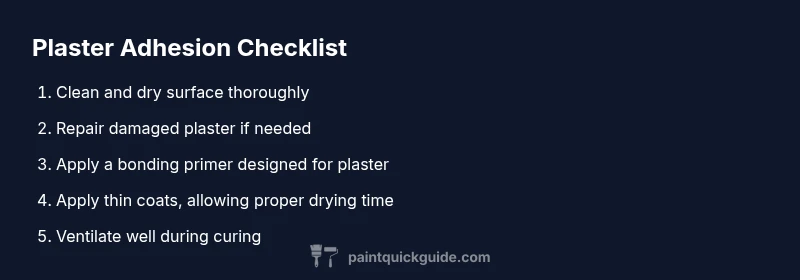
Preparation is the single most important step for plaster adhesion. Start with a thorough cleaning to remove dust and grease, then rinse and allow complete drying. Sand glossy areas until dull, vacuum thoroughly, and wipe with a damp cloth to remove dust. If the surface is porous or powdery, seal it with a bonding primer or an acrylate-based plaster primer. Finish with a dedicated plaster bonding primer to maximize the first coat’s grip. Always follow the primer’s dry-time instructions before any paint goes on. The goal is a uniform, clean, matte surface that accepts the next coats evenly.
Moisture and humidity: diagnosing leaks and moisture intrusion
Moisture is a leading cause of paint failure on plaster. Check for visible leaks, condensation, or damp patches on walls and ceilings. Use a moisture meter to assess plaster dampness levels in affected areas; most primers and paints require a dry surface for proper bonding. If moisture is detected, address the source first (repair leaks, improve ventilation, and run a dehumidifier). After the area dries completely, re-clean, re-sand, and re-prime before repainting. Persistent moisture may indicate more serious structural issues that require professional assessment.
Plaster quality and substrate history
Not all plaster is created equal. Traditional lime plaster or cement-lime mixes can behave differently from modern gypsum plasters. If the plaster is cracked, delaminating, or spalling, adhesion will be compromised regardless of primer. For older homes, expect dust and powdering; in these cases, patching with a patching plaster and allowing full cure time is crucial prior to priming. If the substrate has been previously painted with oil-based paints, a deglosser or solvent-based conditioner can improve surface readiness, but a bonding primer is still essential for good adhesion.
Choosing primers and paints for plaster
Select primers designed for plaster and bonds—look for products labeled as plaster bonding primers, bonding primers for interior walls, or masonry primers. A shellac-based bonding primer or a high-adhesion acrylic primer often yields the best results on plaster, especially when the surface has moisture concerns or previous coatings. Use a veneer of primer on patched areas and full coverage on larger surfaces. For the topcoat, select a high-quality interior latex or acrylic paint with good hide and leveling properties. Check color consistency and ensure the paint is compatible with the primer you selected.
Application techniques that improve adhesion
Apply coatings in thin, even coats; thick coats are prone to shrinking and cracking, which can lead to peeling. Allow full drying time between coats and avoid painting in overly humid or cool conditions. Back-roll after brushing to ensure good contact with the plaster surface, and lightly sand between coats if the primer has cured to a matte finish. Do not rush the process; curing times can vary by product and environment. Always ventilate well to help moisture escape and ensure good cure.
Troubleshooting symptoms: peeling, blistering, chalking
If the paint peels after application, reassess surface prep, primer choice, and moisture. Blistering often indicates moisture trapped under the film; re-check the area for leaks and verify the surface is completely dry before repainting. Chalkiness signals a weak bond or incompatible topcoat; in this case, remove the chalky layer, clean, abrade, and re-prime with a bonding primer. Inconsistent results may require testing adhesion on a small patch with the primer-first approach to confirm which method achieves durable adhesion.
Prevention and maintenance: long-term adhesion
Prevention starts with proper prep and moisture control. Use a dehumidifier in damp rooms, improve ventilation during and after painting, and avoid exposing plaster to direct moisture. Perform small touch-ups using the same primer and paint system to ensure consistent performance. If you need to repaint after repairs, recheck humidity levels and surface readiness. Regular inspections of kitchens, bathrooms, and basements will catch moisture issues early and preserve adhesion over time.
Steps
Estimated time: 4-6 hours (plus drying time between coats)
- 1
Assess moisture and prep area
Inspect for leaks or damp patches and address any moisture sources. Allow area to dry completely before proceeding. Remove any loose or failing plaster around the edges.
Tip: Document any damp spots and ensure fix is complete before priming. - 2
Clean and abrade surface
Thoroughly clean dust, oils, and residues. Lightly sand glossy areas until matte to improve primer grip. Vacuum and wipe down with a damp cloth to remove dust.
Tip: Use a damp microfiber cloth for final wipe-down to catch fine dust. - 3
Choose and apply bonding primer
Select a plaster bonding primer or shellac-based primer. Apply a uniform coat over the entire surface and let it dry according to the product label.
Tip: Do not rush the dry time; primer needs to cure to maximize adhesion. - 4
Patch damaged areas
If plaster is cracked or crumbling, patch with compatible patching compound and sand flush once dry. Re-prime patched areas before topcoats.
Tip: Match patch material to plaster type to avoid bond failures. - 5
Apply topcoat in thin layers
Use multiple thin coats rather than a single heavy layer. Allow ample dry time between coats and keep a consistent technique to minimize texture differences.
Tip: Back-roll to ensure even coverage and surface contact. - 6
Final inspection and cure
Check adhesion in multiple spots after curing. Keep area dry and ventilated for the first 24–48 hours to avoid micro-movements that can cause peeling.
Tip: Test adhesion by gently scoring a small area with a fingernail.
Diagnosis: Paint peeling or blistering on plaster after drying
Possible Causes
- highMoisture intrusion or high humidity
- mediumDusty, oily, or dirty plaster surface
- highIncompatible primer or no bonding primer
- lowOld/damaged plaster with lime putty or gypsum deterioration
- lowCold temperatures or painting in poor conditions
Fixes
- easyAddress moisture sources (repair leaks, improve ventilation, use dehumidifier)
- easyClean and abrade surface to a dull, dust-free finish
- easyApply a bonding primer specifically formulated for plaster; allow full dry time
- mediumPatch deteriorated plaster and re-prime; test adhesion on a patch area
- easyRepaint under appropriate environmental conditions (warm, dry, well-ventilated)
Your Questions Answered
Why won t paint stick to plaster?
Paint adhesion on plaster fails mainly due to moisture, dust, or lack of bonding primer. Prepping thoroughly and using a plaster-bonding primer usually resolves the issue.
If paint won t stick to plaster, it’s typically because of moisture or insufficient surface prep. Clean, dry, prime with a bonding primer, and repaint.
What causes moisture to ruin adhesion on plaster?
Moisture gets trapped under the paint film, causing peeling or blistering. Dry weather, leaks, and poor ventilation contribute to this problem.
Moisture trapped under paint causes peeling. Fix leaks, dry the wall, and ensure good airflow before repainting.
Do I really need a bonding primer for plaster?
Yes. A plaster bonding primer improves adhesion on plaster by penetrating and sealing the surface, especially if the plaster is dusty or porous.
Yes, use a plaster bonding primer for better adhesion and a longer-lasting finish.
Can old plaster affect adhesion?
Deteriorated plaster can crumble and shed dust, preventing a solid bond. Patch or replace damaged areas and re-prime before painting.
Old, crumbly plaster can ruin adhesion; patch, re-prime, and then paint.
How long should plaster primer dry before painting?
Dry times vary by product; follow label guidance. Generally, wait until the primer is fully dry and tack-free before applying top coats.
Let the primer dry completely as per the label before painting.
When should I call a professional?
If moisture is persistent, plaster is severely damaged, or you suspect structural issues, consult a plastering or painting professional for assessment and repair.
Call a professional if moisture is ongoing or plaster is severely damaged.
Watch Video
Quick Summary
- Test adhesion on a patch before full repaint
- Address moisture before prepping the surface
- Use a bonding primer designed for plaster
- Prime, then paint in thin coats with proper drying time
- Ventilate to aid cure and prevent moisture buildup