Why Is My Paint Bubbling: Causes, Fixes, and Prevention
Discover the causes of paint bubbling, how to diagnose moisture and surface prep issues, and a step-by-step fix to stop bubbling for good. A practical guide from PaintQuickGuide for homeowners and DIYers.


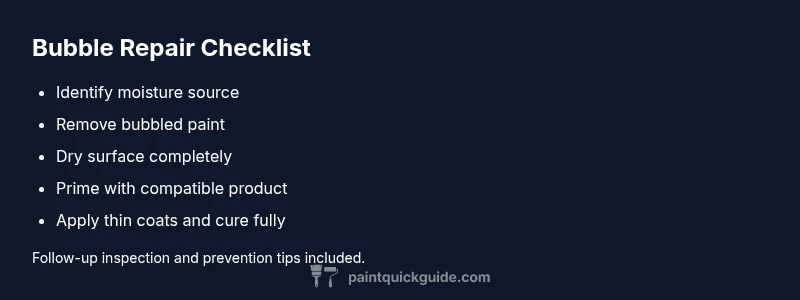
Most bubbling happens when moisture or an incompatible primer traps air under the coating as it cures. Start by stripping away loose bubbles, drying the surface completely, and sealing with a compatible primer before repainting. Apply thin coats at the correct temperature and humidity, and monitor for new bubbles. If moisture sources persist, seek professional help.
Why the Bubbling Happens: Understanding the Core Issue in why is my paint bubbling
Bubbling paint isn’t just a cosmetic flake; it’s a sign of adhesion failure between layers. When you hear the question 'why is my paint bubbling' the most likely culprits are moisture trying to escape beneath a dry coat, or an underprepared surface that won’t hold the new layer. In many cases, the problem starts before you even sand. The PaintQuickGuide team emphasizes that identifying whether moisture, heat, or product incompatibility is driving the bubbles helps you target the fix rather than guessing. This foundation helps homeowners diagnose bubbling on interior walls, cabinets, and even exterior surfaces with a clear plan to restore a smooth, durable finish.
Quick checks you can start with
- Inspect for visible moisture signs (stains, damp spots, musty odors).
- Look under old paint for peeling or blistering, which signals adhesion failure.
- Confirm you are using compatible primer and topcoat for the surface type.
- Check the current conditions: temperature around 50–85°F (10–29°C) and humidity below 85%.
Common scenarios that trigger bubbling
- Moisture intrusion from leaks, high humidity, or poor ventilation behind bathrooms or kitchens.
- Painting over a dirty, dusty, or waxy surface that wasn’t properly cleaned.
- Applying heavy coats or painting in extreme temperatures, which traps solvents and moisture.
- Using oil-based paint on a latex surface or vice versa without a compatible primer.
How moisture and prep interact
Moisture trying to escape from the substrate while a fresh coat is still curing can push up the new layer, creating bubbles. A well-prepared surface—clean, dry, and abraded—improves adhesion dramatically. PaintQuickGuide notes that the combination of surface prep and moisture control is often the deciding factor between a one-day fix and repeated bubbling.
Deep dive: materials and compatibility
Different paints and primers don’t always behave the same way. An incompatible primer on a slick or porous surface can trap solvents and cause bubbling. Always verify that your topcoat is compatible with the primer and substrate (wood, drywall, metal, masonry). If you’re unsure, perform a small test patch before committing to a full room or exterior.
Quick fix mindset: what to try first
If you see bubbles forming soon after application, pause and stop applying more paint. Remove loose blistered sections, dry the area thoroughly, and re-prime with a compatible product after addressing the moisture source. This staged approach minimizes waste and reduces the chance of trapping moisture under subsequent coats.
When to call a professional
If bubbling recurs after you’ve stripped, dried, and re-coated, or if you suspect hidden moisture behind walls, a pro can diagnose leaks, moisture migration, and structural concerns with moisture meters and thermal imaging. The PaintQuickGuide team recommends professional input for persistent or widespread bubbling to prevent future failures.
Putting it together: a practical example
Imagine repainting a bathroom with a vinyl-backed plaster wall. If you skip drying time after a leak repair and jump straight to primer, you may see bubbles appear within hours. Instead, fix the leak, ventilate, dry the wall for several days if needed, apply a stain-blocking primer, and use thin coats of moisture-resistant paint. Following these steps aligns with why is my paint bubbling and leads to a durable finish.
Steps
Estimated time: 4-8 hours (excluding long cure times)
- 1
Assess and document the bubbling
Take photos, note where bubbling is most severe, and check for moisture sources. This helps determine whether the issue is surface-related or a deeper moisture problem.
Tip: Capture a before-and-after to track progress. - 2
Strip loose bubbles and clean
Carefully scrape away blistered paint with a putty knife. Clean the area with a degreaser to remove oils and dust, then rinse and dry completely.
Tip: Wear protective eyewear and a mask when sanding. - 3
Address moisture and ventilation
If a moisture source exists, fix leaks, improve airflow, and run a dehumidifier to reach a stable humidity level before continuing.
Tip: Test for dampness using a moisture meter if available. - 4
Sand and re-prepare
Feather the edges of the stripped area to blend with surrounding surface; wipe away dust using a tack cloth.
Tip: A smooth surface improves primer adhesion. - 5
Prime with a compatible product
Apply a primer suitable for the substrate and the new topcoat. If staining or moisture is an issue, use a stain-blocking or moisture-sealing primer.
Tip: Follow the manufacturer’s dry time exactly. - 6
Apply topcoat in thin layers
Apply 2–3 thin coats rather than one thick coat; allow each coat to dry fully and cure at the recommended temperature.
Tip: Avoid overworking the paint; stop once you have even coverage. - 7
Inspect before final cure
Check for new bubbles after the final coat has dried; if you see any, schedule additional spot repairs instead of repainting whole areas.
Tip: If bubbles reappear, re-evaluate moisture sources. - 8
Document and monitor
Keep notes of conditions, products, and times. Reassess the area after several days of normal use.
Tip: Patience improves long-term results. - 9
Know when to call a professional
Persistent bubbling or signs of hidden moisture may require a specialist with moisture meters or thermal imaging.
Tip: Early professional input can save costly rework.
Diagnosis: Visible bubbling under paint on walls, cabinets, or exterior surfaces after or during application.
Possible Causes
- highMoisture trapped beneath the new coat due to underlying leaks or high humidity.
- highIncompatible primer or paint that doesn’t adhere to the substrate.
- mediumSurface not properly cleaned or prepped (dust, wax, oil residues).
- mediumApplying coats too thick or in unsuitable temperatures.
- lowOld layers interfering with adhesion (peeling undercoats).
Fixes
- easyIdentify and fix moisture source (leaks, condensation, poor ventilation). Use a dehumidifier and ensure area is fully dry before repainting.
- easyRemove bubbled paint, sand edges, and clean the surface thoroughly before priming.
- easySelect a compatible primer for the substrate and topcoat; apply thin coats and allow complete drying between passes.
- easyPaint in appropriate conditions (temperature and humidity). Dry time should be respected; avoid heavy coats.
- mediumIf bubbling persists after steps above, consult a professional for moisture assessment and potential structural concerns.
Your Questions Answered
What causes paint to bubble after it dries?
Bubble formation after drying is typically due to moisture trapped beneath the coating or an incompatible primer. Dirty or waxy surfaces can also prevent proper adhesion, causing blisters as the coating cures.
Bubbles form when moisture or improper prep blocks adhesion, usually due to moisture, dirt, or incompatible primers.
Can I save bubbled areas or do I need to strip?
If the bubbling is limited and the surface beneath is sound, you can strip the blistered paint and recoat after proper drying. If the area is widespread or persistent, remove all affected layers and address moisture first.
You can save small blistered spots by removing the bubbles and repainting after drying; for larger areas, strip and address moisture first.
Is bubbling more common with latex or oil-based paints?
Both can bubble if moisture and prep are wrong, but latex paints are more forgiving on properly prepared interior surfaces. Oil-based coatings can trap moisture on non-porous substrates if not properly primed.
Both can bubble; latex is usually easier to fix when prep is correct, but both require compatible primers.
How long should you wait between coats to avoid bubbling?
Always follow manufacturer-recommended dry times between coats. Rushing coats in humid or cool conditions increases bubble risk.
Let each coat dry fully according to the product directions; don’t rush in damp or cold conditions.
Should I use a primer every time I repaint where bubbling occurred?
Yes. A compatible primer helps adhesion and seals moisture issues before applying the topcoat. In moisture-prone areas, use a moisture-blocking primer.
Primers help adhesion and prevent bubbles, especially when moisture is involved.
What tools help detect hidden moisture behind walls?
A moisture meter or infrared camera can identify high-humidity zones behind finishes. They guide where to repair leaks or improve ventilation.
Moisture meters reveal hidden dampness behind walls and help target repairs.
Can bubbling happen outdoors after rain?
Yes, exterior bubbles often come from rain penetration or surface moisture. Repair sources, dry thoroughly, and use exterior-grade primers and paints in proper conditions.
Outdoor bubbling often means rain moisture; fix sources and paint in suitable weather.
Watch Video
Quick Summary
- Identify the moisture source before repainting
- Use compatible primers and topcoats
- Apply thin coats and respect dry times
- Address surface cleanliness and contamination
- Consult a professional for persistent bubbling