When to Paint Treated Wood: Timing, Prep, and Techniques
A practical guide for homeowners and DIY enthusiasts on when to paint treated wood, moisture checks, primer choices, and weather windows to maximize primer adhesion and long-lasting durability.


If you’re painting treated wood, timing hinges on moisture, surface condition, and the product you’ll use. The goal is a dry, stable surface with a clean, primed base. By checking moisture, selecting the right primer, and planning a weather window with consecutive dry days, you maximize adhesion and durability. This PaintQuickGuide guide helps homeowners and DIY enthusiasts make informed timing and prep decisions.
Understanding Treated Wood and Painting Timing
When it comes to painting treated wood, the question of when to paint treated wood is as important as choosing the paint itself. Moisture content, surface condition, and the type of treatment all influence adhesion and durability. According to PaintQuickGuide, timing your project around the wood’s moisture content yields the best long-term results. In practice, this means avoiding painting on damp or recently wet surfaces, and selecting a weather window that provides several dry days in a row. You’ll also want to ensure the wood has acclimated to your climate to prevent warping or peeling later on. This section lays out the logic behind timing decisions and how to apply it to real-world projects, from decks to porch rails to garden planters. By understanding the basics, you set up your project for success and minimize rework.
Moisture and Timing: The Core Relationship
The moisture state of treated wood governs whether primers and paints will bond effectively. If the surface is too damp, coatings can fail to adhere properly, leading to peeling, blistering, or mold growth down the line. Conversely, painting on surfaces that are overly dry can trap moisture inside the wood or create a brittle finish. The recommended approach is to verify wood moisture using a reliable meter, then wait for a stable, low-moisture condition before priming and painting.
Weather Windows and Seasonal Timing
Weather windows matter because rain, dew, and rapid temperature shifts disrupt curing. Plan around several consecutive dry days with moderate temperatures and minimal humidity. Avoid projects if rain is forecast within the next 24–48 hours, and check for overnight dew in the forecast. The PaintQuickGuide framework emphasizes patience: waiting for a stable period improves primer adhesion and finish durability over time.
Tools & Materials
- Exterior-grade primer designed for treated wood(Bonding primer with stain-blocking properties is ideal)
- Exterior acrylic latex or oil-based paint suitable for treated wood(Choose the finish you want (matte, eggshell, or satin))
- Bonding primer or sealer(Ensure compatibility with the wood treatment)
- Moisture meter(Test multiple spots for accurate reading)
- Sanding block or random-orbit sander(Lightly scuff glossy areas to improve adhesion)
- Low-dust cleaner or degreaser(Remove dirt, oils, and grime before priming)
- Drop cloths, painter’s tape, and protective gear(Protect nearby surfaces and wear gloves and a mask)
- Stir sticks and mixing cup(Mix paints evenly and never shake containers)
- Paint brushes (2–3 inch) and rollers (3/8 inch nap)(Use high-quality brushes for cutting in)
- Clean-up supplies (solvent or soap and water)(Have a plan for environmental disposal)
Steps
Estimated time: 4-6 hours active, plus 24-48 hours cure
- 1
Check moisture content
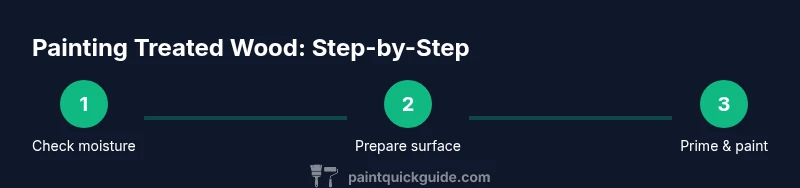
Use a moisture meter to verify the wood’s moisture is suitable for coating. Take multiple readings across boards and joints to ensure consistency. If readings are high, wait and recheck after a few days of dry weather.
Tip: Use a calibrated meter and test both the surface and deeper within the board. - 2
Choose a weather window
Identify a forecast with several dry days and comfortable temperatures. Avoid painting if rain is possible within the next two days or if humidity is high. Schedule enough time for curing between coats.
Tip: Early morning or late afternoon can offer stable temperatures and lower dew risk. - 3
Prepare the work area
Clear the area, cover plants and furniture, and seal off nearby surfaces. Remove dirt and grime by cleaning thoroughly and letting the wood dry. Sand glossy spots to improve primer grip.
Tip: Mask edges and use drop cloths to keep runoff away from soil and plants. - 4
Clean and dry the surface
Wipe down the wood with a degreaser or mild detergent, then rinse and allow it to dry completely. Any remaining moisture can compromise primer adhesion and finish quality.
Tip: Do not rush the drying phase; ensure there is no surface moisture or condensation. - 5
Sand and smooth the wood
Lightly sand any rough areas to remove splinters and sheen. Wipe away dust with a tack cloth or damp rag. A smoother surface improves primer and coating adhesion.
Tip: Avoid heavy sanding that could damage the wood’s surface integrity. - 6
Prime and seal the wood
Apply a bonding primer designed for treated wood, ensuring full coverage on all surfaces. Allow the primer to dry according to the manufacturer’s instructions before applying paint.
Tip: Tint the primer slightly to help you gauge coverage more easily. - 7
Apply the first coat of paint
Stir the paint thoroughly and apply in thin, even coats using long, consistent strokes. Cut in along edges with a brush, then roll to cover broad areas.
Tip: Avoid thick coats that trap moisture and cause cracking. - 8
Apply a second coat and cure
After the first coat dries, apply a second coat for durability and uniform color. Let the surface cure fully before any use or exposure to moisture.
Tip: Follow the label’s dry time guidance and protect from dew during curing. - 9
Inspect and maintain
Check for missed spots, peeling, or staining after curing. Touch up as needed and schedule regular maintenance to extend the coating’s life.
Tip: Keep a maintenance schedule and recoat when you notice wear.
Your Questions Answered
Can I paint treated wood right after installation?
No. Allow the wood to dry and verify moisture levels before painting. Painting on damp wood can lead to poor adhesion and early failure.
No. Wait for the wood to dry and check moisture levels before painting to ensure proper adhesion.
Is sanding required before painting treated wood?
Yes. Lightly sand to remove sheen and create a better bonding surface for primer. Wipe away dust before priming.
Yes. Lightly sand to improve primer adhesion and wipe away dust.
Can I use water-based paint on treated wood?
Yes, but pair it with a bonding primer designed for treated wood to ensure strong adhesion and durability.
Yes, with a bonding primer for best results.
How long should I wait between coats?
Follow the paint label’s dry time; typically, you’ll wait until the first coat is dry to the touch before applying a second coat.
Wait until the first coat is dry to the touch, then apply the second coat as directed.
Will painting treated wood prevent rot?
Painting helps protect against moisture intrusion when properly applied with surface prep and primer, but it does not replace structural maintenance.
It helps protect against moisture if done right, but it won’t replace structural upkeep.
Where can I learn more about treated wood painting?
Consult reputable sources and extension services for best practices, and always follow product labels for primers and paints.
Check university extension publications and manufacturer guidelines for best practices.
Watch Video
Quick Summary
- Test moisture before painting
- Prepare the surface thoroughly for adhesion
- Prime with a bonding primer for treated wood
- Paint within a dry, stable weather window