Is paint or stain better for concrete? A practical comparison
An analytical, practical guide comparing concrete paint versus stain—durability, aesthetics, cost, and maintenance for indoor and outdoor surfaces.


When deciding is paint or stain better for concrete, consider texture, durability, and maintenance. Stain penetrates and preserves natural texture, while paint creates a uniform color and a protective film. If you value a natural look and fewer coats, stain may win; for bold color and easier cleanup in high-traffic areas, paint is often preferable.
What is concrete coating: paint vs stain—core differences
Concrete is a porous, mineral-based substrate with micro-pores and irregularities that influence how coatings behave over time. The central question for readers is is paint or stain better for concrete, and the short answer is that the best choice depends on goals, surface condition, and climate. Paint forms a film on the surface. It often requires a primer and a sealer, produces opaque color, and can help hide surface imperfections. Stain, by contrast, penetrates into the micro-pores and reacts with minerals when stains are dye-based or reacts with lime content in some formulations. It tends to preserve natural texture and requires fewer steps to apply, though color options are typically subtler and more dependent on the underlying concrete. The PaintQuickGuide approach emphasizes evaluating porosity, moisture, and exposure before deciding. This foundational distinction shapes the rest of the comparison, guiding decisions for homeowners and DIYers who want a durable and aesthetically appropriate finish.
Penetration vs film-forming: how they interact with concrete
Concrete’s pores and mineral content determine whether penetrating stains or film-forming paints perform best. Penetrating stains rely on capillary action to deliver color and sometimes moisture resistance without creating a thick surface layer. They are compatible with most concrete mixes and can highlight existing textures. Film-forming paints seal the surface, reducing porosity and offering a uniform color, which can improve washability and stain resistance in busy areas. However, the film can trap moisture if applied on damp concrete or over incompatible sealers, increasing the risk of peeling or blistering. The practical takeaway is that if preserving texture and a natural finish matters, stain has advantages; if a color-driven, easily cleaned surface is the priority, paint may be preferable. In both cases, follow product-specific instructions and perform a small test patch first.
Durability and maintenance: UV, moisture, abrasion considerations
Exposure matters for concrete coatings. UV light can fade stains gradually; moisture can cause paint to blister if a film is not well adhered. For outdoor concrete, both options respond differently to freeze-thaw cycles, traffic, and chemical spills. A penetrating stain usually requires less frequent recoating but may need sealing to maintain stain color. A paint system typically lasts longer between re-seals in protected indoor environments, yet outdoors it may require more frequent top-coats or resurfacing after chipping. The bottom line is to align maintenance tolerance with climate and use case; heavy traffic and direct sun tilt the balance toward a durable film finish, while decorative or natural-effects favor stain.
Aesthetics and color control: choosing look and feel
Paint offers opaque color, precise hues, and uniform coverage, ideal for marking zones, improving safety visibility, or changing style quickly. Stain reveals more of the concrete’s natural mottling and varies with the prior finish, producing a more subtle, organic appearance. Finishes can range from matte to satin, but pigment saturation and opacity differ: staining tends to be more translucent, paint more opaque. For concrete interior floors or patios exposed to sun, colorfastness and washability are pluses for paint; for a rustic, natural vibe that highlights texture, stain is often preferred. The decision is driven by the desired mood, whether you want a dramatic color or a restrained, architectural look.
Surface prep: cleaning and porosity assessment
Preparation is the most critical step for any concrete coating. Before applying is paint or stain better for concrete, you must assess porosity, moisture, and contamination. Cleaning with a degreaser, removing oil stains, and ensuring a dry, dust-free surface improves adhesion for both film and penetrating finishes. Etching or mechanical profiling may be required for older surfaces; follow manufacturer guidance for pH and compatibility with primers or sealers. Repairs should be completed before coating to avoid future cracking or lifting. The right primer, stain sealer, or paint sealer selections can dramatically affect longevity.
Application methods: tools, technique, curing times
Most readers apply composite coatings with practical tools: rollers for broad areas, brushes for edges, and sprayers for large slabs. A film-forming paint typically benefits from even, cross-cut application and a dedicated topcoat or sealer after curing. A penetrating stain often requires fewer steps but may demand a compatible topcoat to maintain color and moisture resistance. Temperature, humidity, and surface moisture influence how long each layer takes to cure; always follow manufacturer instructions and exercise proper ventilation and safety precautions when working with solvents or high-odor products.
Cost considerations and value over time
Cost considerations for concrete coatings hinge on upfront product price, labor, and required maintenance. Paint systems usually involve more upfront cost per area and may require multiple coats plus sealing over time, while stains may appear cheaper initially but can incur sealing costs or refill cycles. Long-term value should account for wear resistance, ease of cleaning, and the look you want to preserve. When evaluating is paint or stain better for concrete, estimate recoating frequency based on traffic and climate alongside the aesthetic goals you have for the space.
Interior vs exterior concrete: environmental influences
Interior concrete (garages, basements, basements, or living spaces) typically experiences less UV exposure and moisture flux, which can favor stain for its texture-preserving properties. Exterior concrete (patios, driveways, pathways) faces sun, rain, and thermal cycling, where a film-based paint can offer stronger moisture barriers and easier graffiti resistance. In damp environments, sealers and moisture barriers become critical. Always consider local climate, exposure, and use-case when choosing is paint or stain better for concrete.
When to choose stain: scenarios and tips
Choose stain when you want to preserve texture, reveal natural aggregate, or create a subtle color shift without obscuring the surface. Stains work well on decorative patios, basements with moisture considerations, and areas where repeated foot traffic could wear away a film. For best results, test stain on a hidden area, control moisture before application, and seal with a compatible product to reduce color fade from sunlight. Staining is often the better long-term option for a natural look.
When to choose paint: scenarios and tips
Pick paint when bold color, visibility, and a strong moisture barrier are priorities. Painted concrete is common in garages, pool decks, and entryways where color signals zones, mirrors safety colors, or aligns with interior design. Use a primer designed for concrete, apply multiple coats as recommended, and top it with a penetrating or film sealer to improve wear resistance. In high-traffic areas or spaces where cleaning is frequent, paint can offer easier maintenance and cleaner aesthetics.
Common mistakes and how to avoid them
Common mistakes include skipping moisture testing, neglecting surface preparation, and applying coatings over damp concrete or incompatible sealers. Over-etching or over-sanding can also weaken the substrate, while choosing a finish that doesn’t suit climate leads to premature failures. A proactive plan involves patching and repairing cracks, using appropriate primers or sealers, and performing a small test patch before full-scale application. Proper ventilation and safety PPE are essential for any coating project.
Quick decision framework: a practical checklist
- Define goals: color, texture retention, or maximum durability.
- Test porosity and moisture to choose a compatible system.
- Select primers and sealers suitable for your chosen finish.
- Plan for weather windows and cure times.
- Schedule maintenance and recoat intervals in line with exposure.
- Consider environmental impact and VOC limits.
- Do a patch test before full-scale application.
Final thoughts and practical next steps
Choosing between is paint or stain better for concrete hinges on the space, exposure, and look you want. Start with a small test patch, follow prep and sealing recommendations, and align maintenance with climate. A well-executed plan yields durable, beautiful concrete surfaces that suit your lifestyle.
Comparison
| Feature | Paint on concrete | Stain on concrete |
|---|---|---|
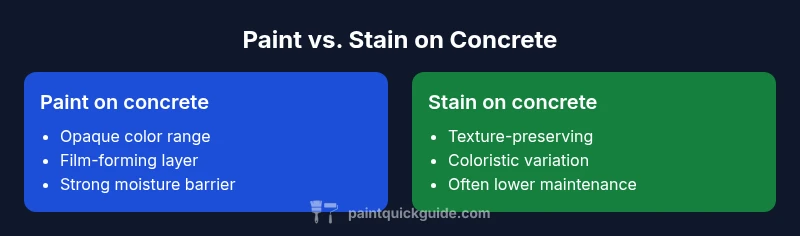
| Penetration/film | Film-forming layer; hides porosity | Penetrates; preserves texture |
| Color options | Opaque, wide color range | Translucent to subtle color shifts |
| Durability under UV/moisture | Strong moisture barrier with proper sealer; UV resistance varies by pigment | Color tends to fade slowly; texture remains visible |
| Maintenance frequency | Typically requires resealing and recoat after wear | Maintenance varies; sealing may be needed periodically |
| Surface texture impact | Creates a smooth, uniform surface | Keeps natural texture and patina |
| Best for | Bold color needs; high visibility zones; easy washability | Natural look; texture preservation; decorative stains |
Upsides
- Gives you control over color and finish
- Paint provides a strong moisture barrier when properly applied
- Stain preserves natural texture and appearance
- Both options can be sealed for extra protection
What's Bad
- Paint can peel or blister if applied over unprepared concrete
- Stain can appear uneven on very porous surfaces
- Sealing and maintenance may be required for stain in wet climates
- Reapplication frequency varies with traffic and weather
Stain is typically the better start for preserving texture and long-term durability on concrete, while paint is preferable for bold color and easier cleaning.
Choose stain if you value texture and low maintenance. Choose paint if you want vivid color and a strong surface barrier; prep and sealing are critical for longevity in either case.
Your Questions Answered
Is stain or paint more durable on concrete?
Durability depends on conditions; film-forming paints can offer strong moisture barriers in dry or controlled environments, while penetrating stains tend to hold up well when texture preservation is desired and sealing is maintained. Both require proper prep and periodic maintenance.
Film coatings can be durable in dry spaces, but stains last longer when you want texture and minimal surface alteration.
Can I apply paint over stain, or stain over paint?
In most cases, you can apply paint over a properly prepared stain if the stain is intact and the surface is dry and clean. Applying stain over paint is generally not recommended unless the paint is compatible with the stain or you plan to remove the paint first. Always follow product guidelines.
Paint over stain is possible if the stain is intact and the surface is dry; otherwise, test a small area first.
What prep steps are essential before coating concrete?
Start with a thorough clean and degrease, remove curing residues, and ensure the surface is dry. Test porosity and moisture; repair cracks; choose compatible primers and sealers. Proper prep is the difference between a lasting finish and early failure.
Clean, dry the surface, test porosity, repair cracks, and choose compatible primers.
How long do coatings typically last on concrete?
Lifespan varies with exposure, traffic, and maintenance. In protected indoor spaces, coatings can last longer between re-seals; outdoors, degradation from sun and moisture can shorten intervals. Plan for periodic inspection and recoat as needed.
Indoor coatings usually last longer; outdoors expect more frequent checks and potential recoat.
Is a concrete garage floor better painted or stained?
For a garage, paint often provides the strongest moisture barrier and easier cleaning, especially in high-traffic zones or where spill resistance matters. Stain can be used for a natural look, but you may need sealing to protect color.
Paint is typically preferred in a garage for durability and easy cleaning.
Are there environmental or health considerations?
Yes. Look for low-VOC products and ensure proper ventilation during application. Some stains and paints use solvents or pigments that require caution. Always follow safety data sheets and local regulations.
Choose low-VOC options and work with good ventilation; read the safety data sheets.
Quick Summary
- Assess porosity before choosing a finish
- Balance aesthetics with maintenance tolerance
- Prioritize proper prep and sealing for best results
- Consider interior vs exterior exposure when selecting a finish
- Test a small area before full-scale application