Paint vs Stain: Choosing the Right Finish for Surfaces
A practical comparison of paint and stain for walls, furniture, and exterior wood. Learn how finish type affects color, texture, protection, maintenance, and cost to decide whether paint or stain is best for your project.


Paint or stain decisions hinge on surface type, desired look, and maintenance tolerance. For walls and cabinetry, paint delivers bold color, uniform coverage, and durability; stain preserves wood grain and creates a natural appearance with lighter protection. Exterior projects balance aesthetics with weather resistance; stain may require more frequent upkeep. This article compares paint and stain across common surfaces to help you decide which finish suits your goals.
What paint or stain really means for surfaces
Choosing between paint or stain starts with the surface you’re finishing and the overall look you want. In general, paint or stain affects visibility of texture, color control, and how the surface responds to wear and the elements. According to PaintQuickGuide, understanding the surface, environment, and long-term goals is critical before selecting a finish. Whether you’re refreshing interior walls, refinishing a wooden deck, or upgrading kitchen cabinets, the decision between paint or stain should hinge on color needs, grain visibility, and maintenance expectations. In this guide, we compare paint or stain for typical projects—interior walls, exterior siding, and wood surfaces—so homeowners and DIYers can decide confidently. The repeated choice of paint or stain often comes up when dealing with decks, trim, or furniture, and a clear framework helps prevent future regrets.
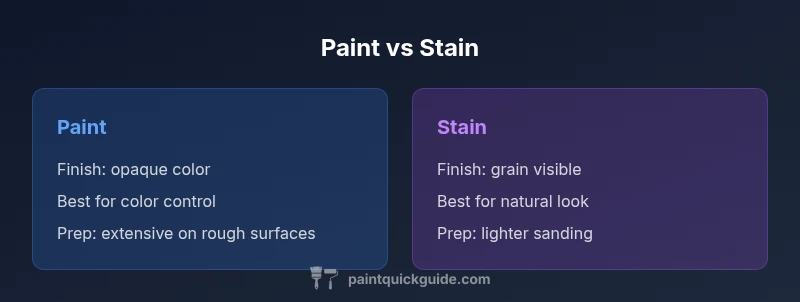
As you evaluate options, keep in mind that the core difference lies in pigment load and transparency. Paint lays down a solid, opaque coating that hides surface flaws, while stain allows wood texture to show through. Paint or stain choices also interact with primers, topcoats, and sealants. Paint is typically more forgiving on slightly rough surfaces and provides easier color changes in the future; stain emphasizes the natural beauty of wood and can be refreshed with a new coat without fully concealing the underlying material.
For many DIYers, the decision comes down to longevity and maintenance. Paint or stain both require proper surface preparation—cleaning, sanding, and priming where appropriate—to maximize adhesion and color retention. The PaintQuickGuide approach is to balance aesthetics with practicality: select a finish that aligns with how often you’re willing to recoat, how much surface prep you enjoy, and the level of protection you need against moisture, UV rays, and daily wear.
Comparison
| Feature | Paint | Stain |
|---|---|---|
| Finish appearance | Opaque color with solid coverage | Translucent or semi-transparent; grain shows through |
| Surface compatibility | Works on most substrates with proper primer | Best on wood and porous surfaces; may require prep for non-wood materials |
| Protection and durability | Strong color layer; excellent moisture resistance when sealed | Enhances protection while preserving natural texture; UV protection depends on sealer |
| Maintenance and refresh | Spot repairs possible; full recoat needed for color refresh | Easier to refresh color by reapplying stain; less dramatic color change |
| Required prep | Primer, sanding, and clean surface required for best adhesion | Cleaning and light sanding; often no heavy priming needed unless surface is damaged |
| Typical cost context | Higher upfront cost per project but less frequent color changes | Lower initial cost; more frequent refresh cycles can add up over time |
| Best for | Bold color control and easy maintenance; ideal for walls and trim | Wood grain preservation and natural look; ideal for decks and furniture |
Upsides
- Paint offers consistent color and hides surface flaws
- Stain preserves wood grain and provides a natural aesthetic
- Both finishes benefit from proper prep and topcoats for longevity
- Water-based options reduce odor and simplify cleanup
What's Bad
- Paint can require thorough prep and priming on challenging surfaces
- Stain may need more frequent reapplication to maintain protection
- Paint may crack on highly flexible or unprimed surfaces
- Stain provides less color opacity and may need sealant for exterior UV protection
Paint generally wins for color control and long-term cleanliness; stain excels when wood grain and natural aesthetics matter most
If you want bold, durable color with easier maintenance, choose paint. If you value wood grain visibility and a natural look, choose stain, especially on exterior wood, and plan for periodic reapplication.
Your Questions Answered
Which surfaces work best with paint vs stain?
Paint is versatile on walls, metal, and many substrates with proper primer. Stain is ideal for wood surfaces like decks, furniture, and exterior siding where grain visibility matters. For multi-material projects, plan section-by-section and apply the appropriate finish to each area.
Paint is great for walls and mixed surfaces, while stain shines on wood. Use the right finish per surface for best results.
Is staining a good option for exterior wood?
Stain is commonly chosen for exterior wood because it preserves texture and is easier to refresh. However, it may require more frequent reapplication and maintenance over time, especially in harsh climates. Pair stain with a UV-protective topcoat for best results.
Yes, stain works well on exterior wood, but plan for periodic maintenance and a protective topcoat.
Can you apply stain over painted surfaces?
Applying stain over paint is possible but not typical. It requires thorough surface preparation and often a compatible clear sealer to ensure adhesion. For most projects, remove the old paint or sand to the substrate before staining.
Staining over paint is tricky; usually remove the paint first for best results.
Does paint protect against UV light?
Most paints include UV inhibitors, especially exterior high-quality formulas, but long-term sunlight exposure can still fade color. For best UV protection, choose a high-quality exterior paint with a durable topcoat and consider tint stability.
Exterior paint helps with UV protection, but still needs the right formula and topcoat.
How long does paint or stain last before reapplication?
Durability varies with climate, surface prep, and maintenance. Paint typically holds up well with proper priming and sealing; stain often requires refreshment to maintain color and protection, particularly in exposed areas. Plan reapplication intervals based on wear and weather.
Durability depends on weather and prep; both finishes need periodic refreshment.
Is prep work different for paint vs stain?
Prep is always important but differs by finish. Paint generally needs clean, smooth, and primed surfaces; stain needs clean wood and light sanding to promote adhesion. Both benefit from moisture control and removal of old coatings when needed.
Prep matters for both; paint needs primed surfaces, stain needs clean wood with light sanding.
Can you mix paints and stains in a single project?
Yes, you can mix finishes by area of the project (e.g., painted walls with stained wood trim) as long as you use compatible primers and sealants at boundaries. Expect ongoing maintenance planning for mixed finishes.
You can mix paint and stain in a project, but plan for compatibility and maintenance.
Quick Summary
- Evaluate surface type before choosing paint or stain
- Paint offers color, durability, and easy cleaning
- Stain highlights grain and preserves natural wood texture
- Prep and topcoats influence performance more than finish alone
- Consider long-term maintenance when budgeting