Can You Use White Paint Instead of Primer? A Practical Guide
Learn whether white paint can replace primer, when it's appropriate, and practical steps for prepping surfaces, coats, and achieving durable results on walls or automotive projects.


Yes, in some cases you can substitute white paint for a primer, but it's not universally recommended. White paint won't seal stains or improve adhesion the same way primer does, and you may need extra coats for opacity. For bare wood, metal, or stained surfaces, use an appropriate primer; reserve white paint as a temporary substitute only for limited areas.
Can you use white paint as a substitute for primer? Key concepts and risks
When homeowners ask can you use white paint instead of primer, the quick reality is nuanced: in some cases it may work for limited areas, but it won't replicate the protective seal, stain blocking, and adhesion benefits of true primer. Primer is designed to seal porous surfaces, block tannins and water stains, and provide a uniform base so topcoats appear evenly. White paint, by contrast, relies on pigment for color and offers little in the way of sealing or adhesion. According to PaintQuickGuide, understanding the surface and paint system is essential before deciding to substitute. If you choose to proceed, expect more coats, longer drying times, and a finish that may vary in appearance across the surface. This isn’t a universal rule, but it’s a logic that helps homeowners avoid later touch-ups and mismatched finishes.
The decision hinges on what you’re painting, why you’re replacing primer, and how visible the final finish will be. On high-traffic walls, trim, or surfaces prone to stains, primer remains the safer bet. On already-painted, non-porous surfaces, or small touch-ups with limited visibility, white paint can be a practical shortcut. The key is to treat it as a temporary workaround rather than a replacement for primer in standard practice. A thoughtful approach to surface prep and finish will usually save time and money in the long run.
Primer vs. white paint: What makes primer special
Primer and white paint serve different chemistry roles in a paint system. Primer is a preparatory coating that improves adhesion, seals the substrate, and blocks stains or tannins that can bleed through finish coats. It also helps create a uniform surface on porous materials like bare drywall, softwoods, and certain metals. White paint, on the other hand, adds color and a protective top layer but does not inherently seal or block stains. This difference matters most on new or repaired surfaces where porosity or contamination could undermine color uniformity. PaintQuickGuide analysis shows that surface porosity, prior staining, and substrate material are the key factors that determine whether skipping primer will affect the final result. If adhesion, stain resistance, or uniform opacity are high priorities, primer remains the recommended choice.
When substitution might be acceptable: scenarios and limits
There are circumstances where can you use white paint instead of primer with careful planning. On surfaces that are already sealed, non-porous, and in good condition, a high-quality white paint with excellent hiding power can produce an acceptable result for limited areas or when the project demands a quick refresh. For example, repainting previously painted, non-porous surfaces with a similar finish can sometimes tolerate a paint-over without primer if you use a top-tier white paint that offers strong pigmentation and leveling. On exterior surfaces with mature paint and light dirt, a single coat of white paint might suffice visually, but you should anticipate potential issues with stain bleed or adhesion in the long term. PaintQuickGuide emphasizes that the decision should be based on surface type, environmental exposure, and the tolerance for extra coats or touch-ups. If you’re uncertain, test in a small area first and monitor over several days to confirm durability and color fidelity.
When you should avoid substituting white paint for primer
There are clear red flags that indicate prioritizing primer is the safer option. Porous substrates like new drywall, sanded wood with knots, or masonry surfaces often require sealer and bonding properties that white paint cannot provide. Surfaces with heavy tannins from cedar or redwood, water stains, nicotine residues, or smoke damage will almost always bleed through topcoats unless a dedicated stain-blocking primer is used. Exterior surfaces exposed to weather, UV, or mildew typically benefit from primers tailored for weather resistance and substrate sealing. Finally, areas with high traffic, trim, doors, or cabinetry where color consistency and durability are critical should not rely on white paint as a substitute for primer. In these cases, primer plus topcoat delivers the most reliable results.
How to maximize results if you decide to proceed with white paint as a substitute
If you decide to proceed with white paint as a substitute, start with a high hiding power white paint and a smooth, properly prepped surface. Clean the substrate thoroughly, remove surface contaminants, and sand glossy spots to ensure better adhesion. Apply multiple light coats rather than one heavy coat to improve opacity and reduce streaks. Between coats, allow adequate drying time per the product label and use proper ventilation. If staining or bleed-through is a concern, consider using a stain-blocking primer on problem areas or a white pigmented sealer designed to reduce tannin bleed before applying topcoats. While this approach can work in some cases, it may require more coats and longer turnaround than the primer-first approach. The goal is to achieve uniform color and surface feel while acknowledging the limitations of skipping primer.
Surface-specific guidance: walls, wood, metal, and masonry
Different substrates behave differently when primer is skipped. Walls and drywall, especially, can be highly porous; a white paint without primer may show uneven absorption and color variation. Wood with knots or resin requires sealing to prevent bleed-through; metal surfaces often need treated primers to prevent rust or corrosion and to improve adhesion of the final color. Masonry and concrete are porous and absorbent; sealing and bonding primers are typically essential to prevent efflorescence and uneven finish. For automotive or specialty finishes, primers provide corrosion resistance, sealer properties, and a consistent foundation for color. In short, the more porous or reactive the substrate, the higher the likelihood that skipping primer will create a finish that fails long-term.
Finish, color, and coverage expectations with white paint
White paint tends to show its true color and finish only after adequate coats and proper surface preparation. You may notice yellowing, tint shift, or color inconsistency if the surface isn’t evenly covered. The more coats you apply without primer, the more likely you’ll see brush or roller marks, especially on flat or matte finishes. If you aim for a crisp, even white on a busy wall or a detailed trim, a primer often delivers a better base for uniform color and durability. When you accept a potentially softer edge or slight sheen variation, white paint can still produce a satisfactory result in controlled conditions and on surfaces with minimal porosity. Your expectations should reflect the substrate’s condition, the paint’s hiding power, and the number of coats you’re willing to apply.
Practical workflow: prep, coats, and drying times
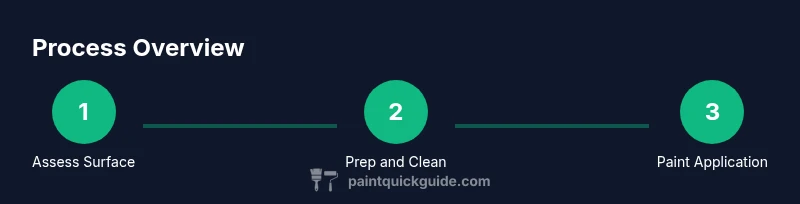
A well-planned approach reduces the risk of later touch-ups when you’re considering can you use white paint instead of primer. Start by inspecting the surface for moisture, cracks, and stains. Clean all dirt and grease, repair any defects, and sand glossy areas. Remove dust with a tack cloth. Prime only where necessary (e.g., stains, knots, or bare wood) and apply white paint in thin, even coats, allowing proper drying time between coats. For porous surfaces, you may need more coats than usual to achieve uniform color. When painting exterior surfaces, ensure you select an area with favorable weather and temperature to avoid improper curing. If results look inconsistent, revisit the surface, reseal problem areas, and consider a dedicated primer for long-term durability.
Quick-start decision guide: can you skip primer safely?
This guide helps you decide quickly: assess porosity, stains, and substrate condition; choose a high-hiding white paint; test a small area; and compare after time to determine if primer is necessary. If stains bleed, knots show through, or if you’re aiming for a durable, long-lasting finish, primer is the safer choice. If you’re dealing with a cosmetic refresh on a sealed, non-porous surface and you’re prepared for potential extra coats, a white paint substitute can be acceptable in a limited scope.
Quick-start decision guide summary (bonus):
- Evaluate substrate porosity and contamination
- Test on a small area first
- Use a high hiding power white paint
- Be prepared for more coats and longer drying times
- When in doubt, prime—especially for long-term durability
Tools & Materials
- High-quality white paint (interior or exterior as appropriate)(Choose a finish suitable for the surface (eg eggshell for walls, satin for trim))
- Primer (stain-blocking or bonding) for use on problem areas(Optional if you’re deliberately skipping primer)
- Surface cleaner/degreaser(Use for thorough cleaning before painting)
- Sanding block or 220-grit sandpaper(Smooth glossy areas to improve adhesion)
- Tack cloth(Remove fine dust after sanding)
- Painter's tape(Mask edges and protect adjacent surfaces)
- Drop cloths or plastic sheeting(Protect floors and furniture)
- Rollers, brushes, and a tray(Select roller nap appropriate for surface texture)
- Mild cleaner and clean rags(For spot cleaning and prep)
- Ventilation mask or respirator(Especially in enclosed spaces or when sanding)
Steps
Estimated time: 4-6 hours
- 1
Assess the surface
Inspect for porosity, stains, moisture, and previous coatings. Decide whether skipping primer is feasible based on substrate condition and project goals. If you detect tannins,Ink bleed, or wood knots, primer or sealer is advisable.
Tip: Document problem areas with a quick test patch to verify hiding power before committing to full coverage. - 2
Clean and prep the area
Thoroughly clean the surface with a degreasing solution and let it dry completely. Lightly sand glossy areas to create a rough surface for better paint grip. Wipe off dust with a tack cloth before painting.
Tip: Even minor surface oils can compromise adhesion; don’t skip the cleaning step. - 3
Choose your white paint carefully
Select a white paint with high opacity and a finish suitable for the space (eg, eggshell for walls, satin for trim). For best results, ensure the pigment load provides strong hiding power.
Tip: Avoid ultra-flat whites on glossy surfaces; choose a mid-sheen for easier cleaning and better coverage. - 4
Perform a small test patch
Apply one coat of the chosen white paint over a representative area to gauge coverage and drying behavior. Compare against adjacent finished areas to judge opacity.
Tip: If the patch is uneven, you may need another coat or reconsider primer on that spot. - 5
Apply the first full coat
Brush or roll with even strokes in consistent direction. Avoid heavy coats that can sag or wrinkle. Allow to dry per label instructions.
Tip: Use long, smooth strokes to minimize lap marks and ensure uniform color. - 6
Assess coverage and decide on additional coats
Inspect for thin spots or streaks. If needed, apply a second coat after proper drying, then reevaluate. Expect more coats than you would with primer, particularly on porous surfaces.
Tip: A second coat is often necessary when skipping primer on porous substrates. - 7
Finish with edge work and touch-ups
Paint trim and edges carefully after the main field coats. Do any required touch-ups while the paint is tack-free to avoid smudges.
Tip: Keep a small brush dedicated to touch-ups to maintain color consistency. - 8
Cure and inspect
Allow full cure time before assessing the final color and toughness. Check for bleed-through from stains or knots after a few days and consider a light second coat if needed.
Tip: Adequate drying and ventilation reduces surface flaws and odor.
Your Questions Answered
Can you use white paint instead of primer on new drywall?
New drywall is highly porous and prone to moisture, so primer is typically essential. White paint alone may result in uneven absorption and visible texture. A stain-blocking or bonding primer helps seal the surface before topcoating.
New drywall is very porous; primer is usually essential for a smooth, durable finish.
Will white paint cover stains or water damage without primer?
Stains and water damage often bleed through white paint if no primer is used. A stain-blocking primer or a sealing primer is generally recommended before applying white paint.
Stains may bleed through without primer; prime first for best results.
How many coats of white paint if you skip primer?
Expect more coats than usual—often 2–3 or more—to achieve even coverage, especially on porous or uneven surfaces. The result may still differ from a primed base.
You’ll likely need extra coats to get even coverage.
Is tinting primer to white a good compromise?
Tinting primer white can help close the color gap but isn’t the same as a true primer. It may provide better coverage and adhesion than plain white paint, yet you still may need additional coats.
Tinted primer helps but isn’t a substitute for proper adhesion and sealing.
Can you use white paint instead of primer on wood knots?
Knots can bleed resin; a sealer or stain-blocking primer is often necessary. White paint alone will not reliably stop bleed-through in many cases.
Knots usually require primer or sealing to stop bleed-through.
What about automotive refinishing—can you skip primer there?
In auto refinishing, primers and sealers are essential for corrosion resistance and color stability. Substituting white paint for primer is not recommended and can compromise durability and finish.
For cars, primer is essential for durability.
Watch Video
Quick Summary
- Evaluate porosity and stains before deciding.
- Primer remains the safer choice for long-term durability.
- If substituting, test first and expect extra coats.
- Porous or stained substrates are least likely to benefit from white paint alone.
- Proper prep is critical to ensure adhesion and color uniformity.