Can You Paint Without Primer? A Practical Guide
Learn when you can skip primer, how to prep surfaces, and which paints bond best without priming for walls, trim, and furniture. Practical guidance for homeowners and DIY enthusiasts from PaintQuickGuide.


Can you paint without primer? According to PaintQuickGuide, in many cases yes, but only with the right surface prep and paint. Primer boosts adhesion, seals stains, and evens porosity. Skip it on certain surfaces (like dry, sealed walls) with bonding paints or self-priming products, but avoid it on knotty wood, old varnish, or glossy finishes.
Primer's core functions
Primer serves three core roles in painting projects: improving adhesion, sealing porous surfaces, and blocking stains or tannins. Without primer, some substrates soak up paint unevenly, causing lap marks and uneven color. A good primer also evens porosity so the topcoat goes on smoothly and hides imperfections. In DIY contexts, the question can you paint without primer depends on surface history and paint type. According to PaintQuickGuide, you can often skip primer when you work on well-prepped, non-porous surfaces with a modern bonding or self-priming paint, but you should plan for extra surface prep and test a patch before committing. The decision should factor in texture, previous coatings, and the level of wear the surface will endure. For example, interior walls with clean, sealed drywall or plaster may tolerate skipping primer, while raw pine knots or water-stained drywall usually benefits from a primer under a quality finish.
Surface types and primer needs
Not all surfaces behave the same way when you skip primer. Porous materials such as new drywall, raw wood, or concrete can drink up paint and show grain and knots if not sealed. Smooth, non-porous surfaces like glossy enamel, sealed metal, or previously painted surfaces with a tough film often accept paint better when prepped but may still require priming to ensure color uniformity. Surfaces with stains, tannins from wood, smoke discoloration, or water damage almost always need a primer or stain-blocking primer under the topcoat. The PaintQuickGuide approach is to classify surfaces into: porous and clean, non-porous and smooth, and problem-prone. For porous surfaces, you’ll often benefit from a primer; for non-porous, you can sometimes rely on a bonding or self-priming paint with careful prep.
When you might skip primer on interior walls
Interior walls can sometimes be painted without primer if the surface is clean, dry, and already sealed with a prior coat or factory finish. For freshly painted or primed drywall, you may skip additional primer if you use a high-quality, stain-blocking, or bonding finish. If the wall has minor imperfections, a light sanding and careful patching can help the new color go on evenly. Always test a small patch on a hidden area to confirm adhesion and uniformity before proceeding with a full room.
Exterior surfaces and primer considerations
Exterior projects are less forgiving of poor adhesion. Surfaces such as wood siding, fiber cement, stucco, or metal often require a primer or bonding primer to seal the substrate and improve film formation in sunlight and temperature changes. If you choose to skip primer, select an exterior paint specifically rated to bond well to the substrate, and ensure you follow a robust cleaning and degreasing routine. Be mindful of weather: avoid painting in high humidity, direct sun, or on surfaces above 90°F, which can cause premature film formation and color inconsistency.
Bonding paints and self-primers: what they do
Self-priming or bonding paints claim to adhere directly to difficult surfaces without a traditional primer. They work best when the surface is properly cleaned and abraded to increase mechanical grip. However, their performance varies by substrate and brand. In some cases, applying two thin coats of bonding paint yields a durable finish without a separate primer. Always follow the manufacturer’s guidelines and test a small area first to verify adhesion and color uniformity before committing to a full project.
Surface prep techniques to maximize adhesion
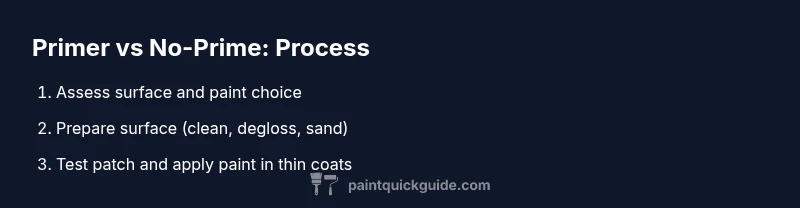
Successful paint application without primer starts with rigorous prep. Clean surfaces to remove dirt, grease, and chalking; degrease oily residues; sand glossy finishes to dull the surface; fill cracks and holes; and wipe away dust. For porous surfaces, consider sealing the most absorbent areas with a quick-drying sealant or a specialized sealer if the surface will be exposed to moisture or tannins. Drying time matters—allow surfaces to dry completely before painting. The better your prep, the more forgiving a no-primer approach will be.
Preparing the surface without primer
Begin with a clean, dry surface. If the surface is glossy, scrub with a mild detergent, rinse, and dry. For oil-based finishes, use a deglosser or light sanding to remove the glossy film. Patch holes and imperfections with spackle or filler and sand smooth. Wipe away dust with a tack cloth, then use painter’s tape to protect edges. Finally, test a small patch in a hidden area to confirm the paint adheres properly before committing to the entire project.
Choosing the right paint for without-primer scenarios
If you plan to skip primer, select paints that advertise superior adhesion or self-priming properties. For interior walls, a high-quality acrylic latex with good leveling can deliver a smooth finish on primed or well-prepped surfaces. On metal or glossy surfaces, choose a bonding primerless paint or a bonding topcoat that’s designed for direct application. Remember, color uniformity and hiding power vary; darker colors may require more coats, while light colors might cover better with fewer coats if the surface is well-prepped.
Application technique: two thin coats, proper tools
Apply the first coat evenly using a quality brush or roller, maintaining a consistent wet edge. Allow sufficient drying time as per label instructions, then inspect for missed spots or uneven coverage. If needed, lightly sand between coats to reduce texture and improve adhesion. The second coat should be even and slightly drier than the first to prevent streaking. When skipping primer, patience with dry times is essential to achieve durable, long-lasting results.
Tools & Materials
- Soap and water or mild detergent(For cleaning surfaces before painting)
- Degreaser or deglosser(Use on oily or glossy surfaces)
- Fine-grit sandpaper (220-320 grit)(Lightly scuff glossy surfaces)
- Putty knife and filler/patch(Fill small holes and cracks)
- Painter’s tape(Protect edges and create clean lines)
- Drop cloths or plastic sheeting(Keep floors protected)
- Quality brushes and rollers(Choose synthetic bristles for latex paints)
- Paint compatible with no-primer scenario(Select bonding or self-priming formula if skipping primer)
- Paint tray and liners(For efficient roller use)
Steps
Estimated time: 4-8 hours (prep, two coats, and dry time)
- 1
Inspect surface and set expectations
Evaluate the substrate, noting porosity, prior coatings, stains, and any damage. Decide if a no-primer approach is viable and plan for extra coats or tests if needed.
Tip: Document a test patch area to gauge adhesion and hiding power before committing. - 2
Clean the surface thoroughly
Remove dirt, grease, and chalking from the surface using soap and water or a mild detergent. Rinse and allow to dry completely before painting.
Tip: Dry time should be longer if weather is humid; wet surfaces will hinder adhesion. - 3
Address gloss and smoothness
Sand glossy or smooth areas to create a mechanical grip. Wipe away sanding dust with a tack cloth before painting.
Tip: Avoid over-sanding; you want dull but not fuzzy surfaces for best adhesion. - 4
Fill defects and repair as needed
Use appropriate filler for holes and cracks. Let it dry fully and sand smooth to ensure an even surface.
Tip: Overfill slightly and sand flush for a clean finish between coats. - 5
Choose the right paint and test patch
Select a bonding or self-priming paint if skipping primer. Apply a small test patch on an inconspicuous area to confirm adhesion and color match.
Tip: If patch fails adhesion test, reconsider primer on that area. - 6
Apply the first coat evenly
Use long, smooth strokes with a high-quality brush or roller. Maintain a consistent wet edge to avoid lap marks.
Tip: Keep a slightly damp edge during application to prevent streaks. - 7
Let the first coat dry thoroughly
Follow the paint manufacturer’s recommended dry time. Check for stiffness or tackiness before proceeding.
Tip: Ventilate the area to promote faster drying. - 8
Apply a second coat and inspect
Lightly sand any imperfections between coats if needed, then apply a second coat for uniform color and finish.
Tip: Two thin coats are better than one thick coat for durability.
Your Questions Answered
Can I skip primer on drywall?
You can skip primer on drywall if the surface is clean, sealed, and ready for a bonding or self-priming paint. Test a patch first to confirm even adhesion and hiding power.
If your drywall is clean and sealed, you may skip primer with bonding paint, but always test a patch first.
What surfaces should never skip primer?
Raw wood with knots, water-damaged surfaces, or areas with heavy tannins and stains generally require primer or stain-blocking primer for best results.
Don't skip primer on knotty wood or stained surfaces; use primer to block tannins and stains.
Are there paints that claim no-primer is needed?
Some bonding or self-priming paints claim to work without a separate primer on certain surfaces. Follow the manufacturer's instructions and test a patch before committing.
Some paints bond directly to surfaces, but always test a small area first.
Does skipping primer affect durability?
Skipping primer can reduce durability on porous or challenging surfaces. With proper prep and a suitable paint, you can achieve durable results, but expect more precise surface prep and possibly more coats.
Primer-free projects can be durable if you prep well and choose the right paint.
How long does it take to finish a no-primer job?
Total time depends on surface prep, drying times, and the number of coats. Plan for multiple hours including dry time and parking times between coats.
Plan for several hours, including prep, coats, and dry time.
Should I test adhesion on every surface?
A patch test on a representative area is recommended for new substrates or tricky finishes. If adhesion fails, consider primer or a different paint.
Do a small patch test to confirm adhesion before continuing.
Watch Video
Quick Summary
- Assess surfaces before skipping primer to avoid failure.
- Proper cleaning and surface prep are crucial when not priming.
- Bonding paints can improve adhesion on tricky surfaces.
- Test patches to validate adhesion and hide before full application.