Can You Use Paint Over Primer? A Practical Guide
Discover whether you can paint over primer, how to prep properly, and the best steps for a durable, even finish. Practical guidance from PaintQuickGuide for DIY enthusiasts.


According to PaintQuickGuide, you can usually apply paint over primer when the primer is fully cured and compatible with your paint. The process works best with the same base system (latex over latex, oil-based over oil-based) or a bonding primer in between. Always test adhesion on a small area before full coverage.
Primer layering basics
Primer on primer is a common strategy for problematic surfaces such as porous walls, stained substrates, or chalky finishes. When done correctly, it can improve adhesion and color uniformity without removing the original primer. However, not every situation benefits from another primer coat, and excess layers can hinder film formation. According to PaintQuickGuide, primer layering is most effective when the underlying primer is sound, fully cured, and compatible with the paint you plan to use. If the previous coat already delivers a solid base and shows no peeling, adding another primer layer may be unnecessary. The decision should consider the surface type, the primer's purpose, and the final paint system. Before committing, test a small area to confirm adhesion and finish quality, and follow manufacturer cure times and recoat windows.
Matching primer and paint types
Choosing compatible primer and paint is the cornerstone of a durable finish. In most cases latex paints pair best with water-based primers, while oil-based paints pair with oil-based primers. If you must switch bases, use a bonding primer designed to bridge between dissimilar products and ensure a uniform surface. Always check product labels for compatibility and drying times. PaintQuickGuide recommends avoiding a chain of incompatible products in hopes of masking issues; instead, select a cohesive combo to minimize risk and maximize color consistency.
Surface prep before painting over primer
Surface prep is the quiet work that determines success. Start by cleaning the surface to remove dirt, oils, and dust. If there are glossy areas, lightly abrade them to create a key for the new coating. Wipe again with a tack cloth to remove residue. If staining or tannins are present, consider a stain-blocking primer before painting. Proper prep reduces the chance of peeling, blistering, or blotchy color and helps ensure the new paint adheres firmly to the underlying primer.
Test patch and adhesion checks
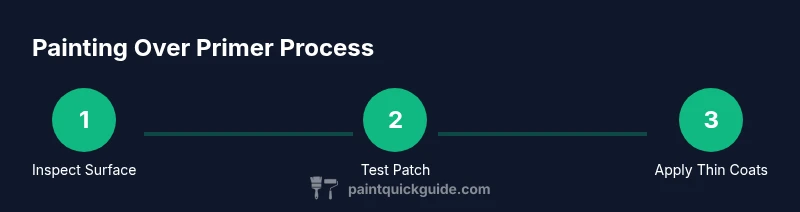
Always perform a small test patch in a concealed area before committing to the whole surface. Apply the paint over the primer patch and wait for the recommended drying time. If the patch adheres well and the finish reads true, you are likely safe to proceed. If you notice peeling, wobbling, or poor uniformity, reassess your primer choice or surface prep. This simple test can prevent costly rework and minimize surprises on large projects. PaintQuickGuide emphasizes using a patch that simulates typical surface conditions for the most accurate result.
Step-by-step approach to painting over primer
Begin by confirming surface cleanliness and a sound bond between primer and substrate. Apply thin coats of paint, using long, even strokes to prevent lap marks. Allow each coat to dry fully before applying the next one. For porous or dark surfaces, two light coats usually provide better coverage than a single heavy coat. If glazing or glazing-type finishes are involved, follow product-specific directions for recoat intervals and drying times. A final inspection should verify color evenness and edge definition. This sequence helps achieve a durable, uniform finish when painting over primer.
Common mistakes to avoid
Avoid stacking multiple primers or finishing coats without allowing proper cure between applications. Skipping surface prep or using incompatible products can cause cracking, peeling, or uneven color. Do not rush the drying process; rushing coats can trap solvents and produce blisters. Finally, neglecting edge protection or dust removal can ruin a perfect finish. Planning and patience reduce the risk of errors and improve long-term durability.
Drying times, recoat windows, and finishing
Drying times vary by product and environmental conditions. Always follow the manufacturers recoat window and cure times to ensure the film forms correctly. Keep the area free of dust and humidity during curing. If you notice blush, dry spray, or touch-up differences after recoating, assess whether additional sanding or primer touch-ups are necessary before finalizing the project. Adhering to recommended times helps ensure a durable, professional-looking result.
Troubleshooting discoloration, peeling, and blisters
Discoloration or staining can appear if the primer was not properly sealed or if the new paint reacts with surface residues. Peeling typically indicates inadequate surface preparation or poor primer adhesion. Blisters may form if solvent becomes trapped beneath the paint film. In these cases, remove the compromised layers, re-clean, re-prime, and re-paint with proper waiting times. When in doubt, consult the primer and paint manufacturer's guidelines or seek guidance from a professional.
Maintenance and long-term durability
A properly applied paint over primer finish should resist typical household wear and cleaning. Regular dusting and gentle cleaning help preserve color and gloss without breaking through to the primer. If damage occurs, assess whether spot repairs or a recoat is needed, and ensure the surface remains prepared for adhesion. Consistent maintenance extends the life of the finish and helps avoid costly refinishing later on.
Tools & Materials
- Primer compatible with your paint type(Choose latex primer for latex paint or oil-based primer for oil-based paint; use bonding primer to bridge incompatible bases if needed)
- Paint(Select the same base system as the primer if possible; follow label for sheen and color)
- Cleaner/Degreaser(To remove oils and contaminants from the surface)
- Soft scrub brush or sponge(For cleaning stubborn residues)
- Fine sandpaper or sanding block(Grit 120–220 for surface keying)
- Tack cloth(To pick up dust after sanding)
- Painter's tape(For masking edges and lines)
- Drop cloths or plastic sheeting(Protect floors and furniture)
- Brushes and rollers(Angled brush for edges; roller for flat surfaces)
- Paint tray and liners(Helpful for larger paint jobs)
- Respirator or disposable mask(Especially when sanding or working with solvent-based products)
Steps
Estimated time: Several hours to complete depending on surface size and drying times
- 1
Inspect the surface
Examine the current finish for peeling, blistering, or staining. Decide if painting over primer is appropriate based on surface condition and durability wishes.
Tip: If there are defects, repair them before continuing. - 2
Test adhesion on a patch
Apply the new paint over a small primer patch and let it cure. Check for adhesion and color match before committing to the entire area.
Tip: Choose a discreet area to avoid noticeable imperfections if the patch fails. - 3
Prepare the area
Mask edges, protect surroundings, and clean the surface to remove dust, oils, and contaminants.
Tip: Keep the workspace well-ventilated and shield nearby surfaces. - 4
Clean the surface
Use a degreaser or mild detergent to remove dirt, grease, and residues. Rinse, and let dry completely.
Tip: Dampness can affect adhesion; ensure the surface is dry to the touch. - 5
Lightly sand for grip
Gently sand the primer surface to create a micro-roughness that improves bonding. Wipe clean with tack cloth.
Tip: Use even strokes and avoid over-sanding glossy areas. - 6
Apply paint in thin coats
Brush or roll on a thin coat, maintaining a wet edge to prevent lap marks. Allow adequate drying between coats.
Tip: Avoid heavy coats that can trap solvents and cause wrinkling. - 7
Wait between coats
Let the first coat cure according to product guidelines before applying a second coat. This helps achieve consistent color and finish.
Tip: Environmental conditions can extend or shorten cure times; adjust expectations accordingly. - 8
Inspect and touch up
Check for missed spots or color variations; apply a final touch-up as needed to ensure uniform coverage.
Tip: Use a clean brush for precise touch-ups to avoid new texture differences.
Your Questions Answered
Can I paint directly over a primer that is already on the wall?
Yes, if the primer is fully cured and compatible with the paint you plan to use. If the primer is peeling or if you are changing base types, you should re-prime or remove the old layer.
Yes, if the primer is fully cured and compatible. If peeling or changing bases, re-prime.
Do I need to sand the primer before painting?
Lightly sanding the primer helps create a key for the paint to grip. Wipe away the dust after sanding before applying the first coat.
Lightly sand to improve grip, then wipe away dust before painting.
Can I use oil-based paint over latex primer or vice versa?
In general, avoid mixing base types. If you must, use a bonding primer designed to bridge between dissimilar bases, and test first.
Avoid mixing bases; use a bonding primer if needed and test first.
How long should primer cure before painting?
Follow manufacturer guidelines; curing times vary with temperature and humidity. Do not rush the first coat if the surface still feels tacky.
Follow the product guidelines; avoid painting while the surface is tacky.
What if the primer is peeling or blistering after paint?
Peeling indicates poor adhesion. Remove the loose areas, re-prime properly, and repaint after ensuring a clean, dry surface.
If peeling occurs, remove the loose areas, re-prime, and repaint after thorough prep.
Is there a significant difference in finish when over primer?
Finish can be affected by the base, the primer, and the number of coats. Thin coats and proper curing improve uniformity and durability.
Finish depends on base, primer, and coats. Keep coats thin and allow to cure.
Watch Video
Quick Summary
- Test adhesion before full application
- Use compatible primer and paint pairings
- Prepare the surface meticulously for best results
- Apply thin coats and allow proper drying between passes
- Consult manufacturer guidelines for cure times