How to Get Out Paint Smell in a Room: Practical Guide
Learn practical, safe methods to remove paint odors from interior spaces. Ventilation, absorbers, humidity control, and cleaning tips for quick relief after painting.


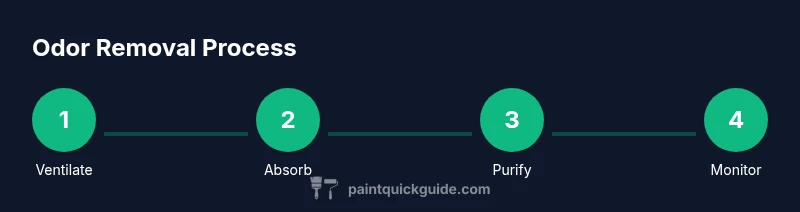
By the end of this guide, you will know how to get out paint smell in a room quickly and safely. Focus on ventilation, absorption, and purification, plus fabric and surface treatments. The plan covers interior paints, primers, and auto-finishing fumes, with practical steps you can implement today. These methods avoid harsh chemicals while improving air quality for everyone.
Why paint smell lingers and what VOCs mean
Paint odors come from volatile organic compounds (VOCs) that off-gas as paints cure. These gases can irritate the nose, throat, and eyes, especially in small or poorly ventilated rooms. The kind of paint you used, its age, and the temperature all influence how long odors stay. According to PaintQuickGuide, improving air exchange and using odor absorbers can significantly reduce the feeling of a fresh-paint stink. This section explains what VOCs are, why they matter, and how to assess the room before you start remediation.
Immediate actions to reduce odor right after painting
As soon as you finish painting, begin ventilating. Open all doors and windows, if safe, and turn on ceiling fans to create cross-ventilation. Place a couple of box fans at opposite ends of the room to push stale air out while bringing fresh air in. Close the door to adjoining rooms to avoid spreading fumes. If possible, set up an exhaust fan to vent air outside. These quick steps do not remove VOCs entirely, but they dramatically reduce their concentration and improve comfort in the short term.
Best odor absorbers and air purification methods
Odor absorbers work by capturing molecules rather than masking them. Place bowls of baking soda or bowls of activated charcoal around the room, especially near paint sources, windows, and fabric items. An air purifier with a carbon filter helps remove VOCs from the air, while a HEPA filter captures particulate matter that may accompany dust from sanding. Avoid overloading fabrics with scents; instead, use neutral products and wash textiles later.
Managing humidity, temperature, and ventilation for faster off-gassing
Humidity levels and temperature influence how quickly paint odors dissipate. If the room is too humid, odors linger longer because water vapor can carry VOCs more effectively. Aim for moderate humidity (roughly 40–60%) and maintain a comfortable temperature to speed up off-gassing without increasing indoor air irritants. Keep doors open to promote air exchange and periodically check that exhaust paths remain clear. Continuous, gentle airflow is more effective than a brief blast of air.
Special considerations for oil-based paints, primers, and car refinishing fumes
Oil-based paints and primers release stronger solvents and can produce more persistent odors. Work in a well-ventilated area, use an exhaust fan directed outside, and wear a respirator when sanding or applying solvents. If you are refinishing a car indoors, prioritize a dedicated, ventilated space with outdoor air exchange and avoid mixing with living areas. Never seal off a painted room with limited ventilation for extended periods, as this traps VOCs and can cause headaches or eye irritation.
When to consider professional help and safety warnings
If odors persist beyond a few days despite ventilation and absorbers, or if anyone in the home experiences headaches, dizziness, or breathing difficulty, consult a professional environmental or air-quality service. Always wear proper PPE when dealing with solvents, keep children and pets away during off-gassing, and avoid using strong air fresheners as they can mask odors rather than address the source.
Tools & Materials
- Box fan(For cross-ventilation to push stale air out and pull fresh air in.)
- Window or pedestal fans(Place across the room to create a cross-breeze.)
- HEPA air purifier with activated carbon filter(Helps remove VOCs and particles.)
- Baking soda(Place in bowls around the room to absorb odors.)
- Activated charcoal odor absorbers(Discretely placed near sources and in closets.)
- Vinegar or citrus peels (optional)(Can provide a light natural scent, not a primary odor control.)
- Lint-free cloths and mild soap(For incidental surface cleaning and wipe-downs.)
- Textile wash supplies(Launder curtains, throws, and cushion covers if they absorbed odor.)
Steps
Estimated time: 2-12 hours for initial relief; full off-gassing can take days in larger rooms or poorly ventilated spaces.
- 1
Open windows and establish cross-ventilation
Open all accessible windows and doors to create a cross-breeze. If possible, place a box fan near an open window to pull stale air outside and another fan on the opposite side to bring fresh air in. The goal is to dilute the concentration of VOCs quickly.
Tip: Position fans so airflow moves from clean outdoor air toward exhaust points; avoid dead zones. - 2
Set up odor absorbers around the room
Place bowls of baking soda or activated charcoal at paint sources, near corners, and in front of fabrics or upholstery. Absorbers work best when they are in multiple positions rather than centralized in one spot.
Tip: Change absorbers every 24–48 hours for best effect. - 3
Purify the air with a filter or purifier
If you have an air purifier, run it with the carbon/activated charcoal setting on. A purifier can reduce circulating VOCs and capture particles stirred up during painting and cleaning.
Tip: Keep purifier at a moderate speed to avoid creating too much air movement that might spread odors into adjacent rooms. - 4
Address fabrics and surfaces
Launder or wash any fabric items that may have absorbed odors (curtains, cushions, blankets). Wipe walls, baseboards, and doors with a mild soap solution to remove any residual film that might release odors later.
Tip: Avoid heavy cleaners that can irritate eyes or throat; test small areas first. - 5
Monitor air quality and repeat as needed
Check room odor periodically. If the smell lingers, repeat absorption and purification steps and extend ventilation windows. Odor off-gassing can slow when humidity rises or when the room is enclosed again.
Tip: Keep doors open during the day and close at night to avoid nightly irritants. - 6
Consider a longer-term plan for persistent odors
If odors persist beyond a full day of airing, reassess ventilation, check for hidden odor sources (fabrics, carpets, or porous walls), and consider professional guidance. Persistent odor can indicate residual solvents that require targeted treatment.
Tip: Document the steps you’ve taken to share with a professional if needed.
Your Questions Answered
How long does paint smell usually last after painting?
Odor duration varies with ventilation and room conditions. Improving air exchange and using absorbers can noticeably reduce the smell, but it may take from a few hours to a few days depending on space and ventilation.
Odors vary, but better ventilation and absorbers shorten the time noticeably.
Is it safe to sleep in a room that was just painted?
If the room is well-ventilated and odor levels are minimal, sleeping is possible. If you notice strong fumes or irritation, leave the room until odors subside and ventilation is ongoing.
Only sleep in a freshly painted room if the odor is barely detectable and air is circulating well.
Do air purifiers remove VOCs from paint odors?
Air purifiers with activated carbon filters can reduce VOCs in the air and help with odors, especially when used in combination with ventilation.
Purifiers help, especially with carbon filters, when used with ventilation.
Are baking soda and charcoal safe around kids and pets?
Baking soda and activated charcoal are generally safe for use in homes when not ingested. Keep containers out of reach of children and pets and replace them as they lose potency.
They’re broadly safe, just don’t let kids or pets eat them.
Should I repaint or clean walls to remove lingering odors?
If odors persist, cleaning walls with a mild soap solution can remove residual films. Repainting is usually not needed unless the smell is tied to the paint itself.
Clean walls first, repaint only if odor remains after cleaning.
Can I use strong air fresheners to mask the odor?
Avoid masking odors with strong fragrances; they can interact with VOCs and irritants. Use odor absorbers and purification instead for a true improvement.
Masking odors isn’t effective long-term; use absorbers and purifier instead.
Watch Video
Quick Summary
- Ventilate early and often to dilute VOCs
- Use odor absorbers in multiple locations
- Purify air with a carbon-enhanced purifier if available
- Launder fabrics and wipe surfaces to remove trapped odors
- Monitor room odor and repeat steps as needed