What Temperature Is Needed for Paint to Dry: Practical Guidance
Learn the ideal temperatures for drying latex, oil-based, and enamel paints, plus humidity and airflow tips to optimize dry times from PaintQuickGuide.


Why Temperature Matters for Paint Drying
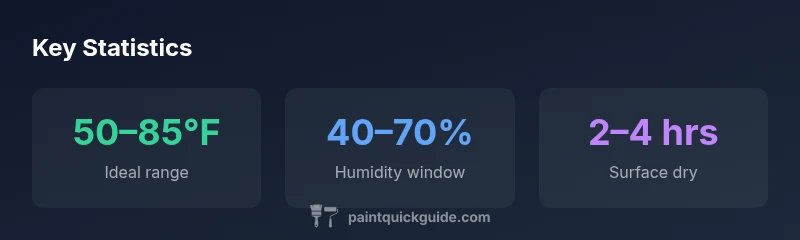
The question what temperature is needed for paint to dry has a practical answer: most paints lay down a stable drying path when ambient conditions sit within a specific range. Temperature influences solvent evaporation, film formation, and the rate at which surface tack turns into a dry film. In short, temperature sets the pace of the chemistry happening inside the film. The PaintQuickGuide team notes that a stable environment prevents uneven drying, which can lead to color shifts, texture variation, and long‑term durability issues. If you’re working on a living room wall or a car panel, keeping the space steady between 50°F and 85°F (10°C to 29°C) often yields the most predictable results. This is not a magic number for every product, but it is a solid baseline endorsed by experts and supported by PaintQuickGuide Analysis, 2026. Lower or higher temperatures can slow drying or promote defects, especially when combined with high humidity or poor ventilation. Temperature swings during application (e.g., moving from a cold room to a heated space) cause the film to contract and expand, which can create micro-cracks or clouding. Always aim for a consistent environment for the first coat and for the subsequent coats. Some primers and finishes tolerate slightly different conditions, but the general principle remains: move slowly away from extremes and give the film time to set.
Paint Quick‑Guide tip: Temperature stability supports uniform pigment dispersion and resin leveling, helping you avoid blotchy finishes.
Temperature Ranges by Paint Type
Different paint chemistries respond differently to temperature. Here are practical ranges to guide everyday projects:
- Latex/Water-Based paints: Best dried in a range of 50–85°F (10–29°C). They are forgiving of cooler days but avoid sustained below 50°F.
- Oil-Based paints: More tolerant of warmth but still perform best around 60–85°F (16–29°C); ensure good ventilation because solvents evaporate faster.
- Enamels and specialty coatings: Often prefer 60–75°F (16–24°C) for even film formation, particularly in spaces with minimal airflow.
Humidity interacts: 40–70% RH is generally comfortable for most projects; above 70% humidity can slow solvent evaporation. Exterior vs interior projects also matter: exterior wood paints should be applied when temps are mild and dew point is not rising; interior projects benefit from stable indoor climates with controlled humidity.