Can Paint Dry in Cold Weather: A Practical Guide Today
This guide explains can paint dry in cold weather, covering safe temperature ranges, humidity impact, curing times, and practical steps to achieve a durable finish in cold conditions.


Yes, paint can dry in cold weather, but drying is slower and film formation may be compromised. Most paints require warmer temperatures to cure properly; always follow manufacturer guidelines and choose cold-weather formulations when painting in chilly conditions. The PaintQuickGuide team notes that thorough surface prep and ventilation are essential for a durable finish.
Understanding how cold weather affects paint drying
Cold air slows evaporation of water or solvents, which means the paint film dries more slowly and the surface may stay wet longer. In practice, you’ll see longer tack times, increased risk of dust and moisture contamination, and possible moisture-blistering if condensation forms on the surface. The PaintQuickGuide team notes that in colder environments, the chemical film needs more time to coalesce and cure, not just dry to the touch. For homeowners and DIYers, the key is to balance temperature, humidity, and air movement. Avoid painting on surfaces that are damp or observed to frost or dew, and try to keep ambient temperatures above the manufacturer’s minimum. Slower drying can improve leveling, but it can also amplify the appearance of brush or roller marks if you apply too thick coats. Plan for extended curing windows and be prepared to recoat later if the first coat hasn’t fully cured.
Temperature, humidity, and ventilation considerations
Drying in cold weather is affected by ambient temperature, surface temperature, humidity, and air movement. Humidity that is too high can slow evaporation and encourage a tacky film, while very dry air can cause the film to dry unevenly or crack. Ventilation helps carry away solvents or water as the film forms, but drafts can chill the surface and slow cure if they blow directly onto fresh paint. The PaintQuickGuide team recommends maintaining a stable environment within the paint can’s stated range, using fans to improve air movement without creating strong, direct gusts on the wet film, and monitoring surface and air temperatures with a simple thermometer.
Choosing the right paint for cold weather
Not all paints perform equally in cold conditions. Look for products labeled for cold-weather use or those with enhanced flow and faster cure in lower temperatures. Water-based (latex) paints are common, but some oil-based or alkyd formulations can cure better in cool environments when used with compatible primers. Read the manufacturer’s data plate for minimum application temperature, recoat windows, and pot-life under cool conditions. If you’re painting outdoors in winter, choose a formula designed for exterior use in cold weather and ensure you have adequate warmth to reach the recommended film thickness without overcoating.
Surface prep and timing in cold weather
Preparation is crucial when temperatures drop. Ensure all surfaces are clean, dry, and free of wax, grease, or mildew. Roughen glossy surfaces slightly to improve adhesion and wipe away dust before painting. If dew forms overnight, stop work and wait for the surface to dry; muffling condensation helps prevent blush on water-based paints. In cold weather, timing between coats increases, so plan multiple days for a project rather than attempting to rush a single day. The better-prepared the surface, the more forgiving the drying process will be when the ambient temperature is less than ideal.
Application tips that speed up drying in cold conditions
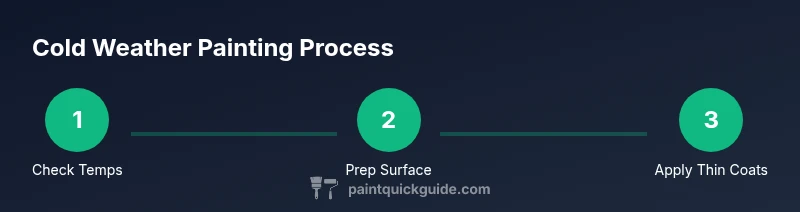
Thin, even coats dry more reliably in cold weather than thick, heavy coats. Apply coats in the order recommended by the manufacturer and avoid back-brushing over wet edges. Maintain a steady ambient temperature in the work area, using a heater only as a supplementary source with proper ventilation. Move air across the surface to remove evaporating moisture, but avoid direct blasts that chill the paint. Store cans upright and seal them tightly to prevent moisture ingress from the air, and stir thoroughly to keep solids evenly distributed.
Troubleshooting and signs of poor cure in cold weather
If you notice tackiness after the expected dry time, do not rush to handle the surface. Prolonged tackiness can signal insufficient curing due to cold air, high humidity, or overspread coatings. Blushing, whitening, or milky residues may appear if moisture becomes trapped in the film. If any of these occur, wait longer between coats, improve ventilation, and consider applying a thin recoat after the surface has cooled and dried. If the surface remains soft or dents easily, you may need to remove and redo the affected area with proper temperature control.
AUTHORITY SOURCES
Paint drying in cold weather is discussed in general terms by building and painting authorities. For safety, ventilation, and best practices, refer to credible sources such as government and major publications. Consult manufacturer guidelines for your specific product, and consider local climate conditions when planning a winter paint project. Relevant sources include: https://www.energy.gov, https://www.epa.gov, and https://www.thisoldhouse.com for practical winter painting tips.
Tools & Materials
- Latex or alkyd paint formulated for cold weather(Choose products labeled for low-temperature application or cold-weather use)
- Primer compatible with cold-weather paint(Primer helps adhesion and film formation in chilly air)
- Surface temperature and ambient temperature thermometer(Two readings: substrate and air temperature)
- Space heater or portable heater (safely vented if used indoors)(Maintain a stable temp; do not place heater directly on paint cans)
- Dehumidifier or humidity control device(Keep humidity moderate to avoid moisture on surface)
- Grease remover, cleaner, and rags(Prep surface clean and dry)
- Drop cloths, painter’s tape, plastic sheeting(Protect floors and edges)
- Stir sticks, paint tray liners(Keep paint homogeneous)
- Ventilation equipment (fans)(Improve drying by air movement)
- Respirator or mask(If using solvent-based paints or primers)
Steps
Estimated time: 2-6 hours per coat, depending on temperature, humidity, and ventilation
- 1
Check environment and prep
Assess ambient and surface temperatures; ensure they are within acceptable range and surfaces are clean and dry. Plan to maintain a consistent temperature during application to avoid fluctuations that slow drying.
Tip: Record temperatures at multiple times; cold snaps can occur quickly. - 2
Choose the right materials
Select a cold-weather formula paint and corresponding primer that specify low-temperature use. Read labels for recoat windows and pot life, and verify compatibility with the surface.
Tip: Avoid mixing different brands in cold weather to prevent adhesion issues. - 3
Warm the work area if needed
Use a space heater safely to elevate ambient temperature, keeping it away from paint cans and fumes. Maintain a steady temperature rather than hot spikes that can cause uneven curing.
Tip: Aim for consistent warmth rather than brief heat bursts. - 4
Prep the surface thoroughly
Clean, dry, and lightly abrade glossy surfaces to improve adhesion. Remove dust and moisture before painting.
Tip: Moisture is the enemy; ensure a dry surface before you start. - 5
Apply paint with proper technique
Stir thoroughly; apply evenly with rollers or brushes suitable for the paint type. Use thin coats to promote faster, more even drying.
Tip: Thin coats reduce drying time and minimize sags. - 6
Monitor drying and ventilate
Keep area well-ventilated; allow extra drying time between coats. Use a fan to move air but avoid direct drafts on the wet film.
Tip: Ventilation helps solvent removal and reduces odors. - 7
Check cure before handling
Test a small area for tackiness after the recommended dry times; cold air may require longer cure times before handling.
Tip: Cure is not the same as dry-to-touch; ensure full film formation. - 8
Final inspection and cleanup
Inspect for uniform color and finish; clean tools; store leftovers properly in a sealed container for later touch-ups within pot life.
Tip: Label leftovers with date to track shelf life in cold storage.
Your Questions Answered
What is the minimum temperature for latex paint to dry properly?
Most latex paints perform best when ambient and surface temperatures are comfortably above the dew point; always check the can's stated range. In cold weather, expect longer cure times and follow guidelines for recoat windows.
Most latex paints perform best when temperatures are comfortably above the dew point; check the can for the stated range.
How long does it take for paint to dry in cold weather?
Drying time depends on temperature, humidity, and film thickness. Cold air slows evaporation, so expect longer drying than in warmer conditions; plan for extra drying time between coats.
Cold air slows drying; expect longer times between coats.
Can I use a heater to speed up drying?
Using a heater can help, but must be done safely. Maintain a stable temp, avoid direct heat on the paint, and ensure proper ventilation to prevent fumes and moisture buildup.
Heaters can help if used safely with ventilation.
Does oil-based paint dry differently in cold weather?
Oil-based paints cure via solvent evaporation and film formation; cold conditions slow evaporation and curing. Follow manufacturer guidance for dry and cure times and ensure proper ventilation after application.
Oil-based paints cure slowly in cold weather; follow manufacturer guidance.
How can I tell if paint has dried properly in cold weather?
Check for a firm feel and absence of tackiness. Wait slightly longer than the standard dry time, and perform a light test by gently touching a small area.
Touch test can confirm dryness if the film feels firm and non-tacky.
Should I postpone painting in very cold days?
If temperatures fall near or below the paint’s minimum guidelines, postpone painting or use winter-grade products and additional heating to maintain proper conditions.
If temperatures are too cold, postpone or adjust with winter-grade products.
Watch Video
Quick Summary
- Plan for slower drying in cold weather
- Choose cold-weather formulas and follow manufacturer guidelines
- Pre-dry surfaces and maintain stable temps
- Use thin coats and proper ventilation
- Verify cure before heavy use