How long does paint take to dry? A practical guide
Learn how long paint takes to dry under common conditions, with latex and oil-based timelines, factors that affect dry time, and practical tips to speed up drying safely for walls, furniture, and cars.


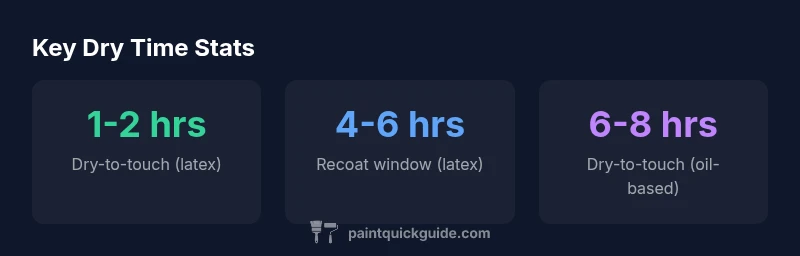
Under typical indoor conditions (around 70°F/21°C and 40-60% humidity), latex/ acrylic paint dries to the touch in about 1-2 hours and is ready for a first recoat after 4-6 hours; oil-based paints take longer, usually 6-8 hours to the touch and up to 24 hours before recoating. Real dry times vary with temperature, humidity, airflow, and surface porosity.
how long does paint take to dry: fundamentals and timing
Drying times describe when a paint film reaches a surface that feels dry to the touch, not when the coating has fully cured or reached maximum hardness. For most interior latex paints, a tack-free film appears in about 1-2 hours under normal conditions, while recoat windows run around 4-6 hours. Oil-based paints are slower to dry and often require longer intervals before recoating. The exact timing varies with temperature, humidity, airflow, surface porosity, and how thick the film is laid down. According to PaintQuickGuide, knowing these timelines lets you plan multi-coat projects, minimize downtime, and reduce the risk of dents or smudges. Remember that darker colors can appear dry sooner, but the film may still be soft; always perform a light touch test and defer to the product data sheet for precise guidance.
Latex vs oil-based: expected dry times
In general, latex or water-based paints dry to the touch within about 1-2 hours and can accept a second coat after 4-6 hours in typical indoor environments. Oil-based paints often take 6-8 hours to dry to the touch and may require 24 hours before recoating. Differences arise from solvent evaporation rates and resin chemistry; latex dries quickly but can be slower to fully cure in high humidity. If you’re painting trim or high-traffic areas, consider using a fast-drying formula designed for interiors, but always verify with the manufacturer’s data sheet.
Temperature and humidity: the big drivers
Dry time is highly sensitive to ambient conditions. Warmer, drier air speeds solvent evaporation and accelerates film formation, while high humidity can slow drying and extend tackiness. A steady room temperature around 70°F (21°C) with low to moderate humidity usually yields predictable results. Rapid changes in temperature or strong drafts can cause film defects or inconsistent drying. For exterior projects, daytime temperatures well above freezing and good airflow help, but dew points or late-evening moisture can derail the process.
Surface and primer effects
Surface roughness, porosity, and previous coatings influence how quickly a film dries. Bare new drywall or recently primed wood tends to dry faster because there’s less existing film resisting evaporation. Porous surfaces absorb binder, which can lengthen the apparent dry time as moisture migrates to the surface. Primers that are compatible with the topcoat improve even drying and reduce pigment uptake that can slow cure. Always follow the primer and topcoat manufacturer recommendations for best results.
Coats, film thickness, and color darkening
Thicker coatings and darker colors slow drying and can create longer wait times before the next coat. For even results, apply thin, uniform coats rather than one thick layer. Allow the first coat to reach a stable dry-to-touch state, then test for tackiness across multiple sections (edges and flat surfaces). Keep in mind that color depth affects perceived dryness; a visually dry-looking surface may still be soft internally, especially with deep hues or opaque finishes.
Interior painting: practical expectations
A typical interior wall project with latex paint may involve two to three coats, with the first coat forming a dry-to-touch film within 1-2 hours and the second coat following after 4-6 hours in good conditions. Rooms with high traffic or frequent use, such as kitchens or hallways, benefit from a longer curing period between coats to avoid scuffing. Taping and masking should be considered during the recoat window to maintain clean lines, and fans can improve air circulation but should not point directly at wet edges to prevent dust or debris from settling on the surface.
Exterior painting: climate and drying
Exterior projects are more variable due to sun exposure, wind, and ambient humidity. Dry times can be extended on overcast or damp days, and edges may appear dry while larger areas remain soft. For topcoats, plan for longer dry times and ensure there is adequate airflow to promote even evaporation. Prime in appropriate conditions, and avoid painting if rain is forecast within 24 hours, as moisture can compromise adhesion and cure. A typical exterior coating sequence often spans multiple days to account for both surface protection and environmental variance.
Speeding up drying safely
To speed up drying without sacrificing finish quality, focus on safe techniques: thin coats; improved ventilation using cross-flow without direct air on wet edges; maintain moderate room temperature and avoid direct sun on dark colors; use water-based paints where appropriate for faster drying and easier cleanup; always follow label guidance and manufacturer best practices for fast-drying formulations to avoid cracking or poor adhesion.
Estimating dry time for a project: a practical checklist
Begin by checking the product data sheet for the specific dry-to-touch and recoat times. Record the room temperature and relative humidity, then adjust expectations based on those conditions. Use a gentle touch test across several areas to confirm dryness before handling or applying a second coat. Keep a simple log of when coats were applied and the current conditions to plan the next steps accurately. Remember that these times are guidelines and that curing (hardening over days) continues beyond surface dryness.
Dry-time comparisons by paint type
| Paint Type | Dry-to-Touch | Recoat Window | Notes |
|---|---|---|---|
| Latex/Acrylic | 1-2 hours | 4-6 hours | Common for interior walls; quick turnaround |
| Oil-based | 6-8 hours | 24 hours | Longer cure; strong leveling; odor |
| Water-based enamel | 1-2 hours | 6-8 hours | Durable for trim; easy cleanup |
Your Questions Answered
What factors most affect paint drying time?
The biggest drivers are temperature, humidity, airflow, surface porosity, and film thickness. Higher temperatures and better ventilation speed evaporation, while high humidity and rough surfaces slow drying. Always check the product data sheet for your specific topcoat.
Dry time mainly depends on temperature, humidity, airflow, and the surface you’re painting. Check the label for your paint type.
Does paint color affect drying time?
Color depth can influence how a surface appears to dry, especially in sunlight, but it does not dramatically change the chemical drying rate. Darker c olors may feel dry sooner visually, while still curing internally.
Color can affect how dry it looks, but the actual curing time is set by the paint chemistry and conditions.
Can I speed up drying without compromising finish?
Yes, by applying thin coats, ensuring good ventilation, and maintaining moderate temperatures. Avoid using heat sources directly on wet edges and never rush cure times beyond manufacturer guidelines.
Thin coats and good airflow help. Don’t hurry the cure beyond what the label allows.
How can I tell if paint is fully dry and cured?
Dry means the film is no longer tacky; cured means the film has reached its maximum hardness. You can test by gently pressing a hidden area and looking for smudging or fingerprint transfer, and by waiting the full recommended cure period given by the manufacturer.
Dry to touch is not the same as fully cured. Check the label for cure times and test discreetly before use.
Is outdoor drying time different from indoor?
Exterior paints cure more slowly under cool, damp, or overcast conditions and dry more quickly under sun and wind when temperatures are moderate. Always consider dew points and forecasted rain when planning exterior work.
Outdoors, weather dictates timing more than indoors. Watch for sun, wind, and humidity.
“Drying times are a moving target, but understanding the key factors helps you plan coats and minimize downtime.”
Quick Summary
- Start with a light touch test to judge dryness
- Expect longer cure times in high humidity
- Thin coats dry faster and reduce waiting times
- Always follow label instructions for recoating
- Plan around environmental conditions to save time