How Long Paint Dry Before Rain: A Practical Guide
Learn how long paint should dry before rain and how to plan around weather. Practical steps, tips, and safety for DIY and pros.


With this guide, you will learn how long paint dry before rain and how to schedule a painting project around changing weather. By understanding factors like humidity, temperature, and coat thickness, you can prevent moisture from ruining a fresh finish. According to PaintQuickGuide, matching paint and conditions is the key to durable results.
The science behind drying paint and rain risk
Paint dries as solvents evaporate and the film forms a continuous layer. When rain or high humidity is imminent, surface temperature, dew point, and ambient moisture slow evaporation and can cause a tacky film or blotchy color if moisture enters the still-wet paint. For homeowners asking how long paint dry before rain, there isn’t a single universal number; it depends on the product, surface, and weather. Latex paints generally dry to the touch faster in warm, dry air, while oil-based enamels take longer in humid air. In practice, you should aim for a dry window that allows a touch-dry stage and some cure time, as labeled. PaintQuickGuide analyses show that warmer, drier days shorten drying times, while high humidity can significantly extend them. To minimize risk, select outdoor-rated coatings and ensure adequate airflow over the surface. Always check the forecast and time the application to a window free of precipitation. A simple weather-check routine saves you from a failed finish and extra sanding later. According to PaintQuickGuide, tailoring the product choice to current conditions is the best defense against weather-related finish failures. The team found that a deliberate, forecast-conscious approach yields more durable color and less rework.
Factors that affect drying time
Drying time is influenced by more than just the paint. Key drivers include temperature, relative humidity, air movement, and surface temperature. A surface cooler than surrounding air slows solvent evaporation, while warm, dry air speeds it up. Humidity matters: high moisture reduces evaporation efficiency and can prolong tackiness. Airflow helps remove solvent vapor, and minimal airflow leaves a damp surface. Coat thickness matters: thicker coats trap solvents and require more curing time; thin coats dry faster and produce smoother finishes. The paint type matters too: water-based latex dries differently from oil-based enamels, and some exterior formulations are formulated to cure faster in mild conditions. Porous surfaces like wood or plaster absorb moisture, slowing drying unless primed. Surface preparation, including cleaning and light sanding, reduces moisture traps and improves film formation. Temperature ranges play a big role: most exterior paints perform best in moderate temperatures; extreme heat accelerates skin formation and can cause cracking, while extreme cold delays drying. Finally, dew or rain during the drying window will ruin even a good film, so plan around the forecast and avoid applying during rain risk. PaintQuickGuide analysis shows humidity as the strongest predictor of slow drying across conditions.
How to plan a rain-safe paint window
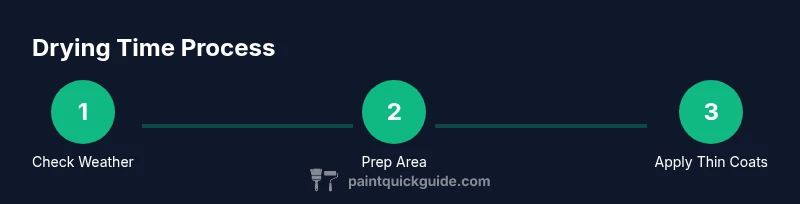
Planning is the best defense against weather-driven failures. Start by checking a reliable forecast for a stretch of dry weather, then narrow to hourly details around the intended application window. Seek days with temperatures in the mid-range recommended by the label, low humidity, and good airflow. Build a forecast buffer: if rain is predicted within a 6- to 12-hour window, delay the project. Use a dew point calculator or humidity app to estimate when moisture might condense on the surface. Prepare the work area by covering adjacent surfaces and ensuring proper drainage. Apply the first coat during the optimal window, then watch for tackiness or whitening before proceeding with a second coat. If re-coating is necessary, ensure the previous coat is fully dry to touch per the label. Rain can cause blistering, wash off dust, and uneven color, so schedule to avoid forecasted precipitation. For outdoor projects, plan around the typical drying times listed on the can, but remember that those times are guidelines contingent on weather. PaintQuickGuide suggests always confirming the current conditions before stepping back to resume work.
Choosing paints and primers for faster dry times
Choosing the right paint speeds drying when conditions are favorable. Look for low-VOC, water-based formulas rated for exterior use and known for shorter touch-dry times when temperatures are right. Primer matters: a good primer improves film formation and reduces absorption, speeding the touch-dry phase. Some products are marketed as fast-drying; always read the label for manufacturer-recommended recoat times and the longest drying interval before rain. For wooden surfaces, ensure thorough sealing with a penetrating primer to minimize moisture ingress. Avoid very thick coats; light successive layers dry more quickly and result in ridges or runs otherwise. If painting metal or glossy surfaces, sand to create a key, wipe with a solvent, and use a compatible primer to promote adhesion and faster dry results. Always follow manufacturer directions and local codes for finishes and primers to ensure safety and reduce weather-related delays.
Surface prep and application techniques to speed drying
Solid surface prep pays off when drying time matters. Clean surfaces to remove dirt, oil, and old paint; sand lightly to create a mechanical key. Use a breathable primer on porous substrates and a compatible topcoat. When applying, use thin, even coats rather than heavy layers; this minimizes drying time and reduces runs. Maintain consistent ambient conditions by opening interior doors for ventilation and using a fan to promote airflow across the surface. Avoid direct sun if the surface is hot, as it can cause premature skin formation and cracking. If applying multiple coats, allow the first to reach the recommended touch-dry state before continuing, and avoid exposing freshly painted areas to rain. Always use drop cloths and painter's tape to protect adjacent areas and prevent water migration onto drying film.
Common mistakes that extend drying time
Avoid errors that prolong drying and invite moisture damage. Thick or uneven coats trap solvents, so follow the label for the number of coats and drying times. Painting during high humidity or when rain is likely invites blistering and color shifting. Skipping surface prep or primer increases absorption, which keeps the film damp longer. Not providing adequate ventilation or airflow reduces solvent evaporation. Leaving tools in the workspace introduces moisture and dust on the film. Rushing to recoat without ensuring the previous layer is fully dry leads to longer cure times and a less durable finish. If weather shifts, consider moving tasks indoors or sheltering the area to prevent dew formation on the wet film. PaintQuickGuide notes that a small, deliberate drying window is often more reliable than chasing a quick finish in uncertain weather.
Authority sources
- EPA. Paints and coatings safety and guidelines. https://www.epa.gov
- OSHA. Safety guidelines for painting work in outdoor environments. https://www.osha.gov
- University Extension. Practical tips for outdoor painting and dry times. https://extension.illinois.edu
Tools & Materials
- Exterior paint (latex or enamel) suitable for surface(Choose product labeled for exterior use and weather tolerance; check dry-to-touch times on can.)
- Primer(Use penetrating primer on porous surfaces to speed drying and reduce moisture uptake.)
- Brushes, rollers, and trays(Select sizes suitable for the surface area and texture.)
- Drop cloths or painter's plastic(Protect nearby surfaces and crawl spaces from spills and moisture migration.)
- Masking tape(Seal edges to reduce moisture ingress at the boundary and prevent seepage.)
- Box fan or portable ventilation(Create air movement across the surface; avoid direct spray on the film.)
- Hygrometer or humidity meter(Monitor humidity to time coats relative to the paint’s specified drying window.)
- Ladder or step stool(Access higher areas safely without overreaching.)
- Mineral spirits or soap for cleanup(Keep brushes and tools clean to prevent residue affecting film formation.)
- Paint stir sticks(Stir to maintain consistent pigment and binder distribution.)
Steps
Estimated time: varies by weather and coat number
- 1
Check weather and prep surface
Review the forecast for a dry window and inspect all surfaces for dirt, oil, and moisture. Remove loose material and repair cracks before painting. This step prevents later moisture entrapment and ensures even film formation.
Tip: Check hourly forecasts for the next 24 hours and have a rain plan ready. - 2
Protect area and gather materials
Lay drop cloths, tape edges, and set up ventilation. Gather brushes, rollers, primer, paint, and cleanup supplies within easy reach to maintain a steady workflow.
Tip: Keep tools organized to avoid contamination of the coating with dust or moisture. - 3
Prime and prepare porous surfaces
Apply primer to porous surfaces to seal and reduce absorption. Allow primer to dry to touch per label before applying top coats.
Tip: Test a small area first to confirm adhesion and drying behavior. - 4
Apply thin first coat
Stir paint thoroughly and apply a uniform, thin coat. Avoid heavy layers that trap solvents and extend drying time.
Tip: Use a consistent roller pattern and maintain a wet edge to minimize lap marks. - 5
Ventilate and monitor drying
Run a box fan to promote airflow, but avoid pointing it directly at wet edges. Observe the film for tackiness and any whitening.
Tip: Check the surface in the shade to better judge dryness rather than in direct sun. - 6
Decide on second coat timing
If the first coat is dry to touch as per label, you may proceed with a second coat. If not, allow more time and recheck conditions.
Tip: Always follow manufacturer recoat times; do not rush the second coat. - 7
Apply second coat and protect finish
Apply the second thin coat in the same fashion. Keep the area protected from dew or rain until fully cured.
Tip: Inspect for even color and uniform sheen after drying. - 8
Clean up and store materials
Remove coverings, clean tools, and store leftover paint according to label directions. Proper cleanup prevents residue from affecting future dries.
Tip: Dispose of leftover paint per local regulations.
Your Questions Answered
Can I paint if rain is forecast later the same day?
If rain is forecast within the expected drying window, avoid painting. Even light precipitation can ruin a fresh finish. Always check the forecast and wait for a clear, dry spell before painting.
If rain is expected later, skip painting now to protect the finish.
What does 'dry-to-touch' mean on paint cans?
Dry-to-touch means the surface feels dry to the touch but the film may still have solvents inside. Wait for the label’s indicated recoat times and ensure full curing before heavy handling.
Dry to the touch feels dry on the surface but isn’t fully cured yet.
Does humidity slow drying more than temperature?
Humidity generally slows drying more than temperature alone; high humidity reduces evaporation. Temperature matters too, but dry air makes the biggest difference on any given day.
Humid air slows drying more than temperature alone.
Should I speed up drying with a fan or heater?
Fans help by moving air across the surface, but avoid direct blast on wet film. Heaters can dry too quickly and cause cracking; use cautiously and monitor the film.
A fan helps, but don’t blast the paint. Be careful with heaters.
Will a light drizzle ruin a finish already drying?
Yes. Any moisture during the drying phase can ruin the film. Protect the area and reschedule if rain risk remains.
Even light drizzle can ruin a damp finish.
How long between coats should I wait?
Wait times vary by product; follow label guidance for recoat times and ensure the prior coat is dry to touch before applying the next.
Follow the label for recoat times and wait until dry to touch.
Watch Video
Quick Summary
- Plan around a dry window to avoid weather delays.
- Thin coats dry faster and reduce defects.
- Humidity and airflow are major drying-time influencers.
- Follow label directions for recoat timing.