How Long Does Paint Dry on Walls? A Practical Guide
Learn realistic drying times for latex and oil-based paints on drywall, including temperature, humidity, and ventilation factors, plus tips to speed up or space coats.


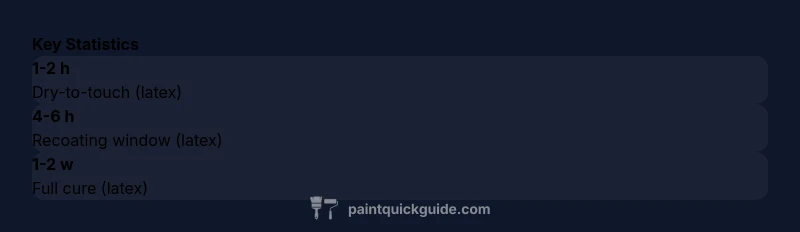
Latex (water-based) paint on drywall typically dries to the touch in about 1–2 hours, can be recoated after 4–6 hours, and reaches full cure in 1–2 weeks (humidity can extend this to 3–4 weeks). Oil-based paint dries to the touch in 6–8 hours, can be recoated after 24 hours, and may take 7–30 days to fully cure depending on ventilation and temperature.
What affects how long paint dry wall times differ
Understanding how long paint dry wall times differ helps homeowners plan a project. The overall drying timeline is a function of paint chemistry (latex vs oil-based), substrate porosity, and surface preparation. Drying also depends on how thick you apply the coating, known as wet film thickness, which governs how long moisture stays in the film. Environmental conditions—temperature, humidity, and air movement—play major roles as well. If you’re comparing two rooms or two coats, you’ll notice visible differences even with the same product. These variables help explain why the exact date you can safely proceed may shift from one room to the next, and why the phrase how long paint dry wall times vary is common in practice.
Latex (water-based) interior wall paint drying times
Most homeowners choose latex for its low odor and easy cleanup. Under typical indoor conditions—roughly 65–75°F (18–24°C) and 40–60% relative humidity—latex dries to the touch in about 1–2 hours. A good rule of thumb is to wait 4–6 hours before applying a second coat for most latex formulas. In drier or cooler environments, you may approach the lower end of this window; in heat and humidity, the window can stretch toward 6–8 hours before recoat. Full cure generally occurs in 1–2 weeks, though high humidity or persistent dampness can push cure times longer, sometimes up to 3–4 weeks. Thin, even coats dry faster than thick ones, so planning multiple light coats pays off over a single heavy coat.
Oil-based interior wall paint drying times
Oil-based paints take longer to dry and cure but offer superior leveling and a harder film. In well-ventilated spaces at moderate temperatures, these paints typically dry to the touch in 6–8 hours. A standard recoating window is around 24 hours, though some formulations may tolerate longer gaps if temperatures are cooler. Full cure for oil-based paints can range from 7–30 days, with higher humidity or poor ventilation extending this period. Because oil-based products release stronger solvents, ensure you have proper ventilation and avoid stacking coats without proper drying.
Environmental and application factors that influence drying
Temperature, humidity, and air movement are the primary external drivers of drying time. Warmer room temperatures generally accelerate evaporation, while high humidity slows it. Good airflow helps remove moisture from the surface; ceiling fans or box fans oriented to circulate air across walls can shorten dry times, but avoid direct blasts that can cause dust or debris to settle on the wet finish. Surface temperature should stay above the product’s minimum cure temperature, and avoid painting in direct sunlight or near heat-dissipating equipment that can prematurely dry the surface and cause cracking.
How to speed up drying safely
If you’re pressed for time, thin coats are your friend. Apply multiple light coats rather than one thick coat to reduce drying time and minimize sags. Increase airflow with a fan set on a moderate speed and keep doors and windows slightly ajar for ventilation, but avoid drafts that blow dust onto wet paint. Use a dehumidifier in humid spaces to lower moisture in the air, which speeds up drying. Maintain stable temperatures within the paint’s recommended range and avoid using heaters or space heaters too close to fresh paint.
Testing dryness and readiness to recoat
To test dryness, start with a light touch test on an inconspicuous area; if the surface feels tacky, give it more time. For latex paints, a light pressure should not leave a fingerprint after the recommended drying window. For a more reliable check, perform a gloss test with the edge of your fingernail or a clean coin on an inconspicuous spot; shininess should return if the layer is fully cured. Remember, “dry” is not the same as “cured”—full cure can take substantially longer, especially in humid environments.
Planning a painting schedule around dry times
Plan your project with multiple thin coats across days rather than a single heavy coat. Allocate drying time between coats, factoring in ventilation and room usage. If you must finish in a single weekend, choose a latex system in a room with high air exchange and stabilized humidity to maximize the chance of successful recoat times.
Common mistakes that extend drying times and how to avoid them
Avoid applying thick coats; they trap moisture and slow drying significantly. Do not close off the space entirely—lack of airflow equals slower drying. Painting in very cold or very humid conditions can dramatically extend drying times and lead to poor adhesion. Always prepare the wall correctly and use primers when needed to promote consistent drying and curing.
Drying and curing times by paint type
| Paint Type | Dry-to-Touch | Recoating Window | Full Cure |
|---|---|---|---|
| Latex interior | 1-2 hours | 4-6 hours | 1-2 weeks |
| Oil-based interior | 6-8 hours | 24 hours | 7-30 days |
Your Questions Answered
How long does latex paint take to dry on drywall?
Latex paint on drywall typically dries to the touch in 1–2 hours under standard indoor conditions. A second coat can usually be applied after 4–6 hours, and full cure generally completes in 1–2 weeks, though humidity can extend this to several weeks.
Latex paint usually dries to the touch in 1–2 hours. You can recoat after 4–6 hours; full cure takes about 1–2 weeks, longer if humidity is high.
Does room temperature affect drying times?
Yes. Warmer, stable temperatures speed up evaporation and drying, while cold or highly humid conditions slow it down. Aim for the paint’s recommended range to optimize dry-to-touch and recoat times.
Temperature matters. Warmer, stable temps speed up drying; cold or humid air slows it down.
Can I speed up drying by using fans?
Yes, use moderate airflow to move moisture away from the surface. Avoid direct blasts that could cause dust to settle on wet paint. Combine with controlled humidity for best results.
Fans help, just don’t blast the wall. Keep humidity in check and air moving.
Is it safe to recoat latex paint after 2 hours?
Two hours is typically too short for most latex paints; plan for 4–6 hours between coats under normal conditions. Check the product label for exact guidance on your formula.
Usually not; most latex paints need about 4–6 hours between coats.
What should I do if walls feel tacky after hours?
If the surface is still tacky, give it more time to dry in a well-ventilated area and avoid touching. Check humidity and temperature, and ensure coats are thin and even.
If tacky, don’t rush. Increase ventilation and wait longer before trying to recoat.
How long does oil-based paint take to dry on drywall?
Oil-based paints generally dry to the touch in 6–8 hours and require about 24 hours before a second coat. Full cure can range from 7–30 days depending on ventilation and temperature.
Oil-based paints dry to touch in 6–8 hours; plan for 24 hours before recoating.
Do environmental conditions affect full cure more than drying?
Yes. Drying refers to the surface becoming non-tacky, while full cure is a chemical process that continues for days to weeks. Humidity and temperature can significantly prolong cure time even if the surface feels dry.
Environment can stretch cure time beyond when the surface stops feeling tacky.
“Drying time is influenced as much by the environment as by the paint formula. Always follow label guidance and allow extra time in humid spaces.”
Quick Summary
- Plan for multiple thin coats, not one thick coat
- Humidity and temperature strongly influence drying times
- Ventilation speeds drying; use fans and dehumidifiers as needed
- Differentiate between drying to touch and full cure
- Always check product label for specific guidance