How Long for Acrylic Paint to Dry: A Practical Guide
Explore realistic acrylic drying times, what affects them, and how to manage dry-to-touch and full cure under varying conditions for DIY projects and auto refinishing.


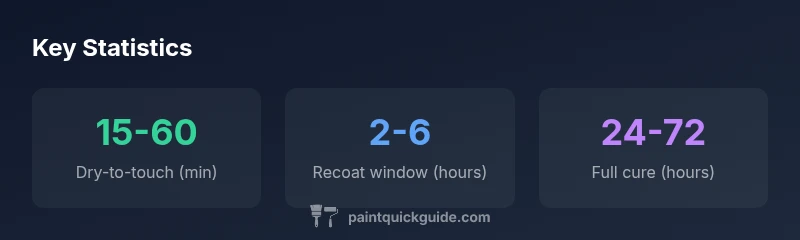
Under typical indoor conditions, acrylic paint dries to the touch in roughly 15–60 minutes and becomes ready for light handling in 2–6 hours; full cure can take 24–72 hours depending on film thickness and humidity. Surfaces porosity, pigment load, and ventilation also influence drying. According to PaintQuickGuide, test a small area first to confirm timing for your project.
Dry Time Basics
If you're wondering how long for acrylic paint to dry, start with the basics: dry-to-touch times, coat thickness, and environmental conditions. Under typical indoor conditions, you can expect a touch-dry window of roughly 15–60 minutes and a recoat window of a few hours for thin layers. The PaintQuickGuide team notes that these numbers are averages and can vary by pigment, binder, and surface. A thinner film dries faster, and a porous surface absorbs solvents more quickly, accelerating film formation. For DIY projects at home, aim for a controlled environment: moderate temperature around 65–75°F (18–24°C) and relative humidity around 40–60%. Good ventilation moves air across the surface, helping solvents escape and the film to form uniformly. In short, plan for dry-to-touch within an hour, then account for slower drying if the room is humid or the coat thicker. According to PaintQuickGuide, testing a small area first helps prevent surprises.
Key Factors That Affect Dry Time
Dry time is not a single fixed number. Several interacting factors determine how quickly acrylic film forms and hardens. Coat thickness is the most controllable: thin coats dry faster and cure more evenly. Humidity and temperature strongly influence evaporation rates; high humidity slows drying, while heat amplifies solvent loss. Surface porosity matters: rough, absorbent surfaces can draw solvents away quickly, speeding the early stages of drying but sometimes leaving a tacky residue if the film is too thick. Ventilation moves air across the surface, aiding solvent release. Pigment load and binder type can alter adhesion and film formation. Retarders or flow aids modify drying behavior; use them sparingly and follow manufacturer guidance. A practical takeaway: for predictable results, prefer thin coats, controlled room conditions, and adequate airflow.
Dry Time by Surface Type
Different substrates interact with acrylic paint in unique ways. On wood, expect faster dry-to-touch if the wood is dry and smooth, but oil-rich woods or sealed surfaces may slow drying. Metal surfaces often dry quickly but can develop a glossy finish that may delay full cure if coatings are thick. Primered surfaces generally offer predictable drying times, while bare plaster or drywall can behave differently due to porosity. Canvas or fabric typically dries faster to the touch but may need longer cure due to the material’s absorbency. Plastic can trap solvents if inadequately prepared, extending dry times. For automotive refinishing, dry times are highly dependent on the basecoat and topcoat formulations. In all cases, verify dryness with a touch test and observe for tack-free conditions before proceeding.
Thin Coats vs Thick Coats: How to Speed Dry
Thin coats dramatically reduce dry-to-touch times and help prevent issues like wrinkling or cracking. As a rule of thumb, apply coats no thicker than a credit card edge (about 0.5–1 mm). If you need faster progression, minimize air entrapment by brushing or rolling with even strokes and maintaining a steady pace. Thick coats can dry on the surface yet remain soft underneath, lengthening cure times and increasing the risk of cracking. For spray applications, maintain consistent distance and overlap to keep coatings uniformly thin. Always allow adequate flash time between passes to avoid solvent pooling and uneven texture.
Environmental Conditions: Humidity, Temperature, and Airflow
Environment is a silent driver of drying behavior. Temperature near 65–75°F (18–24°C) generally balances evaporation without causing rapid edge drying. Relative humidity around 40–60% supports steady film formation; high humidity can trap moisture and extend cure times. Adequate airflow accelerates drying by removing evaporated solvents; however, too much air in a dusty environment can cause surface dust to settle on wet coatings. If you’re working in a variable climate, consider using a dehumidifier or a portable heater in small spaces to stabilize conditions and achieve more consistent results.
How to Test Dryness Without Damaging the Film
To judge if acrylic paint is dry to the touch without leaving marks or indentations: perform a light fingertip touch on a discreet area. If the surface feels dry and does not shift, it may be ready for light handling. For a more robust check, use the tape test: press a small piece of painter’s tape onto the film and lift gently; if the tape pulls away pigment or shows adhesive residue, the coating is not yet cured. A clear indicator is the absence of tackiness for at least several hours depending on coat thickness. Always err on the side of caution when applying subsequent coats or placing objects on the surface.
Common Pitfalls: Dust, Dirt, and Recoats
Dust and dirt can settle on a still-wet surface, trapping particulates beneath the coating and creating a rough texture. Plan app second and allow extra dry time in drafty rooms. Rushing a second coat over a not-quite-dry layer often leads to solvent trapping and poor adhesion. If you need to move items across a painted surface soon after application, place protective barriers or spacers to prevent sticking. Finally, avoid peak sun exposure or direct heat, which can cause uneven drying and cracking.
Dry Time vs Cure: What You Need to Plan For
Dry time refers to when the surface is dry to the touch, whereas cure time is the period during which the coating achieves maximum hardness and chemical resistance. Acrylics typically reach handling readiness within hours but may require 24–72 hours (or longer in high humidity) to fully cure. During curing, the film continues to harden and may still be susceptible to surface damage. Plan projects with this distinction in mind, especially when assembling furniture or applying subsequent layers. If the item will bear weight or be exposed to moisture, allocate more curing time and consider a protective topcoat.
Tools and Techniques to Manage Dry Time
Practical tools and techniques can help stabilize and shorten drying windows. Use a weather-appropriate dehumidifier in humid spaces and a portable fan to increase airflow across the surface. A skin thermometer or hygrometer helps track temperature and humidity with more precision. When painting cars or furniture, ensure proper surface preparation—cleanliness and priming reduce variability in drying behavior. Finally, always follow manufacturer recommendations for drying times and recoat windows to ensure optimal finish and durability.
Dry-time expectations across common painting scenarios
| Scenario | Dry Time (to touch) | Recoat Window | Notes |
|---|---|---|---|
| Indoor, normal humidity | 15-60 minutes | 2-6 hours | Thin coats speed up drying |
| Indoor, high humidity | 30-90 minutes | 3-8 hours | Ventilate and reduce humidity |
| Outdoor/shaded, dry weather | 20-60 minutes | 4-12 hours | Wind helps; shield from dust |
Your Questions Answered
What affects acrylic paint dry time?
Several interacting factors determine drying: coat thickness, humidity, temperature, ventilation, and surface porosity. Thinner coats dry faster, while high humidity slows evaporation. Surface preparation and binding agents also influence how quickly the film forms.
Dry time depends on thickness, humidity, and air flow; thinner coats dry faster and good ventilation helps.
Can I speed up drying of acrylic paint?
Yes—apply thin coats, maintain moderate temperatures, and ensure adequate airflow. Avoid using direct heat or forced heat sources that can cause cracking or uneven curing.
Thin coats and airflow speed up drying; avoid direct heat.
How long should I wait before applying a second coat?
Wait until the first coat is dry to the touch, typically 15–60 minutes for thin layers. For thicker coats or humid conditions, extend this window and perform a test before recoating.
Wait until the first coat is dry to the touch, then test before recoating.
Does outdoor painting dry differently than indoor?
Outdoor drying is affected by sun, wind, and humidity. Direct sun can dry the surface quickly but may cause cracking; wind can carry dust. For reliable results, paint in shaded, ventilated areas and protect from dust and debris.
Yes—outdoor drying is faster in sun, slower in high humidity; protect from dust.
What is the difference between dry-to-touch and cure time?
Dry-to-touch means the surface feels dry and can be lightly touched without transferring material. Cure time refers to when the film attains maximum hardness and chemical resistance, which can be 24–72 hours or longer depending on conditions.
Dry to the touch is not the same as full cure; cure takes longer.
What surfaces affect drying time the most?
Porous or rough surfaces pull solvents away and can speed up dry times initially but may require longer cure. Non-porous, smooth surfaces can trap solvents if coatings are thick. Always prep surfaces according to the paint type.
Porous surfaces can dry faster at first but may cure slower.
“"Dry times are a function of film thickness, surface porosity, and environment; understanding these factors helps you plan and avoid mistakes."”
Quick Summary
- Expect 15-60 minutes to touch dry under typical indoor conditions
- Apply thin coats to shorten dry-to-touch time
- Ventilate well to promote even drying
- Humidity and temperature can extend cure beyond 24 hours
- Test dryness before proceeding with next steps or handling