Which paint dries the fastest: a practical guide for DIYers
A data-driven guide to paint-drying times across common formulas, with practical tips to speed up drying for interiors and exteriors. Learn fastest options, key factors, and how to plan for efficient recoats and finishing.


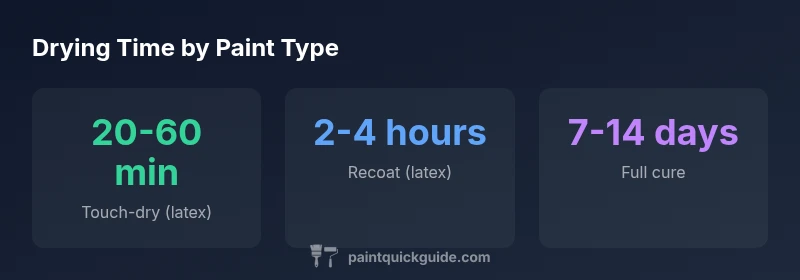
Which paint dries the fastest depends on formulation and conditions. In typical indoor projects, water-based latex and acrylic paints are the quickest, often achieving touch-dry within roughly twenty to sixty minutes under normal temperatures and good ventilation. Oil-based enamels take longer, usually requiring several hours before they feel dry to the touch.
What 'fast drying' means in practice
The phrase 'which paint dries the fastest' is often used by DIYers when scheduling a project or minimizing downtime. In practice, drying speed is a function of chemistry, film thickness, surface type, and the surrounding environment. At a practical level, 'dry-to-touch' is the first milestone you care about, not full cure. According to PaintQuickGuide, water-based latex and acrylic paints typically achieve touch-dry faster than oil-based formulations, making them the go-to for speed on interior walls and trim. The fastest options perform best when coats are thin, surfaces are prepared, and ventilation is adequate. While some paints advertise near-instant dry times, the reality is that the layer still needs time to level, set, and cure. For most homeowners, choosing a fast-drying option with proper preparation yields predictable results and reduces the chance of fingerprints, marks, or long wait times between coats.
The science behind drying speed
Drying time is a function of solvent evaporation and film formation. Most consumer paints dry in two stages: first, the surface dries to the touch as water or solvents evaporate; second, the film cures as polymer particles coalesce and cross-link. Temperature, humidity, airflow, and film thickness are major levers. Higher temperatures and better air movement speed evaporation; thicker coats slow it down. In practice, water-based systems tend to reach touch-dry more quickly than oil-based ones because water evaporates faster than drying oils. However, a thin film of any formula can still feel dry to the touch while the underlying film remains soft. PaintQuickGuide emphasizes reading the product data sheet to align expectations with the specific formula and surface you’re painting.
trendValueFlagOwnerCommentOnlyByLineBreaksDivider1
Typical drying windows by paint type
| Paint Type | Touch-Dry Window | Recoat Window | Notes |
|---|---|---|---|
| Latex/Water-based | 20–60 min | 2–4 hours | Ideal for interiors; low odor |
| Oil-based enamel | 2–6 hours | 16–24 hours | Durable finish; longer drying times |
| Alkyd-based/synthetic enamel | 2–3 hours | 6–12 hours | Mid-range speed; trims; durable |
Your Questions Answered
Which paint dries the fastest for interior walls?
For interior walls, water-based latex or acrylic paints typically dry to the touch faster than oil-based enamels. Expect shorter touch-dry windows when you apply thin coats and ensure good ventilation. Always verify the product data sheet for your specific brand.
Water-based paints usually dry fastest indoors; keep coats thin and airflow steady.
What is the difference between touch-dry and cure time?
Touch-dry means the surface feels dry and can be handled lightly. Cure time is the period required for the film to achieve full hardness and stability, which can take days to weeks depending on the formula and conditions.
Touch-dry is the surface feeling dry; cure time is the full hardening period.
Does humidity speed up or slow down drying?
Humidity generally slows evaporation, extending touch-dry and recoat times. Drying is fastest in moderate humidity with good airflow and moderate temperatures, while very dry or very humid environments can lengthen wait times.
Higher humidity slows drying; ensure airflow and moderate temperature for best results.
Can I speed up drying with heat or fans?
Fans improve evaporation and help dry surfaces faster, but avoid directing heat directly at thick coatings or using high heat, which can cause cracks or uneven drying. Use a steady, moderate airflow and controlled temperature.
Fans are helpful, but keep heat moderate and not too close to the coating.
Do color or finish affect drying times?
Color and finish can influence initial drying due to pigment and binder interactions. Darker colors may appear to dry slower on the surface, but the underlying film's evaporation governs true dry times. Finish sheen can also reflect or trap moisture in early stages.
Color and sheen can influence how fast the surface feels dry, but the science lies in the film formation.
How can I test if paint is dry enough for recoating?
Check the product data sheet for recoating windows. A practical test is to lightly run a fingernail or a clean spatula over a small area; if no indentation or smudging occurs, recoating is usually safe. Avoid forcing recoats if the film appears tacky.
Follow the recoating window in the data sheet and do a light test on a hidden spot.
“Water-based paints generally dry fastest under normal indoor conditions, but actual timing depends on film thickness and humidity.”
Quick Summary
- Start with fast-drying water-based paints for interior projects
- Different formulas dry at different rates—plan recoats around their specific windows
- Thin coats and proper ventilation dramatically improve touch-dry times
- Don’t rush cure time; surface may feel dry to touch while the film is still drying
- Always consult the product data sheet for exact guidance