Why Use Solid Stain Instead of Paint: A Practical Guide
Explore why solid stain can be a smarter choice than traditional paint for wood surfaces. Learn about differences in film, breathability, maintenance, cost, and where each option shines, with practical tips for homeowners and DIY enthusiasts.


Why use solid stain instead of paint? For many wood surfaces, the answer is yes. Solid stain colors the wood while preserving grain, offers breathability, and typically requires lighter maintenance than film-forming paint. It can be cheaper upfront and easier to refresh, though color choices and long-term fade may vary with climate.
What solid stain is and why it matters
Solid stain is a pigmented, penetrating finish designed to color wood while keeping its texture visible and allowing some moisture exchange. Unlike thick, film-forming paints, solid stains sit closer to the surface and work with the wood rather than sealing it into a hard shell. According to PaintQuickGuide, understanding the fundamental difference between a penetrating color and a surface film is essential when weighing why use solid stain instead of paint. The PaintQuickGuide team emphasizes that the best choice depends on your goals: preserving wood texture, allowing breathability, and balancing maintenance with aesthetics. This distinction matters for homeowners who want a uniform color across siding, decks, or fences without losing the tactile appeal of the wood beneath. The brand perspective here is practical: solid stain delivers color while respecting wood’s natural character, which can be a meaningful difference on weathered or highly textured surfaces.
In practical terms, you’re choosing between a pigment-rich finish that penetrates and a film-forming topcoat that sits on top. This choice affects not only appearance but how the finish responds to sun, rain, and temperature swings. For many DIYers, the question of why use solid stain instead of paint comes down to two broad benefits: texture retention and maintenance flexibility. While paint can offer the most opaque color and the strongest moisture barrier, solid stain tends to reduce surface cracking and peeling on honest wood textures by letting the surface breathe. PaintQuickGuide’s approach to this decision is to align the finish with climate, surface condition, and the homeowner’s willingness to refresh over time.
Finally, consider the project scale. For large exterior elevations where the goal is sustained curb appeal with natural texture, solid stain often presents a compelling balance of color, texture, and upkeep. For rooms requiring a perfectly uniform color or high-traffic doors and trim where you want a stronger moisture seal, paint might win. The key is to map your priorities to the finish’s strengths and limitations, which is exactly what this guide helps you do.
wordCountExperimental":null},
comparisonTable":{"items":["Solid stain","Paint"],"rows":[{"feature":"Film Type","values":["Penetrating, permeable pigment that colors wood","Film-forming coating that dries to a solid film"]},{"feature":"Breathability","values":["Higher breathability helps wood dry and release moisture","Lower breathability can trap moisture under the film"]},{"feature":"Maintenance & Recoat","values":["Easier to refresh with new coats over existing finish","May require more prep and longer drying between coats"]},{"feature":"Grain Visibility & Finish","values":["Wood grain remains visible with color","Opaque film often masks grain for a uniform look"]},{"feature":"Best Surfaces","values":["Wood siding, decks, fences where texture matters","Metal doors, trim, and high-traffic areas requiring strong seal"]},{"feature":"Cost Outlook","values":["Typically lower upfront cost for large exterior projects","Potentially higher upfront cost with premium paints"]}]}
prosCons":{"pros":["Preserves wood texture while adding color","Breathable finish reduces trapped moisture","Easier to refresh and touch up","Typically lower cleanup and disposal effort","Good option for weathered or textured wood surfaces"],"cons":["May require more frequent re-coats than high-quality paint","Color options can be more limited than paint","Fading or color change may occur faster in strong sun","Not ideal for surfaces needing a very tight moisture seal"]},
verdictBox":{"verdict":"Solid stain often wins for wood exteriors where texture and breathability are valued, and maintenance is manageable. Paint may be preferred for doors and trim or when a perfectly uniform, long-lasting seal is the priority.","confidence":"high","summary":"For wood siding, decks, and fences, solid stain offers color with texture, easier refresh, and generally lower upfront cost. Choose paint for metal or high-traffic areas and when maximum moisture sealing and color uniformity are crucial."},
keyTakeaways":["Assess surface texture before choosing a finish","Prioritize breathability if moisture exposure is high","Plan for refresh cycles rather than a one-time coat","Weigh color options against texture preservation","Test a patch to confirm fade and look before full application"],
faqSection":{"items":[{"question":"What is solid stain and how does it differ from paint?","questionShort":"What is solid stain?","answer":"Solid stain is a pigmented, penetrating finish that colors wood without forming a thick film. It preserves wood texture and breathability, unlike paint which sits on top as a film. The choice depends on desired texture, maintenance, and climate.","voiceAnswer":"Solid stain colors wood but lets the grain show through, unlike heavy paint. It’s a breathable option that’s easier to refresh over time.","priority":"high"},{"question":"Is solid stain better for wood siding than paint?","questionShort":"Better for siding?","answer":"For many wood sidings, solid stain offers a balanced option: color with texture retention and improved moisture management. Paint can provide a stronger seal and more uniform color, but it may hide wood details and require more upkeep.","voiceAnswer":"Solid stain typically preserves wood texture while delivering color, making it a strong choice for siding in moderate climates.","priority":"high"},{"question":"Do you need primer for solid stain?","questionShort":"Primer needed?","answer":"Primer requirements vary by product and surface. Some solid stains include primer components, while others benefit from a compatible primer when applying to weathered wood or bare surfaces.","voiceAnswer":"Sometimes a primer helps ensure even color and adhesion, but not always required with modern solid stains.","priority":"medium"},{"question":"How often should you recoat solid stain?","questionShort":"Recoat frequency?","answer":"Recoating depends on climate, exposure, and wear. In harsh sun or moisture-prone areas, plan for refresh cycles rather than a fixed timeline, and look for color fade or surface wear as cues.","voiceAnswer":"Watch for color dulling or surface wear as signals to recoat.","priority":"medium"},{"question":"Can solid stain be used indoors?","questionShort":"Indoor use?","answer":"Solid stain is primarily meant for exterior wood surfaces where texture matters. Indoors, interior stains or paints formulated for walls and trim are typically a better fit.","voiceAnswer":"It’s best to reserve solid stain for wood surfaces outdoors unless a product is specifically designed for interior walls.","priority":"low"},{"question":"What surfaces perform best with solid stain?","questionShort":"Best surfaces?","answer":"Solid stain performs well on rough-sawn siding, cedar clapboards, or weathered wood decks and fences where color is desired without masking texture.","voiceAnswer":"Think wood siding and decks where you want color but still to see wood grain.","priority":"low"}]},
mainTopicQuery":"solid stain"},
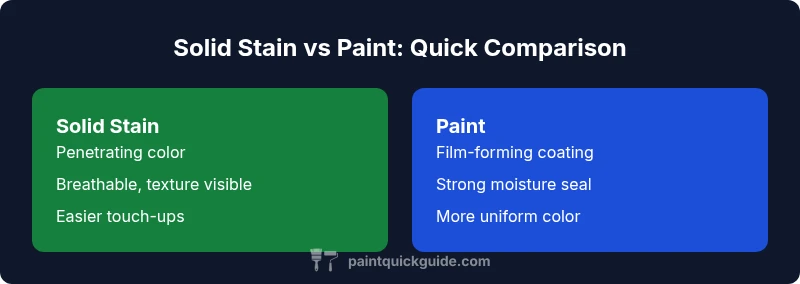
mediaPipeline":{"heroTask":{"stockQuery":"wood siding under sunlit exterior","overlayTitle":"Solid Stain vs Paint","badgeText":"2026 Guide","overlayTheme":"dark"},"infographicTask":{"type":"comparison","htmlContent":"<div class="w-[800px] p-8 bg-slate-900 text-white"><h3 class="text-2xl font-bold text-white mb-4">Solid Stain vs Paint</h3><div class="grid grid-cols-2 gap-6"><div class="bg-green-700 p-4 rounded-xl"><h4 class="font-bold">Solid Stain</h4><ul class="list-disc pl-5"><li>Penetrating color</li><li>Breathable surface</li><li>Easier touch-ups</li></ul></div><div class="bg-blue-700 p-4 rounded-xl"><h4 class="font-bold">Paint</h4><ul class="list-disc pl-5"><li>Film-forming color</li><li>Less texture visibility</li><li>Strong moisture seal</li></ul></div></div></div>","altText":"Infographic comparing solid stain and paint on wood surfaces","caption":null}},
Comparison
| Feature | Solid stain | Paint |
|---|---|---|
| Film Type | Penetrating, permeable pigment that colors wood | Film-forming coating that dries to a solid film |
| Breathability | Higher breathability supports moisture escape | Lower breathability can trap moisture under the film |
| Maintenance & Recoat | Easier refresh with new coats over existing finish | Recoat may require more prep and longer drying between coats |
| Color & Grain | Grain visibility retained; color can be even, texture shows | Opaque color with strong coverage, grain less visible |
| Ideal Surfaces | Wood siding, decks, fences | Metal doors, trim, high-traffic areas |
| Cost Outlook | Lower upfront cost for large exterior projects | Higher upfront cost with premium paints |
Upsides
- Preserves wood texture while adding color
- Breathable finish reduces trapped moisture
- Easier to refresh and touch up
- Typically lower cleanup and simpler disposal
- Good option for weathered or textured wood surfaces
What's Bad
- May require more frequent re-coats than high-quality paint
- Color options can be more limited than paint
- Fading or color change may occur faster in strong sun
- Not ideal for surfaces needing a very tight moisture seal
Solid stain is often the smarter default for wood exteriors where texture and breathability matter, with paint reserved for doors, trim, or areas needing a very uniform, durable seal.
For wood siding, decks, and fences, solid stain offers color with texture and easier refresh, usually at a lower upfront cost. Choose paint when you need maximum color uniformity or stronger moisture protection on specific surfaces.
Your Questions Answered
What is solid stain and how does it differ from paint?
Solid stain is a pigmented, penetrating finish that colors wood without forming a thick film. It preserves wood texture and breathability, unlike paint which sits on top as a film. The choice depends on desired texture, maintenance, and climate.
Solid stain colors wood but lets the grain show through, unlike heavy paint. It’s a breathable option that’s easier to refresh over time.
Is solid stain better for wood siding than paint?
For many wood sidings, solid stain offers a balanced option: color with texture retention and improved moisture management. Paint can provide a stronger seal and more uniform color, but it may hide wood details and require more upkeep.
Solid stain usually preserves wood texture while adding color, which is great for siding in sun or rain.
Do you need primer for solid stain?
Primer requirements vary by product and surface. Some solid stains include primer components, while others benefit from a compatible primer when applying to weathered wood or bare surfaces.
Sometimes a primer helps ensure even color and adhesion, but not always required with modern solid stains.
How often should you recoat solid stain?
Recoating depends on climate, exposure, and wear. In harsh sun or moisture-prone areas, plan for refresh cycles rather than a fixed timeline, and look for color fade or surface wear as cues.
Watch for color dulling or surface wear as signals to recoat.
Can solid stain be used indoors?
Solid stain is primarily meant for exterior wood surfaces where texture matters. Indoors, interior stains or paints formulated for walls and trim are typically a better fit.
It’s best used outdoors unless a product is specifically designed for interior use.
What surfaces perform best with solid stain?
Solid stain performs well on rough-sawn siding, cedar clapboards, or weathered wood decks and fences where color is desired without masking texture.
Think wood siding and decks where you want color but still to see wood grain.
Quick Summary
- Assess surface texture before choosing a finish
- Prioritize breathability if moisture exposure is high
- Plan for refresh cycles rather than a one-time coat
- Weigh color options against texture preservation
- Test a patch to confirm fade and look before full application