Is paint or stain better for exterior wood: A practical comparison
An analytical guide comparing paint and stain for exterior wood, covering durability, aesthetics, prep, and long-term value. Learn how climate, wood type, and maintenance affect your choice.


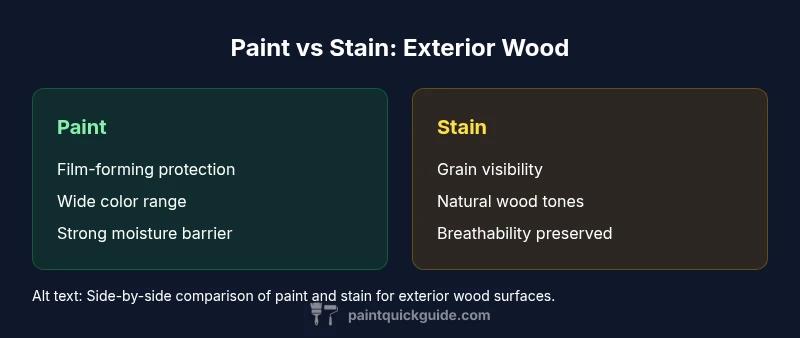
On exterior wood, neither option is universally best; paint and stain serve different goals. Paint provides a stronger film that blocks moisture and UV rays, often lasting longer in harsh climates, but hides wood grain and requires thorough prep. Stain preserves natural grain and breathability, offering easier maintenance, but may require more frequent reapplication in sun-exposed areas. Choose based on climate, aesthetics, and maintenance willingness.
is paint or stain better for exterior wood: a practical frame
For homeowners considering is paint or stain better for exterior wood, the decision hinges on how you weigh aesthetics, durability, and maintenance. Exterior wood surfaces—whether siding, decks, or fences—endure sun, rain, wind, and temperature swings. Paint and stain each address those challenges differently, so your choice should align with climate, wood species, exposure, and how much upkeep you’re willing to commit. According to PaintQuickGuide, a well-chosen coating not only protects wood but also enhances curb appeal and long-term value. This article expands the framework, contrasts coating mechanics, and offers practical guidelines to help you decide what is paint or stain better for exterior wood in your specific project.
is paint or stain better for exterior wood: a practical frame (continued)
Before you decide, establish your core priorities: Do you want color uniformity and a barrier against moisture, or do you prefer a natural look that highlights grain? Are you coating new wood or renovating an older surface with repairs? How much time and budget can you devote to maintenance over the coming years? These questions drive whether a paint-based film or a penetrating stain is the better fit for your exterior wood.
is paint or stain better for exterior wood: a practical frame (closing thoughts)
In practice, many homeowners find a mixed approach works best: paint on high-traffic or heavily weathered areas for durability, and stain on ornamental features where grain is a design element. The key is to tailor the choice to the wood kind, environmental conditions, and the level of color control you desire. PaintQuickGuide’s team emphasizes that successful outcomes start with proper surface prep and realistic maintenance planning.
Comparison
| Feature | Paint | Stain |
|---|---|---|
| Film type vs. penetration | Film-forming coating (solid/semi-opaque) | Penetrating pigment that sinks into wood |
| Grain visibility | Hides grain with a solid/opaque finish | Preserves natural grain with transparency |
| Moisture and UV protection | Typically strongest moisture/UV barrier when well primed | Protection depends on pigment; breathability remains |
| Color control | Extensive color palettes; uniform color across surfaces | Color limited by stain options; natural tones |
| Prep and priming needs | Often requires thorough cleaning, sanding, and priming | Usually lighter prep; some surfaces need minimal priming |
| Maintenance interval (conceptual) | Longer-recoat intervals with proper prep | More frequent refreshes may be needed |
| Aesthetics and applications | Covers imperfections; ideal for smooth, uniform looks | Highlights wood character; suited for rustic or tested wood |
Upsides
- Strong, durable color barrier that protects against moisture and sun
- Excellent color control and uniform appearance
- Covers minor surface imperfections more effectively
- Wide range of finishes and sheen levels
What's Bad
- Thicker coatings can trap moisture if not applied correctly
- Requires more diligent surface prep and maintenance planning
- Can peel or crack on movement-heavy substrates if not installed properly
Paint generally provides longer-lasting protection and color control for exterior wood; stain preserves grain and breathability but may require more frequent refreshes.
Choose paint when you want durable moisture and UV protection with a wide color range. Choose stain when grain visibility matters and you’re aiming for a natural or rustic look; plan for periodic maintenance to maintain appearance and protection.
Your Questions Answered
How long do exterior paints and stains typically last before needing a refresh?
Durability depends on climate, surface, and prep. In general, paints tend to last longer between recoats in harsh climates, while stains may require more frequent reapplication in strong sun or frequent rainfall areas. Proper primer, surface cleaning, and temperature-considerate application extend both coatings’ life.
Paints typically last longer between recoats in harsh climates, while stains may need more frequent refreshment in strong sun. Proper prep and climate-aware timing help both coatings last longer.
Should I prime before applying paint or stain on exterior wood?
Yes, priming is usually recommended for exterior wood before painting to improve adhesion and film formation. Some stains require a stain-blocking primer if the wood is heavily weathered or contains tannins that can bleed through. Always follow product-specific instructions.
Yes, primer helps with adhesion for paint, and sometimes stain blockers are needed for difficult tannin bleed.
Can I switch from stain to paint later, or paint to stain later?
You can switch coatings, but it requires proper surface preparation. Painting over stained wood or staining over painted wood may require sanding, cleaning, and possibly a primer sequence to ensure adhesion and even appearance.
Yes, but prep is key — sand, clean, and prime as needed before changing coatings.
What factors should drive my choice for exterior wood coatings beyond aesthetics?
Consider climate, exposure, wood species, maintenance willingness, and budget. If you have high UV exposure or variable weather, a paint film often offers durable protection; if you want to showcase grain and keep a natural look, a stain is preferable and can be layered with sealers for longevity.
Climate and maintenance willingness are crucial; pick paint for durability, stain for grain and natural look.
Are there environmental or health considerations when choosing coatings?
Many modern exterior coatings prioritize low VOC content and water-based formulas. Choose products certified for low emissions and follow ventilation and curing recommendations to minimize indoor and outdoor environmental impact.
Look for low-VOC, water-based options and follow label directions for safe use and curing.
Quick Summary
- Assess climate and sun exposure before choosing coating material
- Prep properly; surface prep dominates coating performance
- Paint offers color flexibility and stronger film protection
- Stain preserves grain and wood texture for natural aesthetics
- Balance long-term maintenance with upfront costs and effort