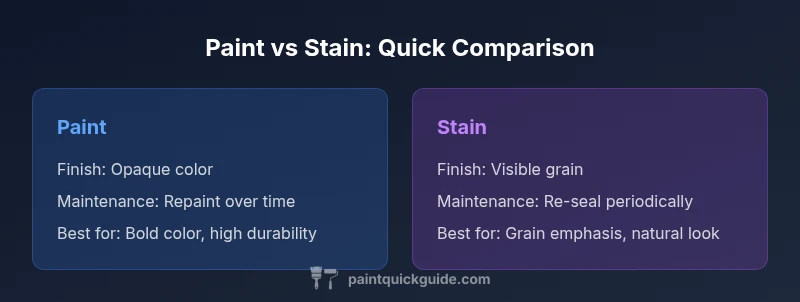
Paint vs Stain Wood: A Comprehensive Comparison
A data-informed comparison of paint and stain on wood, covering durability, aesthetics, prep, cost, and maintenance for indoor and outdoor surfaces.


Paint vs stain wood offers two distinct approaches to protecting and beautifying wood surfaces. In short, paint creates an opaque shield with broad color options and quick coverage, while stain emphasizes the wood’s grain with natural tones and deeper penetration. This comparison helps homeowners and DIY enthusiasts choose the finish that fits their project, climate, and maintenance preferences.
What paint vs stain wood does to surface textures and grain
Paint and stain are fundamentally different ways to treat wood. Paint sits on top of the surface, forming an opaque layer that hides grain and offers a continuous field of color. Stain penetrates the wood, leaving most of the natural grain visible and enhancing the wood’s character with tinted or natural tones. The choice influences how light reflects, how colors appear in different lighting, and how the surface ages. For wood species with strong grain like oak, stain can dramatically highlight patterns, while softer woods may benefit from the uniform appearance of paint. Regardless of your choice, proper prep—cleaning, sanding, and ensuring a sound surface—is essential to maximize adhesion and finish longevity. Paint or stain can also be paired with a clear topcoat to boost durability and weather resistance over time. This decision affects maintenance cycles, color stability, and the overall look of your space, whether indoors or outdoors.
Durability and Weather Resistance: indoor vs outdoor
Durability is influenced by the finish’s protective qualities and the environment. Paint, when properly primed and sealed with a topcoat, tends to resist moisture, scuffs, and UV exposure better in high-traffic areas. It forms a durable barrier that can stand up to abrasion, making it a solid choice for doors, trim, cabinetry, and outdoor siding in many climates. Stain relies on pigment or dye embedded in the wood and a protective sealant. In exterior use, stain can fade unevenly if the sealant breaks down, but it preserves wood hardness and appearance longer in shaded, protected areas. For decks, fences, or wood facing strong sun, a high-quality stain with UV protection plus a durable sealer often outperforms plain paint in terms of natural look retention. Always factor humidity, temperature swings, and exposure to moisture when estimating longevity and maintenance.
Color options and tonal range
Paint offers a broad spectrum of colors and finishes, from solid matte to high-gloss, including custom tints. This versatility makes it ideal for matching décor, branding, or bold design goals. Stain provides mostly natural tones—such as browns, reds, and grays—often with limited color adjustments. However, stains can be customized through pigment concentrates or tinted sealers to achieve a desired wooden feel while keeping the grain visible. If your goal is a dramatic color change or a modern look with strong lighting contrasts, paint is usually the better tool. If you want the wood’s character to take center stage while still achieving protection, a stained finish paired with a sealer can be preferable. The decision frequently hinges on how much the grain should appear and whether color consistency across boards matters for your project.
Prep, priming, and sealing: what to know
Prep is the backbone of a lasting finish. For paint, clean, dry, and lightly sand the surface; apply a compatible primer to improve adhesion, block stains, and even out porosity, then top with one or more coats of paint and a protective topcoat. For stain, you’ll typically sand and clean, perhaps use a wood conditioner on softwoods to even out absorption, then apply the stain and seal with a compatible topcoat. Some wood types absorb stain unevenly, so conditioner can help achieve a uniform look. Peel-resistance and weatherproofing are critical for outdoor installations; UV-blocking varnishes or polyurethanes can significantly extend the life of either finish. Always follow product labels for recoat times and moisture considerations to prevent peeling or cracking.
Application steps: painting vs staining
Start with a clean, dust-free surface. For painting, apply a high-quality primer suitable for the substrate, then apply at least two thin coats of paint, allowing proper dry time between coats. Lightly sand between coats for a smooth finish. For staining, apply the stain with a natural-bristle brush or cloth, wiping excess to control depth, and allow it to penetrate before applying a protective topcoat. In outdoor settings, consider a stain with built-in UV protection and a robust sealer; for interiors, a polyurethane topcoat can increase abrasion resistance on high-use surfaces like cabinets and trim. Both paths benefit from test swatches on inconspicuous areas to verify color, sheen, and build before committing to the entire surface.
Maintenance, repair, and longevity
Maintenance cycles depend on exposure and wear. Painted surfaces may require color refresh or a full repaint every few years in high-traffic areas, especially where peeling or fading occurs. Stained surfaces often need periodic resealing or reapplication of the topcoat to maintain moisture resistance, particularly in outdoor environments. Regular cleaning with non-abrasive cleaners helps protect both finishes from dirt buildup and moisture intrusion. If you notice peeling, cracking, or discoloration, address the area promptly by sanding lightly, reapplying primer or sealer as needed, and recoating. The goal is to keep the surface protected while preserving the aesthetic you chose.
Cost, time, and value over time
Cost considerations hinge on product quality, surface area, and environmental conditions. Paint typically involves higher upfront material costs due to primers and multiple coats but can offer longer intervals between maintenance in sheltered spaces. Stain generally has lower initial costs and shorter application times for certain surfaces, yet maintenance may recur more frequently if UV exposure or moisture is a constant factor. Value over time also depends on how long you plan to keep the surface looking consistent and protected. For busy households with high-traffic areas, paint may deliver better long-term value; for classic aesthetics with visible grain and easier touch-ups, stain can be the wiser choice.
Choosing the right approach for your project: scenarios
Indoor cabinetry, doors, or trim where bold color and a clean, uniform look are desired benefit from paint with a durable topcoat. Exterior siding, decks, or fences that should showcase wood grain while remaining protected often respond well to stain plus topcoat, especially in areas with strong sun or moisture. For furniture and decorative pieces, consider your performance expectations: paint for durability and color flexibility, stain for warmth and grain emphasis. Finally, climate and maintenance willingness should guide your choice; in harsher environments, a high-quality system of primer, stain or paint, and sealer will determine the finish’s lifespan.
Common notes on climate, wood type, and finishing
Certain wood species behave differently with paint or stain. Pine tends to absorb more stain evenly with conditioner, while oak can show grain resolve with stain but may require more prep to prevent blotching. Hardwoods generally accept paint coverage well after a proper primer, offering a smooth, uniform surface. In damp climates, both finishes benefit from a good sealant and periodic inspections for moisture-related issues. The practical takeaway is to align your finish with the surface exposure, desired appearance, and your planned maintenance schedule to optimize results over years.
Comparison
| Feature | paint | stain wood |
|---|---|---|
| Finish appearance | Opaque color; hides grain; broad color options | Translucent to semi-transparent; grain visible; natural tones |
| Durability with topcoat | High durability with primer + topcoat; resistant to scuffs | Moderate; protected by sealant; protection varies with UV exposure |
| Color options | Wide palette; can tint; consistent color blocks | Limited color range; emphasizes wood tones |
| Prep requirements | Priming + sanding; ensure surface is smooth | Sanding + wood conditioner (optional) + stain prep |
| Maintenance | Repaint or refinishing every few years as needed | Re-seal or reapply topcoat periodically; cleaning required |
| Best for | Bold color, moisture resistance, high-traffic surfaces | Showcasing grain, natural look, traditional aesthetics |
Upsides
- Offers powerful color control and a uniform finish
- Typically easier to clean and maintain on high-traffic surfaces
- Wide product availability and established application processes
- Good protection when paired with proper primers and topcoats
What's Bad
- Requires more prep and potential repainting over time
- Paint can crack or peel on flexing or unfinished surfaces without proper priming
- Stain may fade or require reapplication of sealant, especially outdoors
- Color choices may be less dramatic than paint for some projects
Paint is generally better for bold color and durable protection; stain is ideal for grain-forward aesthetics with natural warmth.
Choose paint when you need color variety and strong surface protection in high-use areas. Choose stain when grain visibility and a natural look are priorities, especially outdoors; plan for regular sealing and maintenance.
Your Questions Answered
What is the main difference between paint and stain on wood?
The main difference is opacity. Paint provides an opaque layer that hides grain and creates solid color, while stain penetrates the surface to emphasize the wood grain with translucent color. Both finishes require proper prep and sealing to maximize durability.
Paint hides the grain for a bold color; stain shows grain and a more natural look. Both require good prep and sealing for longevity.
Is staining wood better for outdoor decks?
Stains with UV protection and a durable topcoat are popular for decks because they preserve the wood’s natural look while offering moisture resistance. Paint can also be used outdoors, but it may require more maintenance to avoid cracking on boards that flex with temperature changes.
Stains with UV protection are common for decks to keep grain visible and protect against moisture; paint is possible but needs maintenance.
Do I need primer for painting wood?
Yes. A compatible primer improves adhesion, blocks stains, and helps even out porosity before painting. Skipping primer can lead to uneven color and premature peeling, especially on woods with blotching tendencies.
Primer helps paint stick and look even, especially on blotchy woods.
Can I switch from stain to paint later?
Yes, but you should properly prep the surface first. Sand, clean, and apply a compatible primer or sealer before painting to ensure even color and adhesion. Switching back to stain later is more involved and may require certain sealants.
You can switch finishes with proper prep and primer; switching back and forth needs careful prep.
How often should I recoate painted wood in high-traffic areas?
Recoat frequency depends on wear, moisture, and sun exposure. In high-traffic indoor areas, expect refinishing every few years, while exterior painted surfaces may need touch-ups or repainting on a longer cycle, depending on climate.
In busy indoor spaces, repaint every few years; outdoors, refresh as needed based on weather.
Quick Summary
- Assess exposure and traffic to choose finish
- Paint for color variety and ease of cleaning
- Stain to highlight grain with a natural look
- Schedule regular maintenance for longevity