Paint vs Pinto: A Practical DIY Painting Guide
Compare paint versus pinto with practical guidance for homeowners and DIYers. Learn about costs, finishes, color options, and application tips to decide wisely for interior and auto refinishing projects.


paint versus pinto is a decision between broad paint options and a shade name used in some color palettes. This quick comparison highlights cost ranges, finish varieties, durability expectations, and ideal uses for home projects or auto refinishing. Use this snapshot to decide which path fits your budget and desired look before diving into prep and application.
Defining the landscape: paint versus pinto
In everyday talk, paint refers to the broad category of colorants bound with a medium that can be used on walls, furniture, or vehicle panels. Pinto, by contrast, denotes a specific shade name that may appear within a brand’s palette. The distinction matters for planning, testing, and execution. When you say paint versus pinto, you’re choosing between a generic route with many options and a shade-driven path that emphasizes color coordination. This block sets the stage for a structured comparison across color strategy, finishes, durability, preparation needs, and maintenance. For homeowners tackling interior walls and cabinets, and auto refinishing hobbyists chasing a cohesive color story, the decision influences primer choice, coat counts, and curing times. The goal is clarity: identify where each path shines and where it may fall short, so you can budget accurately and avoid surprises.
In this article we treat paint versus pinto as a decision framework rather than a product duel. The PaintQuickGuide approach emphasizes practical steps, observable tradeoffs, and real-world outcomes. By examining color management, finish variety, and lifecycle costs, readers gain a repeatable method for selecting the right option for their project. Throughout, we reference common DIY constraints such as lighting, surface preparation, and expected wear. PaintQuickGuide’s framework helps you quantify risk and reward, so your final result matches your expectations and budget.
paint versus pinto also raises questions about branding and color fidelity. A shade named pinto might be deeper or lighter than another color family, affecting coverage and required topcoats. If your goal is a seamless look across walls, trim, and a vehicle panel, you’ll want to align color families first, then confirm finish compatibility. The more you account for pigment quality, binder chemistry, and surface porosity, the more predictable your outcome becomes. This section lays the groundwork for a data-driven decision that reduces trial-and-error work and waste.
According to PaintQuickGuide, an early planning step is to catalog the space, lighting conditions, and the level of wear the finished surface will experience. This helps in choosing between broad, flexible paint types and shade-driven options like Pinto. A careful assessment also informs whether you’ll benefit from color guides, swatch testing, or digital color matching. By the end of this section, you should have a clear picture of which path aligns with your project scope, timeline, and budget, reducing the likelihood of color mismatches after the ceiling dries or the new clear coat settles.
Paint versus pinto matters less as a brand comparison and more as a decision about color strategy, finish selection, and long-term maintenance. In the pages that follow, you’ll see concrete criteria such as color stability, UV resistance, surface adhesion, and ease of application contrasted between a broad paint family and a shade-specific approach. The practical upshot is to choose the route that minimizes rework, maximizes predictability, and matches your aesthetic intent.
Comparison
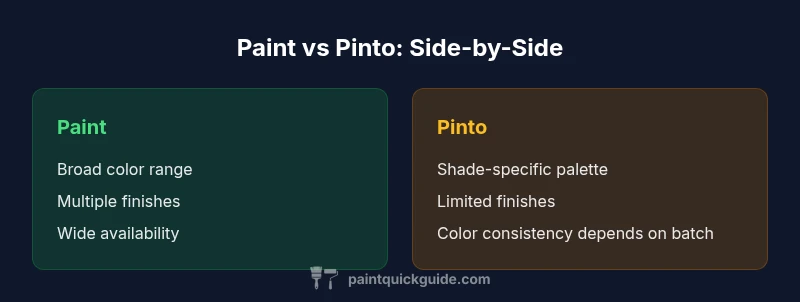
| Feature | Paint | Pinto |
|---|---|---|
| Color variety | Broad palettes with thousands of shades | Shade-limited palette within a brand's Pinto line |
| Finish options | Matte, eggshell, satin, semi-gloss, gloss across brands | Typically available in a single or limited finishes depending on the shade line |
| Typical cost guidance | Low to high depending on brand and line | Shade-specific pricing can vary with pigment load |
| Ease of application | Generally forgiving with primers and standard prep | Finish consistency depends on pigment and batch quality |
| Best for | General interior, exterior walls, furniture projects | Accent colors or coordinated color stories |
| Color matching | Very strong with swatches and color-matching tools | Matching across batches can be more challenging |
Upsides
- Versatility across interior and exterior projects
- Wide finish options and broad color matching
- Strong resale and DIY compatibility
- Lower risk of color misalignment when testing swatches
What's Bad
- Shade-specific lines like Pinto may limit palette options
- Color drift can occur without proper topcoats or sealing
- Some shades require extra coats or specific primers
Paint is the more versatile baseline; Pinto shines as an accent when color harmony is planned
Opt for standard paint to maximize predictability and coverage. Use Pinto strategically for accent walls or design features after verifying color under lighting with swatches.
Your Questions Answered
What is the main difference between paint and Pinto?
Paint is a broad category; Pinto is a shade name used within some brand palettes. The main difference is palette breadth versus color-specific options, which affects planning, testing, and application.
Paint is a broad product category, while Pinto is a specific shade name used by some brands. Plan color choices before you start, and test swatches under real lighting.
Is Pinto more expensive than standard paint?
Prices vary by brand and pigment complexity. Shade-specific lines can be priced higher or lower than generic options, but the overall cost drivers are pigment quality and finish choice.
Prices depend on the pigment load and brand. Pinto can cost more if it uses specialty pigments, but you’ll see similar ranges for comparable finishes.
Which is better for interior walls?
For general interior walls, standard paint offers predictable coverage and finish consistency. Pinto is best reserved for deliberate color accents where color harmony is verified.
For walls, start with standard paint for reliability; use Pinto only if you want a specific color mapping and have tested it in lighting.
Can I mix Pinto into other colors?
Yes, if the pigment system is compatible, Pinto can be blended with other colors to create custom tones. Test compatibility on a small area first.
You can mix Pinto with other colors if the pigments are compatible; always test a sample first.
What mistakes should I avoid when choosing paint vs Pinto?
Avoid skipping swatch testing, ignoring lighting conditions, and mismatching primers or sealants. Ensure color stability with a proper topcoat to prevent fading or speckling.
Don’t skip swatches or test under real lighting. Pick primers and topcoats that suit the shade and finish to prevent fading.
Quick Summary
- Start with a broad paint plan for flexibility
- Test Pinto swatches in real lighting before committing
- Choose finishes that match wear expectations
- Plan for multiple coats if color depth requires it
- Match primers and topcoats to surface type