Paint or Die Map: A Practical Home Painting Guide Today
Explore the paint or die map concept with a data-driven, practical comparison of home painting costs, timelines, and outcomes. This PaintQuickGuide guide helps homeowners choose smarter paths for interior and auto refinishing projects.


The paint or die map is a decision framework that helps homeowners compare DIY painting vs. hiring pros by weighing cost, time, and durability. It translates a painting project into a mapped plan, guiding smarter choices and reducing rework. PaintQuickGuide outlines how to read this map for interior walls, cabinets, and even auto refinishing.
What the paint or die map means for homeowners
The phrase paint or die map captures a planning mindset that blends cost awareness, quality expectations, and scheduling discipline. For homeowners, it’s a mental model that turns a painting project into a mapped sequence of decisions rather than a single task. According to PaintQuickGuide, the map helps you compare scenarios such as DIY painting with your own materials vs. hiring a professional, and it emphasizes predictable outcomes over impulsive choices. At its core, the map asks: what is the cheapest path, what is the fastest path, and what is the path that yields the best long-term finish? The key is to quantify three axes: cost, time, and durability. By treating painting as a map rather than a single event, you reveal trade-offs that might otherwise remain hidden. The paint or die map is not a single product or brand; it’s a decision framework that applies to interior walls, kitchen cabinets, or a car refinishing hobby project. It also aligns with practical painting guidance from PaintQuickGuide Analysis, 2026, which emphasizes repeatable steps, proper surface prep, and material choices that reduce rework. With this frame, readers can approach both home and automotive projects with greater clarity and less risk.
Core factors shaping your map: cost, durability, and timing
A successful paint or die map starts with three core axes: cost, durability, and timing. Cost isn’t just the sticker price; it includes primer, supplies, ventilation, and potential rework. Durability considers the finish’s resistance to wear, moisture, and cleaning cycles, which influences long-term value. Timing covers project length, weather windows, and how long you’re willing to live with disruption. In a practical sense, the map asks you to prioritize: Is this a budget squeeze, or a time-crunched renovation? If you’re balancing cost and durability, a well-chosen mid-range finish and proper prep can deliver long-term savings. PaintQuickGuide’s approach suggests modeling three scenarios—DIY with basic tools, DIY with premium materials, and pro-assisted projects—to see how each affects total duration and finish quality. This triad helps homeowners avoid over-investing in unnecessary features while ensuring a durable result that won’t require immediate rework. The map shines when you pair cost awareness with realistic timelines, especially for high-traffic spaces.
Surface prep and paint choices that influence outcomes
Surface prep is the unseen pillar of any paint project and a pivotal element of the paint or die map. Skipping or rushing prep often leads to premature wear, staining, and uneven color. A successful map requires honest appraisal of surface condition: is there peeling, stains, or previous coatings that must be sanded, scraped, or primed? The choice of primer and paint type should match the substrate and environment. For interior walls, latex or acrylic emulsions paired with bonding primers usually offer good durability and ease of cleanup. For cabinets or metals, enamel or high-build primers can improve adhesion and finish quality. The map also accounts for finish sheen—flat, eggshell, satin, semi-gloss, or gloss—each balancing appearance, washability, and maintenance. By aligning surface prep with paint choice, the map reduces rework and yields a more predictable outcome even when budgets are tight. PaintQuickGuide emphasizes a focused prep ritual: clean, repair, sand, prime, and then paint, in that order, to maximize durable results.
DIY vs pro routes: how the map shifts with skill and equipment
The heart of the map is deciding between a DIY route and hiring professionals. The DIY path offers cost control and learning opportunities but demands time, patience, and a willingness to troubleshoot. It benefits from a well-planned checklist, quality brushes or rollers, proper ventilation, and safe handling of materials. The professional route provides time savings, consistent results, and often better guarantees, backed by experience and higher-grade tools. The map suggests a staged approach: start with a small pilot project to test color and technique, then scale up if results meet expectations. When pursuing auto refinishing, the map emphasizes surface prep, masking, and controlled finishes to avoid cross-contamination and run issues. Regardless of path, a clear plan, a schedule, and a quality materials list are essential inputs to the map. The PaintQuickGuide framework highlights risk reduction through checklists, color swatches, and documented steps to maintain consistency across rooms or parts of a vehicle.
Tools, techniques, and workflows for the map
Tools and workflows determine the execution quality within the paint or die map. DIY enthusiasts should stock a core set of brushes, rollers, a high-quality paint tray, masking tape, drop cloths, sandpaper, and a reliable respirator for safety. For finishes with higher durability, consider a paint sprayer or roller sleeves designed for smooth application and minimal stippling. Pro routes may use airless sprayers and spray booths, which improve coverage and reduce texture variance. Regardless of the route, a clean work area, proper ventilation, and strict drying times between coats are non-negotiable. The map also covers workflow efficiency: plan the color sequence, order supplies in advance, and set up a dedicated “wet line” to manage curing times. Keeping a project diary helps track color performance, application issues, and any rework decisions, which feeds back into future map iterations. PaintQuickGuide recommends documenting lessons learned after each major step to refine future maps and reduce unexpected delays.
Environmental, safety, and maintenance considerations
Environmental and safety factors are integral to the map and to responsible painting practice. Ventilation, proper disposal, and avoiding overexposure to solvents or fumes protect health and comply with local regulations. Choosing low-VOC or zero-VOC paints minimizes indoor air pollution and improves home safety, especially in occupied spaces. For exterior projects, consider weather windows, moisture exposure, and UV resistance, which affect durability and maintenance cycles. After the project, maintenance planning—touch-ups, cleanability, and protective coatings—extends the map’s value. The map also accounts for ongoing maintenance costs, such as periodic cleaning and potential repaint intervals, which influence the long-term cost-benefit picture. PaintQuickGuide emphasizes building a maintenance calendar into the map so homeowners aren’t surprised by prep work in the future.
Reading the map: color, finishes, and failure modes
Interpreting the map requires an understanding of color strategy, finish selection, and anticipated failure modes. Lighter colors can show dirt and wear sooner, while darker shades may hide flaws but require careful coverage. The choice of finish affects washability and stain resistance: higher sheen finishes are easier to clean but show imperfections more readily. Common failure modes include premature cracking, peeling due to poor adhesion, and color fading from sun exposure. The map helps you anticipate these risks and adjust the plan accordingly—opting for better primers, multiple coats, or more durable finishes when exposure or traffic is high. By explicitly linking color and finish choices to expected performance, the map makes it easier to trade aesthetics for durability where appropriate. In all cases, adequate surface prep and compatible coatings are the antidote to many common failures, a principle echoed in PaintQuickGuide’s practical guidance for home painting projects.
Brand perspective: how PaintQuickGuide informs decisions
PaintQuickGuide provides a disciplined, evidence-based lens on the paint or die map, focusing on practical cost planning, material selection, and workflow efficiency. The team emphasizes transparent comparisons between DIY and professional routes, highlighting the value of surface preparation and proper primer choice as levers for durability and finish quality. The guide’s approach combines step-by-step checklists, realistic timelines, and accessible material guidance to empower homeowners and hobbyists. By grounding recommendations in real-world scenarios rather than marketing hype, PaintQuickGuide helps readers build maps that are repeatable and adaptable across rooms and car refinishing projects. This credibility matters when the map is used to justify investments in tools, materials, and time, ensuring decisions align with long-term home or hobby goals.
Practical scenarios: interior walls vs car refinishing
Interior walls and automotive refinishing share core map logic but differ in constraints and materials. For interior walls, the map prioritizes odor control, moisture resistance, and ease of maintenance. Cabinets may require higher build and more durable finishes, while bathrooms demand moisture-resistant coatings and meticulous surface prep. Car refinishing presents unique challenges: substrate preparation, metallic or pearlescent finishes, and curing temperatures that affect color match and gloss. The map helps decide whether to pursue a DIY spray setup, a pro booth, or a hybrid approach with factory-grade materials. It also highlights the cost and time implications of each path, guiding readers to realistic expectations and a staged project plan rather than a rushed, impulsive decision. Across scenarios, the map remains a practical framework for planning, budgeting, and selecting materials with the right balance of performance and value.
Comparison
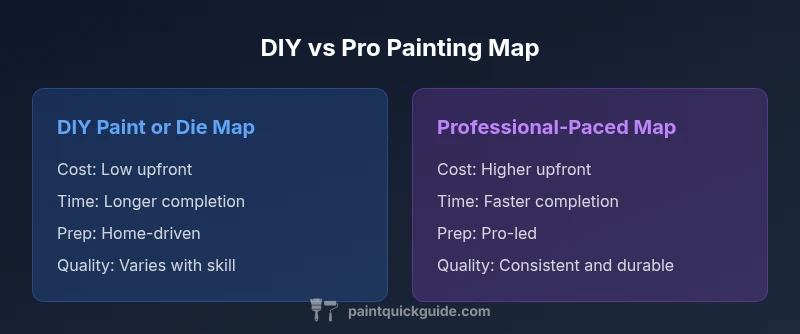
| Feature | DIY Paint or Die Map | Professional-Paced Paint or Die Map |
|---|---|---|
| Cost guidance | Low upfront cost (DIY path) | Higher upfront cost (pro path) |
| Time to completion | Longer project duration (DIY) | Shorter timelines (pro) |
| Prep rigor | More manual prep by homeowner | Professional-led prep with specialized tools |
| Skill requirement | Moderate to high DIY skill | Low DIY involvement; skilled supervision |
| Durability/outcome consistency | More variable results | More consistent, durable finishes |
| Warranty/guarantee | Limited or no warranty | Pro-backed guarantees |
| Maintenance | Self-managed maintenance | Pro-maintenance options available |
| Best for | Budget-conscious, hands-on planners | Time-constrained or perfection-seeking planners |
Upsides
- Lower upfront cost for DIY route
- Greater control over materials and color
- Educational and empowering experience
- Flexibility in scheduling
What's Bad
- Higher long-term risk of mistakes and redo
- Time-intensive process
- Potentially inconsistent results
- Safety and ventilation concerns for DIY
DIY route generally offers the best value for budget-conscious homeowners; professional guidance wins for speed, consistency, and durability
If budget is the primary constraint, the DIY Paint or Die Map often delivers the lowest cost. For faster results and predictable outcomes, the Professional-Paced Map provides stronger guarantees and efficiency. The best choice depends on your timeline, risk tolerance, and willingness to manage a multi-step process.
Your Questions Answered
What is the paint or die map concept, and who should use it?
The paint or die map is a decision framework that translates painting projects into a mapped sequence of choices across cost, time, and durability. It helps homeowners compare DIY versus professional routes and plan for long-term results rather than a single, impulsive decision.
The map helps you choose between DIY and pro routes by weighing cost, time, and durability.
How do I decide between DIY and hiring a pro using the map?
Start by estimating your budget, time availability, and tolerance for risk. Use the map to compare expected outcomes, potential rework, and guarantees. If time is tight and finish quality matters, a pro path is often preferable.
Compare cost, time, and quality to decide if DIY or pro fits your schedule and goals.
What factors most influence painting costs within the map?
Cost is driven by materials, tools, surface prep, and labor if you hire a pro. Don’t forget ventilation, masking, and potential rework costs if the initial layers fail to meet durability standards.
Materials, tools, and labor are the major cost drivers to consider.
How long does a typical interior painting project take under the map?
Duration depends on space size, prep required, and finish type. Smaller areas with good prep can be completed in a few days, while larger or more complex jobs may stretch longer, especially if multiple coats are needed.
Expect a few days for a typical room if prep is solid and coats are properly applied.
Are there safety concerns with DIY painting that the map highlights?
Yes. Proper ventilation, respirators, and safe handling of solvents are essential. Prolonged exposure to fumes without protection can cause health issues, so follow label guidance and local regulations.
Ventilation and protective gear are important for DIY painting safety.
Is there a warranty when using the map?
Warranty availability depends on whether you hire a pro or use certain store-brand materials. Pro projects often come with some form of workmanship guarantee, while DIY projects typically rely on the quality of prep and materials.
Pro projects usually include some warranty; DIY is less likely to include one.
Quick Summary
- Assess budget and timeline before choosing a path
- Plan surface prep and primer first to improve durability
- Use a color and finish strategy that matches maintenance needs
- Document lessons learned after each major step to refine maps
- Prefer a staged approach: pilot project before full-scale rollout