Paint vs Pinto Horse: A Practical Comparison
Compare Paint and Pinto horses: definitions, registries, color patterns, and practical buying tips for homeowners and riders seeking clarity.


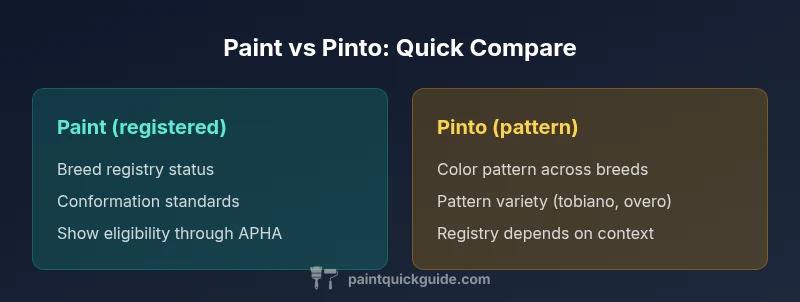
Paint horses and Pinto horses describe two related but distinct concepts: breed registry vs color pattern. A Paint is typically a horse registered with the American Paint Horse Association (APHA) and often has specific conformation expectations, lineage, and show eligibility. A Pinto describes a coat color pattern (any breed or mixed breed can display Pinto patterns, such as tobiano or overo). For most buyers, consider temperament, training, and health as much as appearance.
Defining Paint and Pinto: What the Terms Really Mean?
Paint and Pinto are terms that many riders and buyers encounter, but they refer to different ideas. In the simplest terms, a Paint horse is often a horse with a recognized breed identity and a show record associated with a breed registry (primarily APHA). The Pinto term, by contrast, focuses on color pattern and can apply to horses of many breeds. This distinction matters when you are evaluating a horse for riding, breeding, or showing. According to PaintQuickGuide, understanding these definitions helps homeowners, hobbyists, and prospective buyers avoid confusing a horse’s phenotype with its official status. In practice, a Paint may or may not display Pinto-pattern markings, and a Pinto-patterned horse may be registered in a variety of breed registries or not registered at all. For most people, temperament, health, and training quality should take priority over color labels when choosing a horse.
Historical Context and Registries: APHA, Pinto Registries, and Breed vs Pattern
Color and registration histories shape how people view Paints and Pintos. The APHA governs Paint registration and emphasizes lineage, conformation, and show eligibility. Pinto-registries focus on color patterns and pattern representation, sometimes spanning multiple breeds. The critical distinction for buyers is that Paint status involves a formal registry and show pathways, while Pinto status centers on color expression regardless of breed. This difference influences important decisions, such as breeding goals, training focus, and potential show opportunities. A buyer should verify registration status, lineage documentation, and breed-specific requirements before proceeding. Pedigree and lineage can influence predictability in movement, soundness, and long-term health, which are central considerations for any long-term investment in a horse.
Color Genetics 101: Tobiano, Overo, and Other Patterns
Color genetics are central to Pinto patterns and their diversity. Patterns like tobiano and overo describe how color is distributed on the body and face and can vary within a single horse. Tobiano often produces white patching with smooth, rounded transitions, while overo can feature irregular splash marks with white that may not cross the back. Pinto is a broad umbrella term that encompasses several distinct genetic patterns; horses with Pinto patterns can be registered in different contexts depending on breed and registry rules. While genetics explain color, they do not determine temperament or trainability. Prospective owners should assess a horse’s behavior, learning responsiveness, and overall health alongside color inheritance.
Practical Considerations for Buyers and Owners
When evaluating a Paint or Pinto, practical considerations matter more than color alone. Consider temperament, daily care, and fitness for intended use—whether trail riding, ranch work, or show ring performance. A Paint that meets APHA-recorded conformation standards may align well with breed-specific programs, but this is not a guarantee of suitability for every rider. Pintos offer color and pattern variety, which can be appealing for those who value aesthetics or want a horse with multiple lineage possibilities. In addition to color, assess hoof health, dental condition, back and joint comfort, and prior training. A thorough pre-purchase examination, preferably by an equine veterinarian, can identify issues that could affect performance and longevity.
Show Rings, Breeding, and Value Considerations
Show eligibility and breeding plans differ between Paints and Pintos. APHA-affiliated Paints have defined show classes and judged criteria centered on breed standards. Pintos, depending on their lineage and registry, may have broader show options depending on breed associations and locale. Value is influenced by factors such as training level, soundness, and performance history rather than color alone. Potential buyers should request distance-free evaluation, consider rider compatibility, and confirm any show eligibility requirements before committing to a purchase. Understanding the nuances of registration, lineage, and breed expectations helps prevent costly misalignments later on.
Care, Training, and Management for Color Varieties
Color patterns themselves do not dictate care. Paints and Pintos require the same core horse management: proper nutrition, regular farrier work, parasite control, and routine veterinary care. Training plans should be tailored to the individual horse’s temperament, strength, and learning pace. Some Paints with strong breeding into western disciplines may have expectations for performance routines, while Pintos who are cross-bred or multi-registries can adapt to a broader range of disciplines. Regardless of color, consistent handling, positive reinforcement, and gradual conditioning are key to long-term welfare and performance. Health history and prior training experiences are often better predictors of success than coat color.
Regional Variations and Market Practices
Regional demand for Paints and Pintos can vary. In some areas, registered Paint horses may fetch favorable show-related opportunities and pricing due to recognized breed programs. In other regions, color patterns associated with Pintos can attract buyers who prioritize aesthetic appeal and versatility across disciplines. Market practices also differ by registry requirements and the availability of qualified trainers. Always assess the horse’s fit with your goals, not merely the presence of Paint or Pinto labels. Local clubs, shows, and breed meetings are valuable resources when exploring options.
Registration, Documentation, and Identity Verification
Verifying a horse’s status requires careful review of registration papers, transfer records, and pedigree documentation. For Paints, APHA papers provide a clear record of breed lineage and show eligibility. For Pintos, status depends on the color pattern and the registries involved, which may include multi-breed affiliations. Ask for original registration certificates, microchip numbers, and a vendor’s bill of sale. A transparent documentation trail reduces ambiguity and supports confident decision-making. If you are unsure about a horse’s status, consult the registrar or a qualified equine professional.
Common Misconceptions and Myths Debunked
Several myths persist around Paints and Pintos. A common misconception is that all Pintos are inferior to registered Paints in the show ring; in reality, Pintos can excel in many venues depending on the horse’s abilities and training. Another myth is that color alone determines temperament or health—color is a visible trait, but temperament and soundness come from genetics, upbringing, and care. Finally, some buyers assume that Paint status guarantees better resale value; while registry status can influence opportunities, it does not replace due diligence in evaluating a horse’s actual performance and welfare potential.
Comparison
| Feature | Paint (registered breed) | Pinto (color pattern) |
|---|---|---|
| Definition | Breed-registry status with APHA influence | Color pattern across breeds |
| Show eligibility | Pathways through APHA classes | Depends on breed registry and pattern |
| Genetics focus | Conformation and lineage matter | Pattern inheritance of color patterns |
| Color patterns | Typically solid or specific Paint-patterns | Varied Pinto patterns including tobiano/overo |
| Breeding considerations | Breeding often aligned with APHA goals | Cross-breed potential and pattern-focused breeding |
| Care considerations | Care same as any horse; registry may influence training expectations | Care same as any horse; emphasis on pattern visibility and breed fit |
| Price/value context | Value tied to breed programs and show prospects | Value tied to pattern, versatility, and cross-breed appeal |
Upsides
- Clear breed identity can aid show eligibility and breeder programs
- Pinto patterns offer color variety across many breeds
- Regulatory clarity helps with registration and ownership records
- Historical registries provide predictable lineage information
- Versatility in the Pinto category across disciplines
What's Bad
- Color alone does not determine temperament or health
- Misunderstanding terms can lead to misaligned expectations
- Breeding goals may be complicated by multi-registry rules
- Show success depends on more than color or status
Paints offer breed-specific structure; Pintos deliver color versatility across breeds
Choose Paint if you value breed-programs and predictable conformation; choose Pinto for color variety and cross-breed opportunities. Always prioritize temperament, training, and health over color identity when selecting a horse.
Your Questions Answered
What exactly is a Paint horse?
A Paint horse is typically a horse registered with APHA or a breed registry tied to Paint lineage. They often conform to breed standards and have show eligibility within Paint classes. Color is part of the identity, but breed registration and conformation are key factors.
A Paint is a breed-registered horse with show programs; color matters, but registration and conformation are the main criteria.
Can Pintos be registered as Paints?
Pintos can sometimes be registered in Paint-leaning registries if they meet specific criteria, but many Pintos are registered in color-pattern registries or under other breed associations. It depends on the horse’s lineage and the registry rules.
Pintos may be registered in Paint programs if they meet criteria; otherwise, they’re typically in color-pattern registries.
Are Paints always Pinto-patterned?
No. Paints are defined by breed registration and conformation; they can be solid, near-solid, or carry limited white. Pinto-patterns describe color distribution and can appear across many breeds, including Paints, but they are not exclusive to Pintos.
Paints aren’t defined by Pinto patterns; they’re breed-registered and can be solid or patterned.
What is tobiano vs overo, and why does it matter?
Tobiano and overo are inherited color patterns seen in Pintos. Tobiano patterns typically have white crossing the back with smooth edges, while overo features irregular white patches. These patterns affect both aesthetics and how color can influence registration or show classes in certain registries.
Tobiano and overo are color patterns; they influence appearance and, in some registries, eligibility for certain classes.
How should I choose between a Paint and a Pinto?
Start with temperament, health, and training suitability. Then consider registration goals, show ambitions, and the owner’s willingness to navigate registry rules. Color can be a bonus, but long-term fit depends on behavior and care needs.
Choose based on temperament and training first, then registry goals; color is a secondary factor.
Do color terms affect resale value?
Color or pattern alone rarely determines resale value. The horse’s health, performance, and training history, along with breed and registry alignment, generally have more impact on resale potential.
Color can help with appeal, but health and training mostly drive resale value.
Quick Summary
- Understand the breed vs color distinction before buying
- Prioritize temperament and health over color identity
- Check registration and show eligibility criteria early
- Evaluate conformation and training history for long-term fit
- Ask for complete documentation and veterinary history