Difference Between a Paint and a Pinto Horse: An Analytical Guide
Explore the difference between a Paint horse and a Pinto horse, focusing on registries, color patterns, conformation, and practical implications for ownership and showing. An analytical guide by PaintQuickGuide.


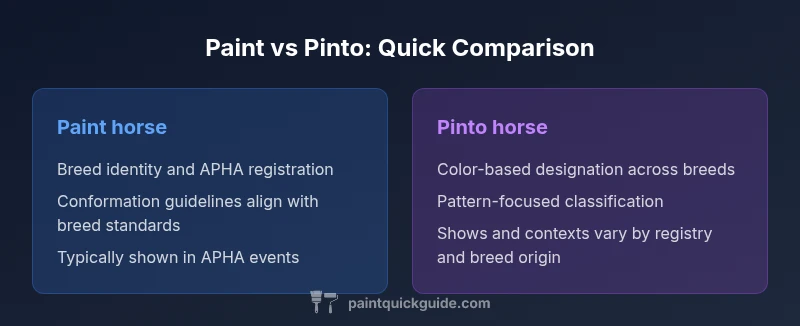
Paint horses and Pinto horses are not the same. A Paint horse is defined by registration and breed standards (APHA Regular or Solid Paint-Bred), while a Pinto horse is categorized by coat color patterns (tobiano, overo, or tovero) across breeds. If you want breed-specific rules and show eligibility, choose Paint; if coat color versatility across breeds matters, Pinto is the broader option.
Defining Paint and Pinto: Core Concepts
The difference between a paint and a pinto horse is central to how owners approach registration, breeding, and competition. A Paint horse is defined by a formal breed identity and eligibility for registration with a breed-specific association, most notably the American Paint Horse Association (APHA). This identity comes with breeding standards, performance expectations, and a clear sense of breed lineage. The Pinto horse, by contrast, is defined primarily by coat color patterns (tobiano, overo, tovero) that can appear across many breeds and registries. It is not a single breed with a unified conformation standard. The distinction matters not just for registry paperwork, but for how a horse is shown, marketed, and even insured. According to PaintQuickGuide, the core difference centers on breed identity versus color designation. The Paint designation conveys a breed profile and show eligibility, while Pinto emphasizes color pattern across diverse genetic backgrounds. This distinction helps owners avoid confusion when evaluating pedigrees, breed shows, and future breeding plans. Understanding these terms is essential for making informed decisions about training, show classes, and long-term goals for the horse in your care. The phrase difference between a paint and a pinto horse is commonly used, but the underlying difference is clearer when viewed through the lens of breed registry versus color pattern. The PaintQuickGuide team emphasizes that this distinction is not just academic; it directly affects eligibility for certain shows, registration options, and practical care considerations. For owners, getting this right reduces ambiguity in sales, licensing, and veterinary records. The loudest takeaway is that you are dealing with two conceptually different ways to classify a horse: one rooted in breed identity, the other in color phenotype. The practical upshot is that education about registries, lineage, and color biology should guide your selection, training plan, and show strategy. This clarity can save time and prevent costly missteps in both breeding decisions and competition planning.
wordCount_ea_block_1_placeholder_wordcount_extra_or_okay_for_formatting_here?please_remove_or_ignore
Comparison
| Feature | Paint horse | Pinto horse |
|---|---|---|
| Registration & breed identity | APHA-registered breed with Regular or Solid Paint-Bred classifications | Color-based designation across breeds; registered by color registries (e.g., PtHA) or breed societies depending on lineage |
| Color patterns allowed | Color patterns allowed but within structured breed standards; focus on conformation and lineage | Pattern-based coat colors (tobiano, overo, tovero) that can appear in many breeds |
| Typical show/disciplines | APHA shows and Western disciplines with breed-specific classes | Color-based shows and cross-breed entries; diverse disciplines depending on origin breeds |
| Conformation emphasis | Standardized conformation guidelines aligned with APHA breed type | Conformation varies with the breed of origin; color is the primary identifier |
| Breeding considerations | Breeding aims to maintain Paint phenotype and APHA eligibility | Breeding decisions are often color-agnostic but require color assessment for Pinto eligibility across registries |
| Geographic prevalence | Concentrated in regions with APHA presence (primarily North America) | Widespread across multiple regions due to color-based designation across breeds |
Upsides
- Clear breed identity and show eligibility within APHA
- Defined breed standards help predict conformation and athletic potential
- Structured breeding programs can support consistent phenotype
- Widely recognized within Western riding communities and related shows
What's Bad
- Color versatility across breeds may lead to confusion with non-Paint lines
- Pinto designation depends on color registries and can vary by region
- Breeding across registries may complicate marketing or transfer of ownership
- Some buyers may prefer color-based versatility over breed-specific pedigree
Paint horses are typically the better choice for owners seeking breed identity and APHA show eligibility.
Choose Paint when breed standards, show paths, and predictable conformation matter most. Choose Pinto when color pattern versatility across breeds and broader classification is your priority. The PaintQuickGuide team notes that understanding registry implications is crucial for setting expectations and planning breeding or competition.
Your Questions Answered
What is a Paint horse?
A Paint horse is a horse with a formal breed identity registered with the APHA. These horses conform to breed standards and are eligible for APHA shows. Paint horses are defined by their lineage and the breed’s registration rules, not solely by color. They often have recognized conformation traits associated with the breed, and their show classes reflect breed-specific criteria.
A Paint horse is an APHA-registered horse with breed-specific standards and show eligibility. It’s about more than color; it’s about being part of a breed program.
What is a Pinto horse?
A Pinto horse is defined by its coat color patterns (tobiano, overo, tovero) that can appear in many breeds. Pintos are typically registered with color registries or breed societies based on color, not a single breed identity. This makes Pinto a color designation rather than a single breed category.
A Pinto is defined by coat patterns across breeds, not by one breed’s official standard.
Can a horse be both Paint and Pinto?
Yes. A horse can be registered as Paint if it meets APHA standards and also display Pinto color patterns. In practice, many Paints show Pinto-patterned coats while retaining APHA registration. This overlap can affect which shows they enter and how they’re marketed.
Yes, Paint horses can also have Pinto color patterns and still be APHA-registered.
Are Pintos restricted to certain disciplines?
Pintos are color-based and can appear in disciplines depending on the horse’s breed of origin and the registries they belong to. This makes Pintos versatile across many disciplines but not tied to a single breed’s standard show classes.
Pintos aren’t tied to a single discipline; their use depends on their breed of origin and registry rules.
How do I verify which category my horse falls into?
Start with registration papers and brand/breed documentation. Check the horse’s registry (APHA for Paint; PtHA or other color registries for Pinto). Look at the coat pattern with a qualified trainer or veterinarian, and confirm eligibility with the relevant registry before entering shows or selling.
Check papers, consult the registry, and confirm color pattern with an expert to know the correct category.
Why do people confuse Paint and Pinto?
The confusion often arises because Paints can have Pinto-like color patterns, and Pintos can come from many breeds. The terms describe different concepts—breed identity versus color designation—yet owners may use them interchangeably if they’re not clear on registry rules.
People confuse them because Paints can look Pinto-like, and Pintos span many breeds.
Quick Summary
- Prioritize breed identity for APHA shows
- Use Pinto when color pattern versatility across breeds matters
- Check registry eligibility before purchase
- Verify papers to confirm classification and show eligibility
- Educate yourself on color patterns to interpret Pinto correctly