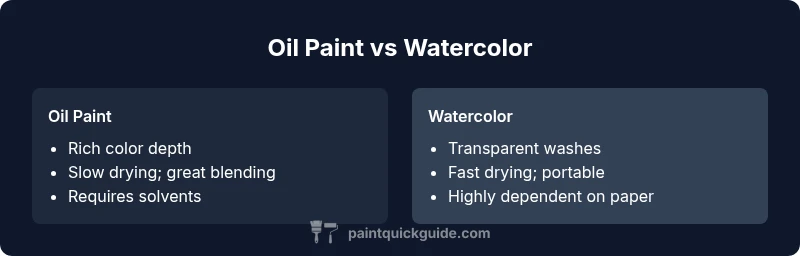
Oil Paint vs Watercolor: A Practical Side-by-Side Guide
A rigorous, analytic comparison of oil paint vs watercolor for homeowners, DIY artists, and hobbyists. Learn technique, materials, cost ranges, surfaces, and workflow to pick the right medium.


Oil paint vs watercolor presents a classic choice for painters. Oil offers rich color, blending latitude, and archival longevity, but requires solvents and longer drying times. Watercolor delivers light-fast translucency, portability, and fast results, yet it is unforgiving of mistakes. Your choice should match goals, space, and learning curve, according to PaintQuickGuide.
Understanding the Core Differences Between Oil and Watercolor
From the perspective of oil paint vs watercolor, artists face distinct tradeoffs in color, technique, and process. Oil paints are known for their buttery texture and slow drying, which supports long glazing, subtle transitions, and depth that remains stable as layers dry. Watercolors dry quickly and behave differently under moisture, making planning and paper choice critical. The PaintQuickGuide team emphasizes that neither medium is inherently superior—each excels in particular contexts and demands specific handling. For many hobbyists, the decision hinges on available studio space, ventilation, and long-term goals rather than short-term convenience. By starting with clear goals, you can choose a path that minimizes frustration and maximizes learning, then expand to the other medium as you gain experience.
Pigments, Mediums, and Blending
Oil paints use oil-based binders that allow extended open time, enabling gradual blending and rich, impasto-capable textures. Watercolors rely on gum arabic as a binder, producing translucent washes and delicate color layering. In practical terms, oil blending invites subtle tonal shifts over extended sessions, while watercolor blending depends on moisture control and paper density. PaintQuickGuide notes that successful artists exploit these differences: oils for depth and glazing, watercolors for luminous lightness and spontaneity. When choosing between oil paint vs watercolor, consider your preferred final look, drying behavior, and how you plan to revise details in the piece.
Surfaces and Grounding
Oil painting traditionally embraces primed canvases, linen, or hardboard with gesso or ground to hold thick paint and enable smooth glazing. Watercolor relies on absorbent papers—typically cotton rag or blend—with specific weights (measured in gsm) and textures (cold-pressed, hot-pressed, or rough). The surface choice affects both handling and outcome; oil on rough canvas will read differently than on smooth panel, while watercolor paper dramatically changes wash behavior and pigment diffusion. PaintQuickGuide highlights that surface prep is as crucial as pigment choice in oil paint vs watercolor, because a poor ground compounds issues from blending or washes.
Drying Times, Longevity, and Archival Quality
Drying time is a major differentiator: oil paints can stay workable for hours to days, enabling detailed glazing but slowing overall progress, whereas watercolors dry rapidly, demanding crisp planning. Longevity depends on pigment stability, varnishing, and storage conditions. Oils, when varnished and protected from solvents, can retain color for generations, whereas watercolor pieces depend more on paper quality and proper framing to resist aging and yellowing. PaintQuickGuide stresses that archival quality is achievable in both media with proper materials and care, but it requires adherence to best practices for each medium.
Color Properties: Opacity, Transparency, and Glazing
Opacity varies: many oil pigments offer substantial coverage and can be thinned for transparency, enabling luminous glazes and dimensional depth. Watercolors are intrinsically transparent, with opacity achievable through layering or using more opaque pigments, but often require careful planning to avoid over-darkening areas. The choice between oil paint vs watercolor here hinges on whether you want bold, opaque passages or transparent, airier washes. Mastery comes from experimenting with layering, glazing, and pigment strength while respecting each medium’s unique color behavior.
Tools, Brushes, Paper, and Supports
Oil painting relies on bristle brushes, palettes, solvents, and oil mediums, with care required for storage and ventilation. Watercolor needs soft brushes, light-fixed palettes, and high-quality paper tailored to its absorbency. Paper selection is particularly impactful for watercolor, influencing wash behavior and edge control; oils tolerate a wider range of supports but still respond to priming and sealants. In oil paint vs watercolor discussions, investing in proper tools magnifies results and reduces frustration, especially for beginners. PaintQuickGuide recommends starting with a basic kit and upgrading as you gain competence.
Price, Availability, and Learning Curve
Oil paints tend to have higher upfront costs (multipacks, solvents, varnishes), and the ongoing cost can accumulate with proper care and storage, while watercolor supplies can be cheaper to start but paper costs add up for large or frequent practice. The learning curve differs: watercolor rewards factual planning and patience, while oil painting offers generous time to correct and refine. For hobbyists with limited space or ventilation, watercolor may be more approachable; those aiming for deep tonal effects may prefer oil, particularly in studio environments.
Techniques and Styles: What Each Medium Excels At
Oil paints shine in realism, portraiture, and impasto textures, with rich color depth that supports nuanced glazing. Watercolors excel at light, sketch-like studies, plein air scenes, and luminous washes that capture atmosphere quickly. The two media naturally lead to different aesthetics: oil-based pieces often feel lush and dimensional, while watercolors feel airy and ethereal. Knowing oil paint vs watercolor strengths helps you set project goals aligned with the medium’s capabilities, enabling you to pick the right approach from the outset.
Workspace, Cleanup, and Safety
Oil painting requires ventilation, cautious handling of solvents like turpentine or odorless mineral spirits, and proper storage of oils and rags to prevent hazards. Watercolor cleanup is simpler: brushes and palettes rinse with water, and you typically avoid strong solvents. Paper and humidity control also factor into safety and longevity of the finished piece. PaintQuickGuide emphasizes setting up a safe, organized workspace to make learning efficient and minimize the chance of accidents or improper storage.
Practical Projects and Skill-Building Paths
To build competence in oil paint vs watercolor, structure projects that progressively challenge you. Start with still-life studies in watercolor to learn washes, then transition to simple oil studies focusing on glazing and tonal values. Alternatively, if you prefer a steady, slower exploration, begin with oil glazing and move toward more translucent washes later. The goal is to build fundamentals—color mixing, value relationships, and edge control—across both media, while keeping projects aligned with your available space and budget. PaintQuickGuide suggests a two-medium practice plan that keeps you adaptable.
Common Mistakes and How to Avoid Them
Common oil painting mistakes include overworking surfaces, neglecting proper ventilation, and failing to let layers dry between sessions. Watercolor errors often stem from over-wetting paper, lifting color unintentionally, or mismanaging pigment density. The remedy is deliberate planning: sketch your composition, test washes on scrap paper, and work in stages with defined goals for each session. A disciplined setup and consistent safety practices help you avoid the most frequent pitfalls in oil paint vs watercolor work.
Comparison
| Feature | Oil paint | Watercolor |
|---|---|---|
| Pigment characteristics | Rich color, adjustable opacity, longer open time | Transparent to semi-transparent washes, variable opacity |
| Drying time | Longer open time; slow drying with glazing | Fast drying, especially on absorbent paper |
| Substrates and grounds | Primed canvas, panel, or board; flexible supports | Watercolor paper; binding and weight are critical |
| Blending and layering | Effortless slow blending; glazing builds depth | Layering dependent on paper and moisture; backruns possible |
| Practical upkeep | Solvents and varnishes; careful storage | Water-based cleanup; minimal solvents |
| Cost and accessibility | Higher initial cost; long-term durability | Lower initial cost; paper accelerates ongoing costs |
| Archival potential | Excellent longevity with proper varnish and care | Good longevity on high-quality watercolor paper and pigments |
| Best for | Depth, glazing, and large studio work | Quick studies, travel, delicate washes |
Upsides
- Oil paints offer depth, richness, and archival durability
- Watercolor is portable, fast to learn, and forgiving for rough studies
- Both media support a wide range of styles when used thoughtfully
- Access to quality materials is broad for beginners
What's Bad
- Oil requires solvents, ventilation, and longer curing times
- Watercolor can be unforgiving on mistakes and paper choice matters
- Paper and ground selection heavily influence watercolor results
- Storage and handling differ; each medium has unique maintenance needs
Oil paints excel for depth and longevity; watercolors excel for speed and lightness.
Choose oil when you aim for rich tonal depth and durable surfaces in a controlled studio. Choose watercolor for portability, quick results, and luminous washes. If possible, learn both to maximize versatility and adapt to project goals.
Your Questions Answered
What are the main technique differences between oil paint and watercolor?
Oil painting relies on slow blending, glazing, and longer open time, enabling deep, layered color. Watercolor emphasizes washes, transparency, and planning due to rapid drying and paper behavior. Each medium rewards different approaches and skills, so your technique should align with the medium you choose.
Oil involves slow blending and glazing; watercolor uses washes and planning. The approach depends on your medium choice, so start with one and learn its rules.
Which medium dries faster and why does that matter?
Watercolors typically dry faster than oils, which means quicker sessions and less time to adjust. Oils dry slowly, allowing for extended blending and correction. The drying rate affects layering, edge control, and how you plan a painting session.
Watercolors dry quickly, so plan washes carefully. Oils give you hours to refine edges, but require patience.
Can I mix mediums on the same piece or surface?
Mixing oils and watermedia on the same painting is challenging because of solvent interactions and surface compatibility. Some artists seal with appropriate grounds and test surfaces, but this isn’t standard practice for beginners. If you want to explore both, keep separate projects or clearly separated areas.
You generally shouldn’t mix oil and watercolor on the same surface without careful preparation.
What papers are best for watercolor painting?
For watercolor, start with high-quality cotton paper of 300 gsm or heavier, ideally 140 lb or 300 gsm in metric. The texture (cold-pressed, hot-pressed, or rough) influences washes and edge handling. The paper choice is as critical as pigment for achieving luminous washes.
Choose a good watercolor paper—cotton, heavy weight, with the right texture for your style.
What safety concerns exist with oil painting?
Oil painting requires ventilation and careful handling of solvents. Use odorless solvents when possible, store rags properly to reduce fire risk, and follow local guidelines for disposal. Always work in a ventilated space and keep a clean, organized studio.
Ventilate well and handle solvents safely when oil painting.
Is gouache a good middle ground between oil and watercolor?
Gouache is a water-based medium similar to watercolor but with higher opacity. It can be a helpful bridge between the transparency of watercolor and the rich color of oils, but it behaves differently from both and has its own set of practices.
Gouache offers opacity with watercolor-like handling, a potential bridge between the two.
Quick Summary
- Start with watercolor to learn washes and value control.
- Progress to oil for glazing, depth, and archival potential.
- Paper choice dramatically affects watercolor outcomes.
- Ventilation and safety are essential for oil work.
- Build a basic kit for each medium before expanding.