Acrylic Paint vs Oil Paint: A Practical Guide for DIYers
An analytical, practical comparison of acrylic paint vs oil paint, covering drying times, finish, surface prep, cleanup, safety, and project scenarios for homeowners and DIY painters.


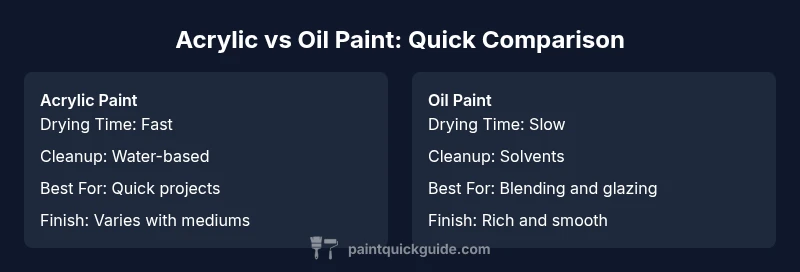
Acrylic paint vs oil paint represent two distinct painting media with different working properties. Acrylics dry quickly, clean up with water, and resist yellowing, making them ideal for fast projects and beginner-friendly work. Oils offer richer color depth and extended blending time for smooth transitions, but require solvents and longer curing. The choice depends on your project timeline, desired finish, and cleanup preferences.
Core Differences in Media Foundations
Understanding acrylic paint vs oil paint starts with their chemistry. Acrylics are water-based polymers suspended in a acrylic binder, while oils rely on drying oils (often linseed) or alkyds as the binder. This fundamental distinction drives almost every other decision a painter makes—from drying time and finish to clean-up and long-term aging. According to PaintQuickGuide, acrylics are generally water-based, dry quickly, and offer excellent color stability with minimal yellowing, while oils provide deeper color saturation, slow blending, and complex glaze possibilities. This section lays the groundwork for a practical, evidence-driven comparison that homeowners and DIY enthusiasts can apply to walls, furniture, canvases, and auto refinishing projects alike. Acrylic paint vs oil paint is rarely a simple choice, but understanding the basics helps you pick the right tool for the job.
For broad audiences, the takeaway is that the medium you choose will shape not only the finish but also the workflow, cleanup, and timing of subsequent coats or sealants. Both media can deliver durable results when used with appropriate materials and surfaces. The PaintQuickGuide team emphasizes that decisions should align with your skill level, space constraints, and long-term maintenance plan. In this guide, you’ll find a practical framework to compare the media across common painting tasks, plus tips to optimize outcomes regardless of the chosen medium.
-1
Comparison
| Feature | Acrylic paint | Oil paint |
|---|---|---|
| Drying Time | Fast-drying (minutes to hours) | Slow drying (hours to days) |
| Open Time / Blending | Limited open time; blending requires quick work or retarders | Long open time; seamless blending and glazing are easier |
| Finish and Color Depth | Bright, crisp color with good colorfastness | Rich, deep color and smooth transitions with glazing |
| Surface Prep | Versatile across many surfaces with proper primer | Typically requires primed, rigid support to prevent cracking |
| Cleanup and Solvents | Water-based cleanup; mild soap | Solvent cleanup (turpentine/mineral spirits); ventilation needed |
| Durability and Aging | Excellent color stability; less yellowing | Potential yellowing over time if not protected; aging depends on varnish |
| Odor and VOC | Low odor; low VOC options common | Higher odor and VOC content without proper ventilation |
| Cost and Availability | Generally affordable and widely available | Often higher cost; longer shelf life when stored properly |
Upsides
- Fast drying enables rapid project completion and multiple coats in a day
- Water-based cleanup reduces mess and makes indoor use practical
- Lower odor options improve indoor usability for enclosed spaces
- User-friendly for beginners and hobbyists with forgiving properties
- Wide range of colors and mediums allows quick experimentation
What's Bad
- Oil paints offer superior blending and glaze potential for nuanced finishes
- Oil cleanup requires solvents and good ventilation, increasing health and safety considerations
- Acrylics can appear plastic-like if not finished with the right mediums and varnishes
- Oil paints may yellow slightly with age if not protected by appropriate varnish or layers
Acrylic paint excels for speed and ease; oil paint wins on depth and blending when used with proper technique.
If you need rapid coverage and easy cleanup, acrylics are the practical choice. For projects demanding subtle color transitions and long-term richness, oil paints win, provided you manage solvents and curing time. The best choice depends on your project type, workspace, and skill level.
Your Questions Answered
What is the fundamental difference between acrylic paint and oil paint?
Acrylic paint uses a water-based polymer binder that dries quickly, while oil paint uses a drying oil or alkyd binder that takes much longer to cure. This difference affects drying time, blending ability, and final appearance. Both can produce durable finishes with proper technique and surface prep.
The basic difference is the binder: water-based acrylics dry fast, oils stay wet longer for blending.
Is acrylic painting easier for beginners than oil painting?
Yes, acrylics are generally easier for beginners due to quick drying, water cleanup, and fewer odor concerns. Oils require more planning for layers, solvent safety, and longer drying times. Beginners can start with acrylics and switch to oils later as skills mature.
For a beginner, acrylics are usually the better starting point.
Can you mix acrylic and oil paints in the same project?
Directly mixing acrylic and oil paints in the same layer is not recommended because the chemistry differs and can cause adhesion problems. Some artists use hybrid mediums to transition between media, but this requires careful testing.
Mixing directly isn’t advised; if you want a transition, test with compatible mediums first.
What surfaces work best with acrylic vs oil paints?
Acrylics work well on most surfaces with proper priming (canvas, wood, drywall, primed metal). Oils require well-prepared, nonporous primed surfaces (primed canvas, wood panels) to avoid cracking and absorption issues.
Acrylics are versatile; oils need carefully prepared surfaces.
How do you clean brushes and tools after using each medium?
Clean acrylic brushes with soap and water after use. Clean oil brushes with the appropriate solvent (turpentine or mineral spirits) and follow with soap and water; dry properly to prevent bristle damage.
For brushes, water and soap for acrylics; solvent + soap for oils.
Which medium is better for outdoor murals?
Both can be used outdoors, but acrylics are typically preferred for exterior walls due to faster drying, resistance to humidity, and easier maintenance. Oils can be used with proper varnishes and sealants, but longer cure times and environmental concerns must be managed.
Acrylics are usually the go-to for outdoor walls, with proper sealants.
Quick Summary
- Choose acrylics for speed and easy cleanup in home projects
- Opt for oils when blending depth and glaze work matter most
- Match surface prep and ventilation to the medium you select
- Use appropriate mediums and sealants to maximize durability
- Consider hybrid approaches carefully for specialized finishes