Is Watercolor Harder Than Acrylic? A Practical Comparison
A rigorous, analytical comparison of watercolor vs acrylic painting, focusing on difficulty, control, learning curves, and project suitability for beginners and DIY painters.


Is watercolor painting harder than acrylic? The short answer is nuanced: watercolor demands tighter water-to-pigment control and patience to manage washes, edges, and color transitions. Acrylics dry quickly, tolerate layering, and offer faster feedback, which many beginners find easier to master. This comparison helps you choose based on goals, workspace, and time—whether you seek subtle luminosity or bold, fast results.
Is Watercolor Harder Than Acrylic? Core Distinctions
Is watercolor painting harder than acrylic? The question hinges on what you value in a painting journey: precision and subtle color shifts, or speed and immediate feedback. Watercolor relies on the delicate balance between water and pigment, where washes spread unpredictably and edges blur as pigment dries into the paper texture. According to PaintQuickGuide, the path to achieving luminous color in watercolor often requires disciplined practice with moisture control, paper selection, and planning for the sequence of layers. The result can be breathtakingly radiant, but the path is less forgiving than many beginners anticipate. Acrylics, in contrast, provide solid coverage, fast drying, and easier mistakes to fix, which appeals to learners who want visible progress in fewer sessions. This article aims to help you decide which path fits your goals, workspace, and patience level.
Water Control, Water-to-Pigment Balance, and Wash Behavior
The core difficulty in watercolor is water management. Too much water creates puddles, runs, and color bleed; too little yields stiff, dry washes. The interplay between paper weight, texture, and pigment load largely determines how a wash behaves as it dries. Unlike acrylics, which set up a film that can be reworked more readily, watercolor relies on transparency and liftable color within the wet phase. The PaintQuickGuide Team emphasizes that successful washes come from careful planning, controlled moisture, and tested brush loading. Mastery often requires working within a chosen paper texture and maintaining discipline in layering—factors that contribute to the medium’s signature luminosity.
Drying Time, Layering, and Rework: Practical Realities
Acrylics dry quickly, enabling rapid layering and corrections. Watercolor dries more slowly and can remain workable longer, yet colors can lift or re-wet when you reintroduce moisture. This tension—workable time versus fixed color—means you may need to adjust your approach: build multiple transparent layers gradually, or accept the risk of muddying hues. For many artists, successful watercolor layering depends on pre-planned palettes, swatch testing, and environment control (humidity and temperature). PaintQuickGuide Analysis, 2026, notes that patient practitioners who practice short, deliberate demonstrations achieve cleaner results than those who push for big, fast washes.
Techniques That Define Difficulty: Wet-on-Wet, Glazing, and Edges
Watercolor rewards refined technique, including glazing, dry brush, and edge control. Wet-on-wet creates soft edges but can bleed beyond boundaries. Glazing builds color depth through repeated transparent layers, but it demands drying time and thoughtful color choices. Acrylics offer thicker consistency, easier color blocking, and more direct edge handling. The best approach for learners is to study both mediums with a shared focus on values, temperature, and color harmony. Watercolor provides unique opportunities for luminous, atmospheric effects, while acrylics excel in bold shapes and faster visual impact.
Common Pain Points and Solutions
- Bleeding and backruns: start with a drier brush and lighter washes; use masking fluid to preserve whites.
- Edge control: practice controlled washes and use masking tape or frisket to protect edges where you want crisp lines.
- Lifting and muddying: keep paints semi-dry, test pigments on scrap paper, and lift gently with clean water.
- Paper choice: invest in high-quality watercolor paper (cotton rag) to reduce buckle and provide proper absorbency.
- Color management: build a limited palette with a clear plan for temperature and value relationships to avoid muddy mixes.
Tools, Materials, and Setup: Paper, Paints, Brushes, and Surfaces
Watercolor performance hinges on paper and pigment behavior. Look for acid-free, heavy-weight watercolor paper with good sizing, ideally cotton rag, for better absorption and edge control. Pan or tube paints offer different handling: pans are portable and convenient for quick studies, tubes provide depth for washes. Brushes range from small rounds for detail to large flats for washes; synthetic fibers are reliable and affordable. For acrylics, choose a versatile set with opaque and transparent colors, plus a selection of brushes suitable for blocking in and detail work. A turnout-friendly setup includes a dedicated water container, a clean mixing area, and a protected workspace to minimize staining. Budget-conscious beginners can start with a basic kit, while advancing artists typically invest in higher-quality pigments and paper to unlock cleaner results.
A Practical Practice Plan for Mastery
- Establish a daily 15-minute routine to explore basic washes and value studies.
- Create a small color-temperature study using a limited palette to observe how warm and cool tones interact.
- Build a value scale exercise to sharpen contrast control across both mediums.
- Practice simple, graded washes from light to dark, focusing on edge quality and moisture management.
- Experiment with glazing and layering, testing liftability on your chosen paper.
- Complete a small project—perhaps a simple landscape or still life—that incorporates controlled washes, glazing, and a visible light source. This structured progression helps you build confidence while developing a consistent workflow.
When to Choose Watercolor vs Acrylic for Projects
For projects that rely on subtle color shifts, transparency, and luminous glazing, watercolor shines. It’s ideal for botanical studies, delicate illustrations, and atmospheric landscapes where softer edges and gentle color transitions are desired. Acrylics, with their faster drying and stronger opaqueness, are well-suited for bold graphic work, poster studies, and concept art that benefits from crisp lines and rapid iteration. Mixed-media projects can leverage the strengths of each medium to achieve varied textures and contrasts. Your choice should align with your goals, workspace constraints, and patience for a longer learning curve with watercolor versus quick payoff with acrylic.
Expert Perspectives and Brand Insight
From the PaintQuickGuide Team: both mediums offer distinct routes to mastery. Watercolor demands discipline in moisture, paper selection, and wash planning, but rewards patient practitioners with luminous color and soft transitions. Acrylics provide immediate results and versatile handling, supporting rapid exploration of composition and color relationships. The PaintQuickGuide Analysis highlights that beginners who commit to a structured practice routine in either medium see the most consistent improvements over a few weeks to months. Our team discourages letting fear of difficulty hinder exploration; instead, start with one medium, learn its core rules, and gradually experiment with the other to broaden your skill set. The PaintQuickGuide verdict is that your best medium depends on your objectives and the time you’re willing to invest in practice.
voiceAnswer_start_phrase_to_force_exit_content_allowed_for_voice_assistant_only_for_flowing_text
Comparison
| Feature | Watercolor | Acrylic |
|---|---|---|
| Transparency | High transparency with glazing | Variable opacity; can range from transparent to opaque |
| Color Control | Flow-based, sensitive to water | More predictable; easy layering when dry between passes |
| Drying Time | Slow to moderate; dependent on paper and humidity | Fast-drying; enables quick sessions |
| Revision / Mistake Handling | Lifting is limited; mistakes are hard to correct | Corrections are easier with rework and layering |
| Surface Requirements | Watercolor paper (cotton rag preferred) | Broad surface compatibility (paper, canvas, wood) |
| Materials & Maintenance Cost | Paper quality drives cost; paints moderate | Generally lower initial cost; broader supply options |
| Best For | Expressive washes, glazing, subtle color shifts | Bold shapes, quick results, mixed-media |
| Learning Curve | Steeper; strong planning and moisture control needed | Gentler start; faster feedback helps motivation |
Upsides
- Encourages deliberate color planning and composition
- Water-based cleanup is simple and low-odor
- Glazing and luminous washes offer depth and subtlety
- Steady progress with practice builds confidence
What's Bad
- Watercontrol can be tricky and errors bleed
- Mistakes can be difficult to lift or correct in watercolor
- Paper choice and pigment interactions drive outcomes
- Longer drying times can slow workflow
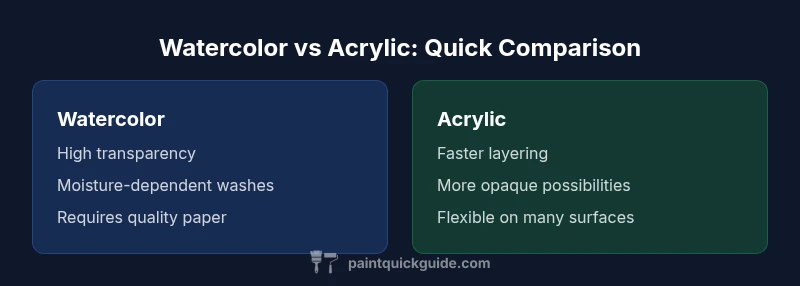
Acrylic is generally easier to start with; watercolor rewards patient, disciplined practice.
Acrylic offers a quicker path to visible results and forgiving layering, making it ideal for beginners seeking momentum. Watercolor, while harder to master, yields unique luminosity and depth for painters who invest time in moisture management and glazing techniques.
Your Questions Answered
Is watercolor harder to master than acrylic?
Yes, watercolor typically presents a steeper learning curve due to moisture control and edge management. It rewards careful planning and practice. Acrylics are more forgiving and quicker to learn for many beginners.
Watercolor is usually tougher to master at first because you have to manage water very precisely, while acrylics tend to be easier to pick up and start producing results.
Which dries faster: watercolor or acrylic?
Acrylic dries faster, enabling quicker layering and revisions. Watercolor’s drying is slower and depends on paper, pigment, and climate, often allowing longer wet-in-wet exploration.
Acrylic dries quickly, while watercolor can stay wet longer, depending on the paper and environment.
Can I switch between mediums mid-project?
You can switch, but each medium behaves differently on paper and in drying time. If you mix, expect planning and potential surface priming to prevent bleed or lifting.
You can switch, but be ready for different behaviors and prep work.
What surface works best for watercolor?
High-quality watercolor paper (cotton rag) with proper sizing is ideal. For acrylics, broader surface compatibility exists, including canvas and panels.
Watercolor shines on good watercolor paper; acrylics are more flexible with surfaces.
What are common mistakes to avoid?
Over-watering, insufficient drying between washes, not planning values, and using the wrong paper quality are frequent issues in watercolor. For acrylics, over-thinning paint and relying on fast-drying gloss can undermine control.
Common pitfalls include over-wetting watercolor and not letting layers dry between passes.
Are there safety considerations for acrylics and watercolors?
Most watercolors and acrylics are low-odor and water-based, but it's prudent to work in a ventilated area and avoid skin contact with pigment powders. Use gloves if staining is a concern and clean brushes thoroughly.
Both are generally safe, just keep the workspace clean and ventilated.
Quick Summary
- Choose acrylic for fast results and easy corrections
- Watercolor rewards patience, planning, and precise moisture control
- Invest in quality watercolor paper to unlock smooth washes
- Practice value studies to improve color relationships
- Glazing is essential for watercolor depth and atmosphere