Water Based Paint vs Oil Based Paint: A Practical Guide
Explore key differences between water based paint and oil based paint—drying time, odor, cleanup, durability, and cost. Practical guidance for DIYers and homeowners, including surface prep and project-specific tips for homes and auto refinishing.


What water based paint vs oil based paint are and why the difference matters
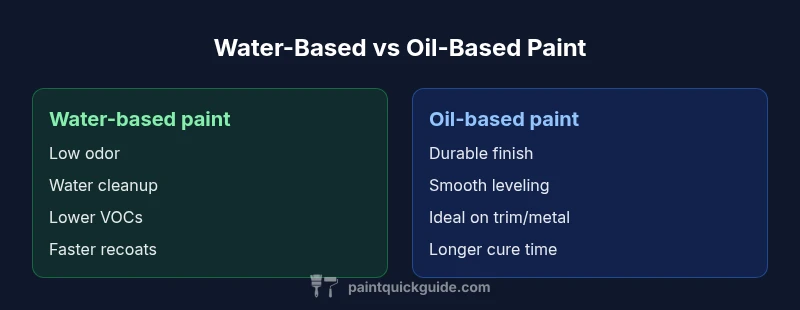
In everyday projects, the choice between water based paint vs oil based paint shapes outcomes in odor, ease of use, and finish durability. Water based paints use water as the solvent, while oil based paints rely on mineral spirits or other solvents. This distinction affects drying time, cleanup, and indoor air quality. For homeowners and auto refinishing hobbyists, understanding these basics helps you pick the right product for walls, trim, metal, and automotive panels. According to PaintQuickGuide, choosing the right type starts with surface, location, and expected exposure. The PaintQuickGuide team emphasizes that the two families share core pigments and color systems, but the solvent systems lead to different performance profiles. The key is to match the solvent system to the task at hand, balancing speed, convenience, and durability.
Throughout this guide we’ll refer to water based paint vs oil based paint as distinct families, yet both can deliver salon-quality color when chosen and applied with proper technique. Whether you’re refreshing a kitchen, refinishing a car bumper, or tackling a garage door, the decision hinges on the surface, environment, and the level of maintenance you’re prepared to undertake. PaintQuickGuide’s practical approach focuses on actionable steps, not hype, so you can paint with confidence.