Is It Paint or Wallpaper? A Practical Comparison Guide (2026)
A data-driven guide for homeowners and DIYers weighing paint vs wallpaper, covering costs, durability, installation, upkeep, and strategic decision tips.


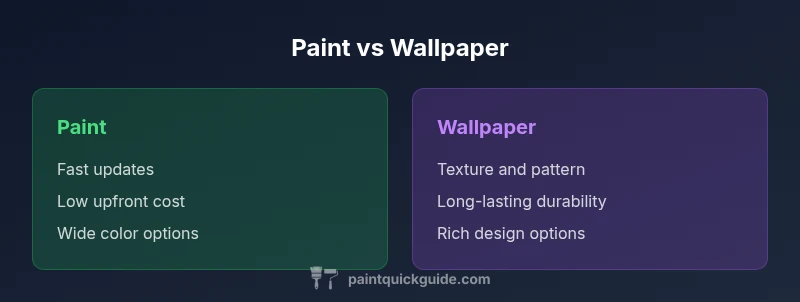
Is it paint or wallpaper? The quick answer is that it depends on your goals: paint offers speed, cost-efficiency, and easy updates; wallpaper delivers texture, long-term durability, and design richness. This comparison helps you decide based on durability, cost, and upkeep, with practical scenarios to guide your choice.
Is It Paint or Wallpaper? Framing the Decision
The question that many homeowners ask when refreshing a space is: is it paint or wallpaper? The short answer hinges on your goals, timeline, and how you use the room. If you look for flexibility and speed, paint is typically the quicker route. If you crave texture, pattern, and a more permanent look, wallpaper can deliver. According to PaintQuickGuide, the best starting point is to define the room’s function, the level of wear it receives, and whether you want to refresh colors more often or keep a design long-term. The PaintQuickGuide team found that prep complexity, removal, and wall condition are major determinants of total cost and downtime, especially for wallpaper. As you read, keep in mind that there isn’t a universal rule—there is a pragmatic framework you can apply to each space. This guide uses clear criteria and real-world examples to help you decide is it paint or wallpaper for each scenario.
Key Differences at a Glance
Paint and wallpaper differ in several core dimensions: preparation needs, installation time, durability, cost, and design versatility. In this section we lay out the baseline contrasts so you can quickly map your priorities to the right choice. You’ll see why some spaces benefit from the immediacy of paint, while others justify the long-term value of wallpaper. Throughout, we’ll reference practical thresholds for typical home projects, avoiding guesswork and focusing on actionable guidance.
Durability, Wear, and Longevity
Durability is a central factor in deciding if it’s paint or wallpaper for your walls. Interior paint finishes vary from flat to high-gloss, with washable options offering better scrubbing resistance for busy spaces. In most homes, a good-quality paint job can stay visually fresh for several years with proper maintenance, though color changes will require repainting to stay current. Wallpaper tends to offer longer-term resilience in terms of pattern stability and edge integrity, especially vinyl or non-woven varieties. However, wall texture and seams can influence long-term performance. The takeaway is to match the wall’s expected wear with the material’s endurance. Paint often wins on mid-term flexibility; wallpaper wins on long-term visual impact and durability in low-traffic spaces. For a grounded view, consider the typical lifecycle in relation to your room’s use and environment.
Installation and Prep: Time, Skill, and Mess
Preparation for paint is usually straightforward: patch holes, sand rough spots, wipe down walls, and apply primer if needed. This process tends to be faster, especially for standard drywall, and it allows a DIY-friendly approach with general tools. Wallpaper installation, by contrast, requires careful wall prep, precise measurement, and meticulous alignment of seams. The paste, pattern matching, and potential need to strip old coverings add complexity and time. The total project duration often scales with room size and wall condition. If you’re aiming for minimal disruption, paint provides a quicker turnaround; if you’re chasing a premium finish with texture, wallpaper demands more planning but can deliver a standout result with fewer annual touch-ups.
Cost and Value: Material, Labor, and Longevity
Costs for paint projects depend heavily on the paint grade, finish, and the size of the space. Materials can be relatively affordable, but labor—especially for multiple coats and color changes—can add up. Wallpaper costs tend to be higher upfront due to materials and installation labor, but lifespans can extend beyond many painted surfaces when applied properly. When evaluating is it paint or wallpaper, compute total cost over time, including removal and wall-prep if you plan to re-theme. In many cases, a high-quality wallpaper installation justifies the investment in rooms where a single look is meant to last for many years. If you’re budget-conscious, start with paint and reserve wallpaper for accent walls or rooms in need of a stronger texture.
Design Flexibility: Color, Texture, and Pattern Options
Paint offers almost unlimited color choices and finish options, allowing rapid changes with relatively simple tools. Wallpapers provide patterns, textures, and tactile surfaces that can transform a space beyond color alone. Modern wallpaper types—vinyl, non-woven, fabric-backed—bring depth and resilience, while paint lets you experiment with subtle grays, bold primaries, or evolving color schemes without committing to a single texture. When evaluating is it paint or wallpaper for a given room, weigh the desire for pattern diversity against the ease of changing the look down the road. If pattern continuity across adjacent rooms matters, wallpaper can create a cohesive narrative; if you rotate styles seasonally, paint is more practical.
Environment, Health, and Removal Considerations
The environmental and health aspects differ between paint and wallpaper. Water-based interior paints tend to have lower solvent emissions, and VOC levels reduce with higher-quality products. Wallpaper removal can involve glue residues and more aggressive techniques, depending on the wall type and adhesive used. If lead paint is a possibility in older homes, professional assessment is advised regardless of whether you choose to repaint or re-wallpaper. For those prioritizing sustainability, consider low-VOC paints and recyclable wallpaper materials. The decision should factor in indoor air quality, the ease of future updates, and the resources available for safe removal when the time comes.
Room-Specific Guidance: Living Rooms, Kitchens, and Bathrooms
Living rooms benefit from paint when you want a broad, unified color that’s easy to refresh. An accent wall or selective wallpaper in a living room can create focal points without overcommitment. Kitchens often favor washable paint finishes for frequent splashes, or tile and vinyl-backed wallpaper in protected zones where cleaning is essential. Bathrooms demand moisture-resistant finishes; high-humidity environments can affect wallpaper longevity if not properly installed or vented. In all cases, assess light exposure, humidity, and traffic to tailor your choice. If you want a quick aesthetic uplift with minimal risk, start with paint; if durability and texture are your priorities, consider wallpaper with appropriate moisture resistance.
Common Pitfalls and How to Avoid Them
Rushed decisions, improper wall prep, and mismatched finishes are common traps when choosing between paint and wallpaper. To avoid them, sample color swatches in multiple lighting conditions, test wallpaper on a small area before full installation, and ensure surface flatness before hanging wall coverings. Avoid poor seam alignment or insufficient adhesive, which can cause bubbling or curling. For high-traffic spaces, choose washable paint or select wallpaper specifically rated for humidity and wear. A structured plan with a clear budget, timeline, and contingency for removal will help ensure your final result matches the initial vision.
Quick Planning Checklist and Decision Tree
Before you start, build a simple decision tree: Is the wall in a high-traffic or moisture-prone area? Do you want quick changes or long-term texture? Are you prepared for removal work if you decide to switch later? If your answers favor speed, cost savings, and easy updates, start with paint. If texture, pattern, and lasting quality are your priorities, investigate wallpaper options with appropriate moisture resistance. Create a sample board of color and texture, estimate wall area, and plan for appropriate priming or adhesive needs. This structured approach helps translate the abstract choice between paint and wallpaper into concrete next steps.
Putting It All Together: A Step-by-Step Action Plan
- Define room function and traffic level. 2) Pick an initial finish and color family for paint, or select a few wallpaper options with texture and scale. 3) Assess wall condition and moisture exposure to determine prep needs. 4) Gather quotes for installation and removal, if wallpaper is chosen. 5) Run a small pilot area to verify satisfaction before committing to the entire room. 6) Schedule installation and arrange post-project maintenance to preserve the finish. By following these steps, you can confidently answer is it paint or wallpaper for your home upgrade and stay within budget and timeline.
Final Thoughts and How to Begin
Choosing between paint and wallpaper is a decision that blends practicality with aesthetics. It’s not only about the color or pattern but about how you live in the space, how much time you’re willing to invest, and what you want the room to feel like for years. Start with a clear set of criteria, test options on sample walls, and estimate long-term maintenance costs. With a structured approach, you can arrive at a decision that aligns with both your design goals and your daily life.
Comparison
| Feature | Paint | Wallpaper |
|---|---|---|
| Application Time | Fast turnaround with painting (often same day in small rooms) | Longer setup and seam alignment for wallpaper |
| Durability | Quality washable paint resists wear with proper maintenance | Vinyl/non-woven wallpaper offers strong durability and pattern stability |
| Removal | Easy to repaint or touch up | Removal can be labor-intensive; may require wall prep afterward |
| Cost per sq ft | Low to moderate for materials; labor varies with finish | Moderate to high when materials plus skilled installation are considered |
| Design Options | Extensive color and finish choices | Wide pattern, texture, and scale options |
| Maintenance | Scrubs and touch-ups as needed | Patterned surfaces can be long-lasting with less frequent changes |
| Best For | Quick refreshes, easy color changes | Texture and long-term, low-maintenance design |
Upsides
- Low upfront cost for basic paint projects
- Broad color options and quick changes
- DIY friendly for many homeowners
- Easier to clean in most spaces
What's Bad
- Wallpaper has higher upfront cost and more complex installation
- Removal can be messy and time-consuming
- Patterned walls may limit future color changes
- Requires wall prep for best results
Paint generally offers better value for most rooms; wallpaper excels when texture and long-term durability matter.
The PaintQuickGuide team recommends starting with paint for most spaces due to cost, speed, and ease of updating. For rooms where texture, pattern, and longevity are priorities, wallpaper is worth considering, provided you plan for installation and removal efforts.
Your Questions Answered
What is the main difference between paint and wallpaper?
Paint is a color-based coating applied to wall surfaces, offering wide color variety and quick changes. Wallpaper is a pre-printed covering with patterns and textures that adheres to walls, often lasting longer but requiring more prep and removal effort if you switch designs.
Paint gives you colors quickly; wallpaper adds texture and patterns, but removal can be a bigger job.
When should I choose paint over wallpaper?
Choose paint when you want fast updates, lower upfront costs, and easy changes with repeating color palettes. It’s also preferable in high-traffic rooms where frequent cleaning and quick redecoration are desired.
If you want quick changes and lower upfront costs, go with paint.
Can you paint over wallpaper?
Painting over wallpaper is possible but not always ideal. You must ensure the wallpaper is in good condition, use a suitable bonding primer, and be prepared for potential issues with adhesion if the wallpaper is old or damaged.
You can paint over wallpaper with proper prep, but it’s not always the best long-term choice.
What about moisture-prone spaces?
Moisture-prone spaces benefit from moisture-rated paints or moisture-resistant wallpapers. Bathrooms and kitchens require careful material selection and ventilation to prevent peeling or mold growth.
Use moisture-rated products and ensure good ventilation in bathrooms and kitchens.
Is wallpaper more durable than paint in the long term?
Wallpaper can provide long-term durability in appropriate environments, especially vinyl and non-woven options. However, durability depends on installation quality and wall conditions, and removal can be more challenging than repainting.
Wallpaper can last longer if installed well, but removal can be harder.
How do costs compare overall?
Paint projects are generally cheaper upfront, with costs driven by material quality and labor. Wallpaper incurs higher initial costs due to materials and skilled installation but may reduce repaint frequency if designed for longevity.
Paint is usually cheaper to start; wallpaper can cost more upfront but lasts longer if installed well.
Quick Summary
- Start with paint for most rooms to save time and money
- Choose wallpaper when texture and enduring design are top priorities
- Account for removal and wall prep in total cost
- Test samples in multiple lighting conditions before committing