Is Paint or Wrap Better? A Practical Comparison for Homes and Cars
A comprehensive, data-driven comparison of paint vs vinyl wrap for homes and vehicles. Learn how costs, longevity, installation downtime, and aesthetics influence outcomes, with actionable guidance from PaintQuickGuide.


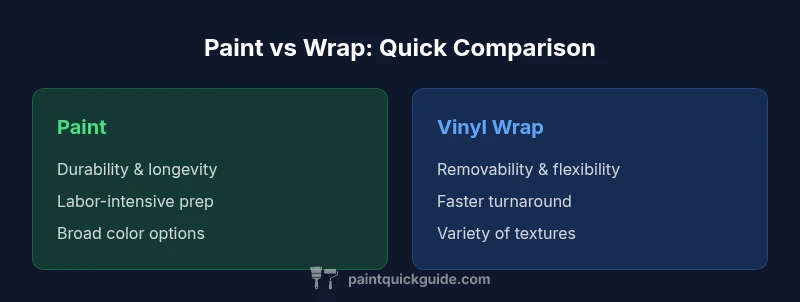
Is paint or wrap better? According to PaintQuickGuide, paint delivers long-term durability and a seamless finish, while wrap offers fast appearance changes and easy reversibility. The best choice depends on project scope, budget, and how permanent the result must be. In general, paint favors longevity and value, while wrap favors flexibility and reversibility.
What paint vs wrap really are for homes and cars
Paint is a liquid coating applied to a substrate and allowed to cure into a continuous film. Vinyl wrap (often called a wrap) is a flexible film that adheres to the surface and is designed for removal. Both approaches protect underlying materials and alter appearance, but they behave differently under sun, heat, abrasion, and time. When asked whether is paint or wrap better, most homeowners and auto enthusiasts will depend on permanence, budget, and how easily the look should be changed. This overview uses practical tradeoffs from the PaintQuickGuide team to help you decide what to choose for your project. Think about how long you’ll keep the look, how much downtime you can tolerate, and what you’ll gain or lose if you change your mind. The goal is a decision that minimizes risk while maximizing satisfaction over the life of the finish.
Cost and longevity explained
Cost is about more than the sticker price. With paint, you pay for prep, primer, topcoat, and skilled labor, but the coating itself tends to stay put for many years if you maintain it and protect it from harsh elements. Vinyl wrap involves film costs, printing or solid-color vinyl, installation labor, edge sealing, and occasional replacement as trends or damage occur. For a home, paint’s long-term durability often translates to lower annualized costs, while a car wrap lets you refresh styling without a full repaint. In practice, the choice hinges on whether you expect to keep the look for many years or prefer the ability to switch designs as tastes change. PaintQuickGuide emphasizes evaluating total cost of ownership rather than upfront price alone.
Durability, wear, and maintenance
Durability for paint relies on surface prep, primer quality, film thickness, and UV exposure. A high-quality exterior paint job protected by appropriate sealants resists peeling, fading, and cracking when maintained. Vinyl wraps, by contrast, are designed to tolerate road debris and weather while remaining removable. Their durability is highly dependent on proper surface preparation, correct adhesive chemistry, and careful edge wrapping. Maintenance for paint is typically cleaning and periodic inspection for chipping; wraps require careful washing to avoid adhesive stress and regular checks of edge seals where the film meets panels. Across both methods, the best outcomes come from professional installation and using products suited to the substrate and climate.
Aesthetic options, color, and finishes
Paint offers a vast universe of colors and finishes—from matte to high gloss, pearl, metallic, and specialty sheens. For homes, color consistency and fade resistance are critical, and high-quality pigments can provide long-term stability. Vinyl wrap shines with graphics, textures, and patterns that are difficult to reproduce with paint, including brushed metal looks, patterns, or bold branding for vehicles. Wraps can incorporate full-color graphics or intricate textures without multiple coats of paint. When deciding is paint or wrap better aesthetically, consider whether you want a traditional, durable finish or a customizable, bold look that can be changed without repainting. PaintQuickGuide notes that both paths can achieve striking results with proper product choice and surface preparation.
Application timeline and downtime
Application timelines differ dramatically. A paint project requires extensive surface preparation, priming, multiple coats, and curing time before use, which means noticeable downtime. Wrap installation typically occupies fewer days, since it involves cleaning, film printing or selection, lamination, and precise adhesion to the surface. In many cases, wraps can be completed while the vehicle is off the road for a short period, making them attractive for owners who need faster turnarounds. For homeowners, a full exterior paint job may span longer due to the curing process, weather constraints, and lead times for custom colors. Understanding the downtime implications helps you decide if permanent color changes or temporary styling are more appropriate for your schedule.
Surface prep and substrate considerations
Both paint and wrap demand clean, stable substrates. Painted surfaces require proper sanding, filler work for imperfections, and primer compatible with the topcoat. Wraps demand an exceptionally clean, smooth surface; any texture or deep imperfections can telegraph through the vinyl and shorten the film’s life. Some substrates—such as highly flexible plastics, certain metals, or weathered surfaces—may need specific prep steps or primer systems to maximize adhesion. For cars, you must consider door seams, moldings, and edges where wrap or paint can lift if not carefully executed. The takeaway: start with a substrate assessment, since this decision cascades into product choice, warranty coverage, and long-term results.
Practical decision framework: when to choose each option
If you’re still wondering is paint or wrap better for your project, follow a simple framework. Step 1: define the permanence you need. Step 2: assess the environment and expected wear. Step 3: set a budget for upfront investment and future changes. Step 4: evaluate downtime and impact on daily life. Step 5: consider the level of customization desired. Step 6: consult with a professional to confirm substrate readiness and proper product selection. Using this framework will help you align the choice with your priorities, whether it’s durability, reversibility, or rapid updates. The framework is especially helpful for homeowners weighing exterior painting against a vinyl wrap for accents or full coverage, and for car enthusiasts weighing long-term color stability against flexible branding opportunities.
Real-world scenarios and best practices
In practice, many homeowners opt for paint when planning a long-term color transformation with minimal future changes, especially on exterior surfaces that face sun exposure and weather. For vehicles or signage, vinyl wrap remains popular because of its reversibility and the ability to create bold graphics without committing to a permanent color. A well-executed job in either path can protect the substrate and improve curb appeal, but the project’s goals should drive the decision. Communities and climate can also influence performance; UV-heavy environments may stress some wraps sooner, while harsher climates may demand more robust paints and protective clear coats. The PaintQuickGuide approach is to match material choices to real-world use, maintenance expectations, and the desire for future flexibility.
Comparison
| Feature | Paint | Vinyl Wrap |
|---|---|---|
| Durability & Longevity | Very durable color & finish with proper prep and UV protection | Edge wear and peeling possible at seams if poorly applied |
| Cost Over Time | Lower ongoing costs for a long-term installation | May require more frequent refresh or replacement for changing designs |
| Installation Time & Downtime | Long prep and cure time for solid color; drying times vary by product | Quicker application with shorter downtime, depending on vehicle size and design complexity |
| Removability & Reversibility | Typically permanent-like once cured; removal can affect substrate if aggressive | Designed for removal with less risk to the base surface when done by pros |
| Aesthetic Options | Broad color range, finishes, and custom blends; easy to cover large areas | Wide graphics, textures, and reversible color changes with patterns |
| Surface Prep Requirements | Requires thorough cleaning, sanding, and priming as needed | Requires clean, smooth surface; imperfections can show through edges |
| Best For | Permanent color, durability, and low maintenance for long-term stays | Temporary styling, color-change flexibility, and rapid deployment |
Upsides
- Paint delivers durable, seamless finishes with strong color retention
- Wrap provides reversibility and rapid color changes
- Both options can protect surfaces when properly installed
- Professional installation yields high-quality results
- With proper product choice, maintenance is straightforward
What's Bad
- Paint requires longer downtime for prep and curing
- Wrap can be costly for small projects and edge wear
- Color matching and consistency can be challenging
- Removal or rework may be required for changes
Paint is generally better for long-term value and permanence; wrap shines for reversibility and fast updates
Choose paint for durability and cost-per-year efficiency on permanent installations. Choose wrap if you want flexible design changes, fast turnaround, or temporary styling.
Your Questions Answered
What is the typical lifespan difference between paint and vinyl wrap?
Lifespan depends on environment, exposure, and maintenance. Painted surfaces tend to hold color and finish longer when properly prepped and protected, while vinyl wraps offer reversible coverage but may require attention to edges and edge seals over time.
Lifespan depends on usage. Paint lasts longer with proper prep and protection; wraps are removable but need edge care to maintain life.
Is paint cheaper upfront than wrap for a car or home project?
Upfront costs vary by project scope, surface, and product quality. In many cases, paint has a lower initial cost for long-term homes, while wraps can be more economical for temporary or highly customized needs on vehicles.
Upfront costs vary; paint is often cheaper to start, while wraps add value through changeability.
Can wraps damage the underlying surface when removed?
Removal should be performed by professionals to minimize risk to the substrate and existing coatings. Proper backing and technique reduce the chance of damage during removal.
Professional removal minimizes risk to the surface underneath.
Is wrap better suited to cars or homes?
Wraps are popular for cars and signs due to reversibility and graphics. Paint is favored for homes and long-lasting color stability, especially on exterior surfaces with UV exposure.
Wraps for flexible looks; paint for durable home color across years.
Is it easier to DIY paint or wrap?
Painting is generally more DIY-friendly for homeowners, provided you have proper tools and ventilation. Wrap installation typically requires professional equipment and expertise for a clean, durable result.
Paint is usually easier for DIYers; wraps usually need pros.
Are there environmental or safety concerns with these options?
Both options require proper ventilation and waste handling. Choosing low-VOC paints and compliant waste disposal reduces environmental impact, while reputable wrap suppliers provide guidelines for safe installation and removal.
Ventilation and proper disposal matter for both paint and wrap.
Quick Summary
- Plan for long-term ownership: paint often wins on durability
- Choose reversibility: wrap excels for temporary or changing looks
- Factor downtime and surface prep: both require prep and proper technique
- Budget for future updates: wraps may need replacement as trends change