Wallpaper vs Paint: A Practical Comparison for Interiors
Explore when wallpaper outperforms paint for interiors, covering durability, design options, installation, and cost. Learn practical guidance from PaintQuickGuide to decide which finish fits your space with confidence.


According to PaintQuickGuide, the question of why use wallpaper instead of paint often comes down to durability, design flexibility, and long-term value in high-traffic areas. Wallpaper offers textures, patterns, and moisture-resistant options that paint cannot easily match. For many homeowners, the best choice depends on space, maintenance willingness, and long-term decorating goals.
Why wallpaper vs paint matters in interior strategy
In most homes, the decision to use wallpaper instead of paint hinges on how you want a space to feel and how much wall prep you’re willing to undertake. The core argument—why use wallpaper instead of paint—revolves around surface imperfections, textures, and a long-lasting aesthetic. Paint is fast, affordable upfront, and versatile, but wallpaper can deliver a lasting sense of depth, pattern, and color that transforms a room’s character. From the perspective of PaintQuickGuide, choosing wallpaper is often about balancing design ambition with practical maintenance considerations.
Durability, maintenance, and longevity under real-world conditions
Durability is a frontline consideration when comparing wallpaper to paint. Modern wallpapers, especially vinyl and washable types, resist scuffs, fingerprints, and moisture better in many bedrooms, hallways, and kitchens. In contrast, paint durability depends on the finish and substrate preparation. A high-quality latex or enamel paint can offer excellent longevity in dry rooms, but in high-traffic spaces or areas with humidity, wallpaper with a proper installation may maintain its look longer with less frequent refreshes. The PaintQuickGuide approach emphasizes material selection (vinyl, fiberglass, or fabric-backed variants) and surface prep to maximize longevity while preserving ease of cleaning.
Design and texture: expanding what’s possible with walls
Wallpaper provides a wide array of textures and patterns—from subtle textures to bold geometric murals—that paint simply cannot replicate with the same depth of visual interest. Textured surfaces, metallic finishes, and photographic murals can create focal points that redefine a room’s mood without repainting. Even if you plan to repaint in the future, wallpaper can serve as a long-lasting backdrop, reducing the need for frequent paint changes and enabling a dramatic style shift over time. Paint, on the other hand, offers color versatility and rapid changes with fewer logistical hurdles, making it ideal for quick updates or seasonal refreshes. For homeowners exploring the difference, PaintQuickGuide’s evaluation highlights the trade-off between texture-rich wallpaper and color-only painting.
Installation realities: time, skill, and wall prep
Installing wallpaper is typically more time-consuming and skill-dependent than painting. Walls must be clean, dry, and often perfectly flat; seams must align precisely to avoid visible gaps. In contrast, painting requires less specialized technique, particularly for DIYers using rollers and brushes. If you’re considering wallpaper, plan for wall preparation, primer selection, adhesive type, pattern matching, and expert hanging if the wall surface is not ideal. Paint QuickGuide notes that the upfront labor cost for wallpaper can be higher, but the result can be more durable and visually impactful, particularly for feature walls or rooms with irregular textures.
Costs, value, and long-term considerations
Cost comparisons between wallpaper and paint vary by room size, chosen materials, and labor rates. Wallpaper generally has a higher upfront cost, including material and installation, but can offer extended lifespans with washable finishes and fewer repaint cycles. Paint presents a lower initial price and a wide range of finishes, making it suitable for frequent updates or temporary decor themes. The long-term value of wallpaper tends to be higher in spaces with high wear, moisture exposure, or the desire for a distinctive aesthetic that doesn’t require frequent changes. PaintQuickGuide’s analysis emphasizes evaluating the current wall condition, room function, and homeowner willingness to invest in professional installation when weighing wallpaper against paint.
Room-by-room guidance: where wallpaper shines and where paint wins
Certain spaces benefit disproportionately from wallpaper: entryways with textured walls, powder rooms seeking a high-end look, or living rooms needing a dramatic focal wall. Kitchens and bathrooms can also benefit if you choose vinyl or moisture-rated wallpaper with proper ventilation. Conversely, bedrooms and home offices that require rapid color changes or budget-conscious updates may lean toward paint for flexibility and speed. The key is matching material choice to room function and maintenance expectations, as highlighted in PaintQuickGuide’s practical recommendations.
Removability and future updates: planning for change
A common concern is how easy wallpaper is to remove when you want a new look. Modern vinyl wallpapers are easier to peel and remove with minimal wall damage if you follow manufacturer guidelines, but some wallpapers may leave adhesive residue or require wall repairs. Paint, by comparison, is straightforward to repaint, but changing color frequently increases maintenance cycles and protective prep work. For those who anticipate changes every few years, a careful mix of wallpaper accents and paintable surfaces can offer flexibility without compromising long-range aesthetics.
Environmental, health, and indoor air considerations
VOC emissions differ between wallpaper adhesives and paint finishes. Low-VOC paints are widely available and can benefit air quality, especially in bedrooms and nurseries. Wallpaper adhesives vary by product, with newer, low-emission options reducing odors and health concerns. A thoughtful selection process—favoring low-VOC paints or vinyl wallpapers with low-odor adhesives—helps ensure a healthier interior environment while achieving the desired look. PaintQuickGuide recommendations emphasize reading label details and choosing products with documented low emissions where occupants spend the most time.
Making a decision: a practical framework for homeowners
To decide between wallpaper and paint, start with the room’s function, lighting, and occupancy patterns. Consider wall texture, moisture exposure, and the likelihood of decor changes. Create a simple decision map: if you want bold texture, durability, and a lasting statement, wallpaper may be preferable; if you expect frequent updates, color flexibility, and lower upfront costs, paint is likely the best option. Throughout, weigh the wall prep, installation feasibility, and long-term maintenance against your budget and lifestyle. This pragmatic approach aligns with PaintQuickGuide’s evidence-based guidance and helps you choose confidently.
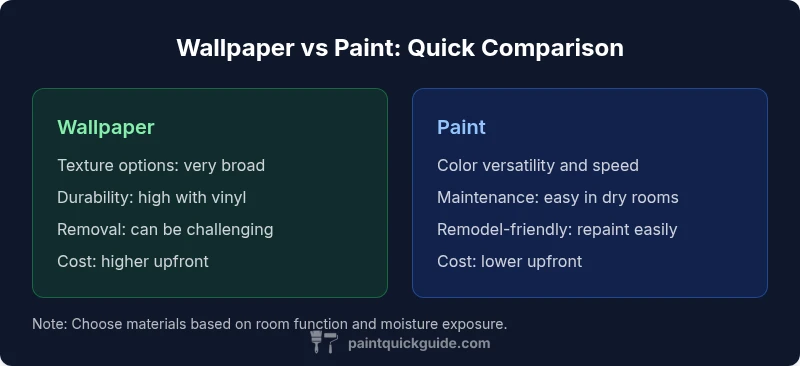
Comparison
| Feature | Wallpaper | Paint |
|---|---|---|
| Durability/Longevity | High with vinyl/textured wallpaper and washable finishes | High with durable finishes (latex/enamel) when properly applied in dry spaces |
| Design Options | Extensive textures, patterns, murals, and tactile finishes | Broad color range and finishes; easy to customize with tinting |
| Installation Time & Skill | Longer, requires prep and seam matching; often professional installation | Faster and more DIY-friendly; simpler prep and rolling |
| Maintenance & Cleaning | Washable options exist; some textures hide marks; care depends on adhesive quality | Most finishes are washable; maintenance is simple with appropriate sheen |
| Removability & Renovation | Removal can be challenging; some wallpapers peel cleanly; may require wall touch-ups | Repainting is straightforward; wall repairs are minimal if prepped well |
| Moisture Resistance | Vinyl wallpapers tolerate humidity better; not all are bathroom-grade | Latex/acrylic paints perform well in humidity with proper sealing |
| Initial Cost | Higher upfront cost due to material and installation | Lower upfront cost; versatile budget options |
| Best For | Design-forward spaces, texture-rich walls, accent areas | Flexible color changes, quick updates, budget-conscious projects |
Upsides
- Hides wall imperfections and textures for a polished look
- Expands design choices with patterns, textures, and murals
- Removable vinyl wallpapers enable updates with less wall prep
- Can offer long-term value in high-traffic or moisture-prone spaces
What's Bad
- Higher upfront costs and more complex installation
- Removal can damage walls if not done properly
- Not ideal for curved or irregular surfaces without specialized methods
- Limited DIY feasibility in complex rooms
Wallpaper is the better long-term design investment in many high-traffic or texture-focused spaces; paint remains superior for flexible, budget-friendly updates.
Choose wallpaper when you want durable texture and a lasting design statement. Opt for paint when you prioritize rapid changes, lower upfront costs, and simple refresh cycles.
Your Questions Answered
Is wallpaper suitable for bathrooms or kitchens?
Yes, but only with moisture-rated vinyl wallpapers and proper ventilation. Choose products labeled bathroom-grade or washability, and ensure you follow adhesive guidelines for humidity. Consider alternative options like tile or wainscoting for very wet areas.
Yes—look for bathroom-rated vinyl wallpaper and good ventilation. It’s workable, but pick moisture-resistant options and follow installation guidelines.
Can you paint over wallpaper later if you want a new look?
In many cases you can prime over wallpaper and paint, but removing wallpaper before repainting yields the best finish. If you must paint over, use a high-build primer to prevent wallpaper texture from telegraphing through. Expect some additional prep compared to painting bare walls.
You can paint over wallpaper, but removal often gives the best result; priming is essential if you must paint over.
How long does wallpaper last compared to paint?
With proper care and high-quality materials, wallpaper can last many years, particularly vinyl or washable varieties. Paint’s lifespan depends on finish and maintenance, and can degrade with humidity or heavy use. Regular inspections help you decide when a refresh is due.
If you maintain it well, wallpaper can last many years; paint lasts as long as its finish remains intact and is maintained.
Is wallpaper cheaper than paint in the long run?
Wallpaper often has higher upfront costs due to materials and installation but can reduce refresh cycles in busy areas. Paint is cheaper upfront but may require more frequent updates to maintain a fresh look, especially in high-traffic spaces. The total cost depends on room size, finish, and labor.
Upfront costs for wallpaper are higher, but long-term maintenance may be lower in busy spaces; paint is cheaper upfront but may require more frequent refreshes.
What rooms are best suited for wallpaper?
Accent walls, living rooms, hallways, and powder rooms often benefit from wallpaper’s texture and drama. Bathrooms can work with moisture-rated vinyl, while kitchens should use washable, durable options. Consider room lighting and traffic when selecting pattern and texture.
Accent walls and high-visibility spaces are great for wallpaper, especially with moisture-rated vinyl in kitchens and baths.
How difficult is wallpaper removal?
Removal varies by wallpaper type. Vinyl and modern peel-away options can come off with manageable wall prep, but some older papers require more time and wall repairs. Hiring a pro can simplify the process and reduce wall damage.
Removal can be straightforward with vinyl wallpapers, but some types need more care and wall repairs. Pros often handle it for clean results.
Quick Summary
- Assess wall texture and room traffic before deciding
- Choose vinyl or washable wallpaper for moisture-prone spaces
- Balance upfront costs with long-term maintenance and update plans
- Use wallpaper to create focal points and depth without frequent repainting
- Consider a mixed approach: wallpaper accents with paint for walls