Difference Between Paint and Stain: A Practical Guide
Explore the difference between paint and stain, including durability, finish, maintenance, and best-use scenarios for walls, furniture, and exterior wood. A clear, practical guide from PaintQuickGuide for homeowners and DIYers in 2026.


Paint and stain both seal and beautify surfaces, but they differ in opacity, protection, and maintenance. Paint provides an opaque color and a continuous film, while stain penetrates wood fibers to add color while preserving grain. For interiors, paint is typically best for walls and trim; stain shines on wood surfaces where grain visibility and breathability matter.
What is the difference between paint and stain? Definitions and core differences
At its core, the difference between paint and stain shapes not only color but also how a surface is protected and how it wears over time. Paint provides an opaque color and a continuous film that blocks moisture and resists abrasion. Stain is a penetrating color that soaks into wood fibers, allowing grain and texture to show while adding color. For homeowners and DIYers, this distinction drives look, maintenance, and long-term costs. When you compare the difference between paint and stain, you should consider surface type, exposure, and how much of the natural texture you want to preserve. In practice, paint is favored for solid color and easy spot repairs, while stain suits wood surfaces where grain visibility and breathability matter. According to PaintQuickGuide, understanding this distinction helps homeowners choose coatings that balance aesthetics with longevity across interior and exterior projects.
How film formation and binders shape performance
Paint and stain rely on different binder chemistries to deliver protection. A paint binder (often acrylic or alkyd resins) forms a continuous film as solvents evaporate, producing a tough, uniform layer that blocks moisture and chemicals. Stain binders are designed to penetrate and cure within the wood pores, delivering color with less surface film. This penetrating approach can improve breathability and reduce surface cracking on some woods but may offer less film-based protection against moisture and UV when used alone. The practical effect is that paints excel where durability and washability matter, while stains are preferred when preserving texture and allowing surface aging to show gracefully. PaintQuickGuide highlights that the right binder choice depends on substrate and climate, influencing adhesion and long-term performance.
Opacity, color options, and grain visibility
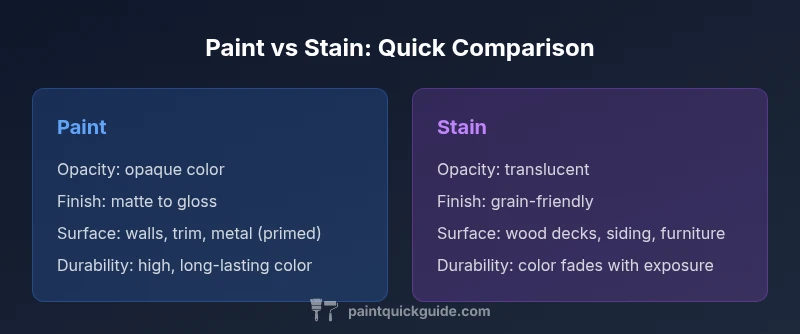
Opacity determines how much of the substrate shows through. Paint delivers a solid, opaque finish, hiding wood grain and imperfections for a uniform look. Stain is typically translucent or semi-transparent, tinting the wood while preserving grain and texture. Color options for paint are broad, spanning matte, eggshell, satin, semi-gloss, and gloss sheens. Stains offer a smaller palette focused on wood tones and tinted hues designed to complement natural grain. The choice affects how imperfections appear and how the surface reflects light, influencing perceived depth and warmth in a room or on outdoor wood.
Durability, weather resistance, and maintenance patterns
A painted surface usually provides stronger moisture barriers and easier cleaning, which supports longer intervals between repaints in many interiors. Exterior paints with UV blockers can resist fading and peeling for many years with proper prep. Stain finishes rely on pigment and sealant within the wood itself, which can fade differently and may require reapplication as color fades or becomes uneven. Maintenance involves cleaning, quick touch-ups, and planned re-coats; the frequency depends on climate, exposure, and the specific product. In dry climates, stains can last a long time; in sunny, humid environments, painting may offer better longevity if top-coated correctly.
Surface preparation and priming guidelines
Prep is the most important step to ensure longevity. For paint, prepare glossy or bare surfaces by cleaning, sanding, and priming to improve adhesion and uniformity. Primer is often essential on bare wood, metal, or painted surfaces with problematic stains. For stain, start with clean, smooth wood and consider a conditioner on softwoods to prevent blotching. Some stains require no primer, but applying a compatible sealant or topcoat can dramatically extend life. Outdoor projects benefit from moisture testing and weather windows; indoor walls benefit from dust-free sanding and patching defects. The right prep reduces issues such as peeling, blistering, or uneven color.
Cost considerations and application tips
Cost varies with product type, surface size, and labor. Paint may have a higher upfront cost per gallon but often covers more area per coat and may require fewer coats than some stains. Stain can be cheaper per gallon, but you may need multiple coats to reach the desired depth and protection. Application methods include brushes, rollers, sprayers, and cloths; each method affects finish and cleanup. For interior projects, low-VOC options reduce odors and air quality impact; for exterior projects in sun and rain, UV-resistant formulations protect color longer. Plan for surface prep, choose compatible primers or sealers, and allow sufficient cure time between coats.
Quick-start decision framework: when to choose paint vs stain
- If you want a uniform color with easy cleanup and strong durability, choose paint.
- If you want to highlight grain and texture while adding color, choose stain.
- For interior walls, paint is usually the go-to; for outdoor wood, decks, and siding, stain is often preferred.
- Consider climate: high sun exposure or wet conditions can influence fading and peeling, so select products with appropriate UV and water resistance.
- Budget and maintenance tolerance matter: paint can offer longer repaint intervals but higher upfront cost, while stain may require more frequent refreshes but can be cheaper to recoat.
Comparison
| Feature | Paint | Stain |
|---|---|---|
| Opacity / Color | Opaque film with solid color | Translucent to semi-transparent color; grain shows |
| Finish Options | Matte to gloss paints; wide color range | Tinted or clear; finishes vary by product |
| Surface Protection | Film-forming protection; moisture barrier | Penetrating protection; breathability |
| Durability / Maintenance | Longer intervals between full re-dos (depending on surface) | More frequent re-coats for consistent color |
| Best Uses | Interior walls, trim, metal surfaces with primers | Wood decks, siding, furniture; where grain matters |
| Prep & Application | Priming often required; multiple coats common | Prep may focus on blotching; often fewer coats but more surface prep |
| Cost Considerations | Variable depending on color and topcoat; long-term value strong | Usually cheaper per gallon; total cost depends on application |
Upsides
- Paint provides a durable, washable surface with a solid color
- Stain preserves natural grain and allows the surface to breathe
- Wide product variety and finishes are available for both options
- Modern Low-VOC formulas improve indoor air quality for both
What's Bad
- Paint requires proper surface prep on glossy or challenging substrates
- Stain may require more frequent reapplication to maintain depth and protection
- Choosing the wrong product can lead to peeling, blotching, or uneven color
Paint generally wins for interior walls and durable color; stain excels for grain-preserving wood surfaces.
In most homes, use paint for rooms and trim to achieve a clean, washable finish. Use stain on exterior wood, decks, and furniture when grain visibility and breathability are priorities. Balance color depth, maintenance, and surface prep to maximize results.
Your Questions Answered
Which lasts longer, paint or stain on exterior wood surfaces?
Durability depends on product quality and exposure. Exterior paint often provides longer intervals between major refreshes, but proper surface prep and topcoating extend stain life as well. Choose based on climate and maintenance tolerance.
On exterior wood, paint typically lasts longer between color refreshes, though a high-quality stain can perform well with proper prep and topcoats.
Can you paint over stained wood, or stain over painted surfaces?
Yes, you can paint over stain if the surface is clean, dry, and properly primed with a bonding primer. Staining over paint is generally not recommended unless you remove the paint first. Plan for the surface preparation workflow accordingly.
You can paint over stain with the right primer; staining over paint is usually not advised.
What prep steps are essential before painting or staining a wood deck?
Deck prep starts with removing debris and cleaning the surface, followed by drying. Sand rough areas and consider a wood conditioner for blotching before applying stain, or a suitable primer and two coats of paint. Allow proper drying time between steps.
Clean, dry, then sand; condition softwoods for stain or prime for paint. Let each coat dry fully before applying the next.
Is there a water-based option for staining exterior wood?
Yes. Water-based exterior stains are common and offer faster drying and lower odor than oil-based options. They should include UV protection and a compatible topcoat for longevity.
Yes—water-based exterior stains are popular, dry fast, and clean up easily; choose one with UV protection.
When should I choose primer for painting over old finishes?
Primer is recommended when surfaces have peeling paint, stains, or glossy finishes that resist adhesion. A bonding primer improves adhesion on tricky substrates. Skipping primer can lead to peeling and uneven color.
Use a bonding primer on difficult surfaces; it helps paint stick and look even.
Are there differences in cleaning and maintenance between paint and stain finishes?
Painted surfaces are generally easier to clean and maintain. Stained surfaces may require periodic re-coats to refresh color and protection. Use mild cleaners and avoid harsh scrubbing to preserve the finish.
Paint cleans easily; stains need periodic refreshes to keep color and protection up.
Quick Summary
- Define surface goals: grain visibility or opaque color
- Paint for durable walls; stain for natural wood look
- Factor climate to choose UV and moisture resistance
- Prep thoroughly to maximize adhesion and longevity