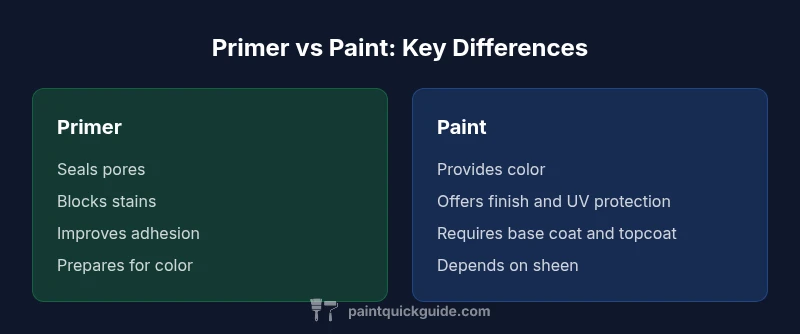
Difference Between Paint and Primer: A Practical Guide
Learn the essential difference between paint and primer, when to use each, and practical steps to achieve durable finishes on interior, exterior, and automotive projects. Includes surface-specific tips, a side-by-side comparison, and troubleshooting guidance.


Primer and paint serve distinct roles in surface finishing. The difference between paint and primer lies in purpose: primer seals and promotes adhesion; paint provides color and a protective topcoat. For most surfaces, use a primer first, then one or more coats of paint. Skipping primer on porous or stained surfaces can lead to poor adhesion, uneven color, and peeling.
The difference between paint and primer
The difference between paint and primer is not just terminology; it reflects distinct chemistry, functions, and performance outcomes. Primer is designed to prepare a surface for coatings, especially on challenging substrates like bare wood, stained drywall, or glossy metal. It creates a stable, uniform substrate by sealing pores, blocking existing stains, and improving adhesion. Paint, by contrast, is a pigmented film that delivers color, gloss level, and UV protection. On many projects, you cannot substitute one for the other without compromising longevity. The goal of using primer first is to reduce the number of paint coats needed, decrease stain bleed-through, and increase the overall durability of the finish. For homeowners and DIY enthusiasts, recognizing this distinction is essential for predictable results.
In practice, the difference between paint and primer becomes most visible when you're working on tough surfaces: knotty pine, water-damaged plaster, or surfaces with tannin bleed. A high-build stain-blocking primer can prevent dark streaks from staining your topcoat, while a bonding primer helps paint adhere to slick surfaces like fiberglass doors or smooth tempered drywall. Language matters too: primer is not a color on the wall, it is an adhesion and sealing layer that improves the pigment performance of the topcoat. As you plan a project, map the substrate, choose a compatible primer, and then select a paint with the desired sheen and durability. The difference between paint and primer shapes your prep time, material choices, and final appearance.
image_alt_text_creation_Notes_for_SEO_and_content_teams_refer_scene_instructions_for_Alt_Text_and_text_keywords_are_included_here_ensuring_accessibility_and_search_relevance
Comparison
| Feature | Primer | Paint |
|---|---|---|
| Main function | Adhesion & stain-blocking primer | Color, finish, and protection in topcoat |
| Best surface type | Bare wood, stained surfaces, slick or porous substrates | All finished surfaces needing color or finish without special adhesion needs |
| Surface preparation | Often requires cleaning; may need light sanding; may need stain-blocking variants | Typically requires cleaning and sanding for best adhesion; not inherently sealing or stain-blocking |
| Bleed-through control | High on porous/tannin surfaces without primer | Low when a compatible primer is applied beneath |
| Drying time | Primer: longer drying, can require 1-2 hours or more before topcoat | Paint: usually when dry to handle in 1 hour or less, depending on conditions |
| Cost context | Low to mid-range depending on primer type | Mid to high depending on color, finish, and brand |
| Best for | Problem surfaces, stains, knots, glossy metals with bonding primers | Providing color, sheen, and UV protection with durable topcoats |
Upsides
- Improved adhesion leading to longer-lasting finishes
- Better stain blocking on porous surfaces
- Smoother color finish with fewer coats
- Helps hide previous stains and prevents bleed-through
What's Bad
- Adds an extra step and scheduling
- Increases upfront cost for materials
- Requires proper surface preparation and drying time
Primer-first approach is essential on problematic substrates and for durable, even finishes.
On porous, stained, or slick surfaces, start with a compatible primer to seal and bond. Follow with paint for color and protection. Skipping primer can lead to peeling, staining bleed-through, and uneven color, especially in high-traffic or sun-exposed areas.
Your Questions Answered
Do I always need primer before painting?
Not always. Bare wood, stained surfaces, porous drywall, and slick surfaces typically require a primer to seal, block stains, and improve adhesion. On well-prepared, previously painted surfaces, primer may be skipped if the new coating is compatible.
Usually yes for porous or stained surfaces; otherwise, primer may be optional on well-prepared surfaces.
Can I use primer as a paint?
Primer is not a decorative finish. It lacks color and UV protection; always apply a topcoat in your chosen color after priming. Some primers can be tinted to help hide the final color, but they do not replace paint.
Primer isn’t the decorative layer—apply paint on top for color and protection.
What surfaces need special primers?
Stains, tannins, or water damage require stain-blocking primers. Glossy metals, plastics, or slick surfaces benefit from bonding primers. Porous woods may need shellac-based primers to seal bleed-through.
Some surfaces need specific primers to ensure adhesion and stain blocking.
How do I choose compatible primer and paint?
Always check manufacturer guidelines for compatibility. Use the primer recommended by the paint brand and ensure both are of compatible families (water-based with water-based, oil-based with oil-based) unless stated otherwise.
Read labels and follow brand recommendations for the best result.
Is there a difference between water-based and oil-based primers?
Yes. Water-based primers are easy to use indoors with low odor; oil-based primers excel at sealing stains and working on hard-to-adhere surfaces but require solvent cleanup and longer dry times.
Water-based is common indoors; oil-based works on tough stains and glossy surfaces.
Will primer help with bleed-through on knotty wood?
Yes. Knotty wood and tannin bleed can transfer color to the topcoat; stain-blocking primers seal these issues to keep the final color true.
Primer blocks knots and tannins so your paint stays true.
Quick Summary
- Assess surface type and stains before choosing primers.
- Choose a primer with stain-blocking and adhesion properties when needed.
- Layer primer first, then apply paint for best durability.
- Test a small area for adhesion and color coverage before full project.
- Plan drying times to avoid rush jobs and ensure proper curing.