Difference Between Paint and Lacquer: A Practical Comparison
A thorough, balanced comparison of paint vs lacquer, covering composition, finish, durability, drying times, and best-use scenarios for walls, furniture, and automotive refinishing.


The difference between paint and lacquer hinges on chemistry, film formation, and performance. Paint uses pigment in a binder to create a color layer with broader durability, while lacquer uses fast-drying resins for a hard, ultra-smooth film. This comparison helps homeowners and auto hobbyists pick the right coating for walls, furniture, or vehicles.
The difference between paint and lacquer: definitions and scope
Paint and lacquer are two distinct coatings used for walls, furniture, cabinetry, and automotive refinishing. The difference between paint and lacquer isn't just about gloss level; it reflects fundamental chemistry, film formation, and performance under real-world conditions. In everyday DIY projects, understanding the difference between paint and lacquer helps homeowners choose a finish that matches the substrate, expected wear, and maintenance needs. For homeowners and auto refinishing hobbyists, the first step is to recognize that paint is a pigment-filled binder that forms a film as solvents evaporate, while lacquer is a clear resin solution that cures as solvents flash off and the film cross-links. The PaintQuickGuide team emphasizes that the distinction emerges from binder chemistry, drying behavior, and how the coating responds to heat, moisture, and light. By grasping these basics, you can orient your project toward a durable, visually pleasing result that aligns with safety and environmental considerations. The rest of this article explores the chemistry, application, and decision criteria in depth.
Core chemistry: resin binders and solvents
From a chemistry standpoint, paint relies on pigment particles dispersed in a resin binder such as acrylic, alkyd, or polyurethane. This combination is designed to provide color, hiding power, and a controlled cure that tolerates routine cleaning. Lacquer, by contrast, uses lighter resin systems (often nitrocellulose or cellulose derivatives) dissolved in fast-evaporating solvents. The result is a hard, resilient film that dries quickly and can achieve a very smooth, glassy finish when applied correctly. Paints offer a broad palette of formulations optimized for interior walls, cabinetry, or automotive color matching, while lacquers emphasize sheen and rapid project turnaround. PaintQuickGuide analysis notes that the trade-offs between these chemistries influence workability, odor, and cure behavior, which are especially important for DIY enthusiasts seeking predictable results.
Film formation and curing mechanisms
Paint films form primarily through solvent evaporation and binder coalescence. As solvents leave, pigment particles and binder parts fuse, creating a continuous protective layer. Curing can be slow, depending on ambient conditions and the resin chemistry, which affects recoat windows and the ultimate hardness. Lacquer films rely on rapid solvent evaporation followed by cross-linking or resin hardening. This produces a very hard, smooth surface quickly, but can be more sensitive to heat and humidity during curing. The contrast in film formation explains why lacquers often require controlled environments and skilled application to avoid runs, orange-peel texture, or stress cracking. Understanding these mechanisms helps you plan ventilation, temperature control, and timing for each coating type.
Surface prep implications for paint vs lacquer
Preparation sets the stage for long-term satisfaction. For paint, especially on walls or drywall, thorough cleaning, scuff sanding, and a compatible primer improve adhesion and coverage. Surface porosity and existing coatings determine whether you need stain-blocking primers or light sanding to remove gloss. Lacquer prep emphasizes a pristine, closed surface because solvents can entrap dust or oils that impede film formation. Wood surfaces often benefit from a sealing primer before lacquer to prevent blotching and to achieve an even finish. For mixed substrates, you may need a hybrid approach: a shellac or polyurethane undercoat followed by your chosen topcoat. The goal is to maximize adhesion, minimize grain raising, and ensure color consistency across joints and edges.
Appearance and finish differences
Finish choice significantly affects perceived color depth and surface texture. Paint provides a broad spectrum of sheens, from matte to high gloss, and hides minor surface imperfections more readily on walls and furniture. Lacquer is prized for its ultra-smooth, glass-like finish, especially on wood and smaller components, where reflections and color clarity are paramount. Color stability is generally strong for quality paints, particularly those with UV absorbers, while lacquer can emphasize grain and natural variations in wood when clear. Lighting conditions dramatically influence the perceived finish; test samples under the actual room light or vehicle showroom lighting to judge sheen, color shift, and texture before committing.
Durability, hardness, and chemical resistance
Durability depends on formulation, substrate, and maintenance. Painted surfaces with good UV protection resist color fade and chalking, making them suitable for walls and exterior trims in many climates. Lacquers deliver exceptional hardness and shallow gloss retention, but may require more frequent recoat cycles around high-traffic areas or sun-exposed surfaces. Both coatings respond differently to cleaners and solvents; always follow manufacturer guidance for cleaners to avoid softening or scratching the film. Paints generally offer easier repair pathways—scuff marks can be touched up, and color matching is often straightforward. Lacquers, while resistant to everyday wear, can be more challenging to repair because refinishing may require complete strip-down and re-coating to preserve an even look.
Typical application contexts: walls, furniture, automotive work
Home interiors commonly use latex or oil-based paints for walls because of coverage, odor control, and cleanup. For furniture and cabinetry, both paint and lacquer have roles, but many hobbyists choose lacquer for final coats on wood pieces when a glassy, flawless surface is desired and the workspace can accommodate spray finishing. In automotive refinishing, lacquers historically played a major role, though modern automotive coatings lean toward two-part paints and clear coats with different durability profiles. When selecting, consider substrate stability, ambient conditions, ventilation, and the level of time commitment you can devote to masking, curing, and cure-time patience. The choice should align with the project’s functional needs and aesthetic goals.
Drying time and recoat windows
Lacquer dries rapidly—often to touch within minutes—allowing fast project turnover but demanding tight control over temperature and humidity. Paints typically require longer drying and curing times, with separate windows for recoat and handling. Water-based paints have improved throughput and safety profiles, while oil-based paints usually offer superior leveling but longer odor and cleanup considerations. Understanding recoat windows is essential to avoid solvent entrapment or poor adhesion at overlap areas. This is especially relevant for furniture and automotive components where timing can determine whether multiple coats blend evenly or show lap marks. Always read the product label for recommended cure times and environmental guidelines to minimize defects.
Maintenance and repair considerations
Repairing painted surfaces tends to be straightforward: light sanding, touch-up paint, and possible re-coat after scuffing. Repaired areas can blend with careful color matching. Lacquer finishing, especially on wood surfaces, may require more rigorous color matching and refining to restore the gloss level. Some lacquer systems allow spot repairs, but the finish can appear inconsistent if repairs do not precisely replicate the original topcoat’s sheen and depth. For DIY projects, opt for paints with good washability and fading resistance for walls, while reserving lacquer for items where the ultra-smooth finish is a priority and the environment supports controlled spray work.
Cost considerations and availability
Paints are widely available across hardware stores, with a broad range of price points and finishes. They also offer extensive color palettes and long-term maintenance options. Lacquers tend to be more specialized and can cost more due to the need for compatible solvents, primers, and often spray equipment. Availability varies by region and formulation (water-based vs solvent-based). When budgeting, consider not only the purchase price but also the ventilation requirements, disposal considerations, and potential waste from overspray or recoats. For many home projects, a well-chosen paint system provides a reliable balance of cost, coverage, and durability, while lacquer is worth the premium for high-end finishes on wood when showroom-worthy gloss is the priority.
Substrate-specific considerations: wood, metal, and plastic
Wood surfaces respond distinctly to each coating. Lacquer excels on finely sanded wood, especially when the goal is a mirror-like finish; it can accentuate grain with appropriate stain and sealing steps. Paints are versatile on wood, metal, and even certain plastics when properly primed. Metal often benefits from primer and topcoats designed for corrosion resistance, with lacquer used selectively for decorative items or cases where ultra-smooth finishes are desired. Plastics require compatible primers to improve adhesion; not all paints or lacquers adhere well without surface preparation. Understanding substrate behavior helps you pick a system that minimizes issues like peeling, cracking, or surface texture changes over time.
How to choose between paint and lacquer: a decision framework
Start with the substrate and expected wear. For high-traffic walls, go with a durable paint with good scrubbability and fade resistance. For heirloom furniture or decorative wood pieces where absolute smoothness and depth matter, lacquer can deliver the finish you crave, provided you can control the workspace and cure conditions. If you expect rapid turnaround and a showpiece look, lacquer may be attractive; if you prefer broad environmental tolerance and easier maintenance, paint is often the safer bet. Consider safety, ventilation, and cleanup requirements as integral parts of the decision, and test finishes on samples that mimic real-world use. In all cases, prepare thoroughly, follow label instructions, and plan for recoat windows to avoid defects.
Comparison
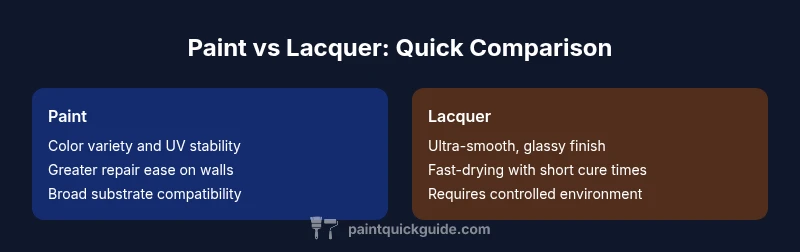
| Feature | Paint | Lacquer |
|---|---|---|
| Binder chemistry | Pigment + resin dispersions (acrylic, alkyd, etc.) | Nitrocellulose or resin-based lacquer systems |
| Finish options | Wide range of sheens; color stability | Ultra-smooth, glass-like finish; high gloss variants |
| Drying and cure | Slower cure; longer cure times and recoat windows | Rapid drying; tight recoat windows; fast handling |
| Durability/UV resistance | Good durability with UV-stable formulations | Excellent hardness; can be sensitive to sun exposure without protective topcoats |
| Application methods | Brush, roller, spray; forgiving on larger surfaces | Primarily spray; requires skilled technique and proper ventilation |
| Repair and maintenance | Easier to touch up and repaint; easier color matching | Repair can be challenging; refinishing may be needed for uniform look |
| Cost and availability | Widely available; broad price range | Typically more expensive; specialized materials and equipment |
| Substrate compatibility | Walls, drywall, primed surfaces | Wood and some veneers; plastics require compatible lacquers |
Upsides
- Broad range of final appearances with paints (matte to high gloss)
- Paints are generally easier to apply and repair for DIYers
- Lacquer yields an exceptionally smooth, glossy finish on wood when conditions are controlled
- Paint systems often offer better color stability and UV resistance with modern formulations
- Lacquer can speed up project timelines when conditions are right
What's Bad
- Lacquer can be more sensitive to temperature, humidity, and dust during finish
- Lacquer may require specialized spray equipment and ventilation
- Paints may have longer cure times and require patience for handling after application
- Certain lacquers can yellow or degrade with UV exposure without protective topcoats
Paint is the more versatile, user-friendly option for most home projects; lacquer excels where a flawless, high-gloss wood finish and speed are paramount
Choose paint for walls and general furniture due to easier application and maintenance. Opt for lacquer when a showroom-quality, ultra-smooth wood finish is essential and you can manage a controlled finishing environment.
Your Questions Answered
What is the main difference between paint and lacquer?
Paint uses a pigment in a binder to create a colored film, while lacquer uses a resin solution that dries quickly to form a hard, smooth film. The difference in chemistry drives distinct drying behavior, finish options, and maintenance needs.
Paint uses pigment in a binder, lacquers are quick-drying resins. The choice affects finish, durability, and care.
Which is more durable for walls: paint or lacquer?
Paint is generally more forgiving and durable for walls, especially with modern UV-resistant formulations and washable sheens. Lacquer can be very hard but is more sensitive to heat, humidity, and UV without protective topcoats.
For walls, paint is usually the safer bet for durability and cleanup.
Is lacquer safer to work with than paint?
Safety depends on the product; many lacquers use stronger solvents than water-based paints, requiring good ventilation and proper PPE. Water-based lacquers are safer options. Always follow the Safety Data Sheet and local regulations.
Ventilation and PPE are essential with lacquer; water-based options can help reduce fumes.
Can I switch from paint to lacquer on the same project?
Switching coatings is possible but requires surface preparation for adhesion, compatible primers, and a consideration of cure times and topcoat compatibility. In many cases, sanding, priming, and testing on a scrap piece is wise.
Yes, but prep and testing matter to avoid adhesion issues.
What substrates are best suited for lacquer?
Lacquer shines on well-prepared wood surfaces and some metals with proper primers. Porous or uneven substrates may require special primers or sealing steps to avoid blotching or grain telegraphing.
Wood is ideal with proper prep; other materials may need careful priming.
Quick Summary
- Choose paint for walls and general furniture for ease and long-term maintenance
- Lacquer delivers superior smoothness and gloss on wood under controlled conditions
- Plan for ventilation, masking, and proper curing when using lacquer
- Match the coating to substrate and expected wear to balance durability and aesthetics
- Understand recoat windows to avoid finishing defects