What Do Paint Jobs Cost? A Practical Guide for Homeowners
Discover what paint jobs cost for homes and cars, with practical price ranges, key cost drivers, and budgeting tips from PaintQuickGuide Analysis, 2026.


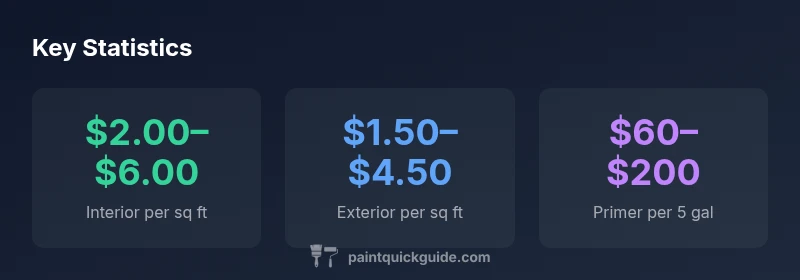
What do paint jobs cost? Prices vary by project type, square footage, and prep work. Interior painting generally runs roughly $2.00–$6.00 per square foot, exterior projects typically $1.50–$4.50 per square foot, and cabinet or auto refinishing can be much higher. These ranges reflect typical market rates and prep needs, based on PaintQuickGuide Analysis, 2026.
What goes into the price of a paint job
Pricing for a paint job isn't a single number; it's a bundle of factors. According to PaintQuickGuide, the largest driver is surface area—the more square feet, the more materials and labor required. The condition of surfaces matters: new drywall or plaster repairs add time and materials; deep stains or glossy surfaces demand more coats and primers. Labor rates vary by region and contractor, so urban markets tend to be higher than rural. Prep work—sanding, caulking, patching—can dramatically affect the bid if extensive. The type of paint and finish also influences price: premium enamels or specialty sheens cost more than standard latex. Color changes across multiple rooms add labor due to multiple steps. Access issues (high ceilings, tight corners, exterior scaffolding) also increase bids. Finally, contractor overhead and a contingency margin appear in every estimate. Understanding these drivers helps homeowners budget when evaluating what do paint jobs cost.
How costs are calculated: per square foot vs per room
Most common pricing models are per square foot or per room. Per-square-foot pricing is straightforward for large, uniform surfaces; it helps to account for paint, primer, and labor. However, smaller or irregular rooms with lots of edges cost more per square foot due to setup time. Some projects quote a fixed price per room for easier budgeting, especially for quick interiors. For kitchens or bathrooms, a premium is often charged due to moisture exposure and the need for moisture-resistant finishes. In addition to labor, paint shops may include material costs and disposal fees in the bid. The recommended approach is to ask for a detailed estimate that itemizes: surface preparation, two coats of paint, primer if needed, trim work, and any repairs. This approach aligns with the budgeting and estimates guidelines from PaintQuickGuide's 2026 analysis.
Typical price ranges by project type
Here are broad ranges homeowners commonly see, recognizing regional differences and scope:
- Interior walls and ceilings: $2.00–$6.00 per sq ft
- Exterior siding: $1.50–$4.50 per sq ft
- Cabinet refinishing (kitchens): $3,000–$15,000 per project
- Auto refinishing (small to mid-size jobs): $2,000–$8,000 Note that these are starting points and that most bids include prep, primer, two coats, and cleanup in the total.
Budgeting a paint project: a step-by-step example
Consider a 1,200 sq ft interior repaint with two colors and mid-range prep. At $2.50–$6.00 per sq ft, the base paint cost ranges from $3,000 to $7,200. Add primer at $0.50–$1.50 per sq ft and two coats, bringing the estimate to roughly $3,900–$9,000. Don’t forget supplies (caulk, sanding discs, tape) and disposal fees, which can add 5–10% to the bill. If the space requires extensive patching or ceiling work, push the upper end toward $9,000–$11,000. When you receive bids, request itemized breakdowns to compare scope and validate whether priming, repairs, and two finish coats are covered.
DIY vs hiring pros: when it makes sense
DIY painting can save money on labor, especially for smaller spaces or single-color jobs, but it risks longer timelines and uneven finish without experience. Hiring professionals pays off when prep work is heavy, multiple colors are involved, or you demand durable finishes and guarantees. For most homeowners, a mid-range interior project with a couple of colors benefits from a professional bid to ensure consistent coverage, edgework, and proper clean-up.
How to get accurate estimates and avoid surprises
Always ask for a written estimate that itemizes surface prep, primer, paint, number of coats, trim work, and cleanup. Clarify what happens if repairs are required or if color changes add steps. Request a preliminary scope of work and a provisional timeline, plus a cancellation policy. Getting multiple bids and checking references can prevent sticker shock and help you identify the best value.
Color choice and finish: how it affects price
Color changes across rooms, high-gloss or enamel finishes, and specialty paints (moisture-resistant, low VOC) typically raise cost due to additional coats and specialized products. If you want a dramatic color change, plan for extra coats and minor prep work. For cost savings, consider reducing the number of colors or selecting standard sheens like eggshell or satin in common tones.
Estimated ranges for common painting projects (home and auto)
| Project Type | Cost per sq ft (low) | Cost per sq ft (high) | Typical project cost | Notes |
|---|---|---|---|---|
| Interior walls | $2.00–$5.50 | $2.50–$6.00 | $1,000–$3,000 | Includes prep & two coats |
| Exterior surfaces | $1.50–$4.50 | $3.00–$5.00 | $3,000–$12,000 | Weather prep affects bid |
| Cabinet refinishing (kitchen) | $60–$200 | $100–$250 | $3,000–$15,000 | High-end finishes add cost |
| Auto refinishing (small job) | $2,000–$8,000 | $3,000–$10,000 | $2,000–$8,000 | Includes prep and clear coat |
Your Questions Answered
What factors most influence the price of a paint job?
Most influence comes from surface area, prep work, number of coats, and the type of paint. Regional labor rates also play a big role. Get bids that break down each factor so you can compare apples to apples.
The biggest price drivers are size, prep, coatings, and where you live. Look for bids that itemize each part so you can compare fairly.
Is it cheaper to paint myself or hire a pro?
DIY can save on labor but may require time and effort you cannot reclaim. Pros provide consistency, warranties, and efficient surface prep. For large spaces or complex color changes, a professional typically offers better value.
Do it yourself if you have the time and want control; hire a pro for large or tricky spaces for a smoother finish and guarantees.
What should be included in a written estimate?
A good estimate should itemize surface prep, primer, paint, number of coats, trim work, and cleanup. It should also note any repairs, disposal fees, and the expected timeline.
Make sure the estimate lists prep, paint, coats, and cleanup, plus any extra charges for repairs.
How long does a typical interior paint job take?
Interior jobs vary by room size and color count but usually span several days to a week for a whole home, factoring drying times between coats.
Most interior jobs take a few days to a week, depending on room count and color changes.
Do finish choices affect cost?
Yes. Higher-sheen finishes and specialty paints increase material costs and may require extra coats or more careful preparation.
Shinier finishes and specialty paints usually cost more and may require extra prep.
Are there hidden costs I should watch for?
Common hidden costs include repairs, extensive surface prep, higher-end primers, disposal fees, and time overruns due to delays. Always ask for a contingency clause in the contract.
Watch for repair charges, extra prep, and disposal fees—ask for a contingency clause.
“A well-prepped surface and accurate primer are the biggest value multipliers in any paint job.”
Quick Summary
- Know the major cost drivers before requesting quotes
- Ask for itemized estimates to compare scope
- Expect higher costs for prep-heavy or multi-color jobs
- DIY save on labor but may affect finish quality