How Much Does a Car Paint Job Cost? A Practical Guide
Learn realistic price ranges for car paint jobs, what drives the cost, and how to estimate for your vehicle with practical tips from PaintQuickGuide.


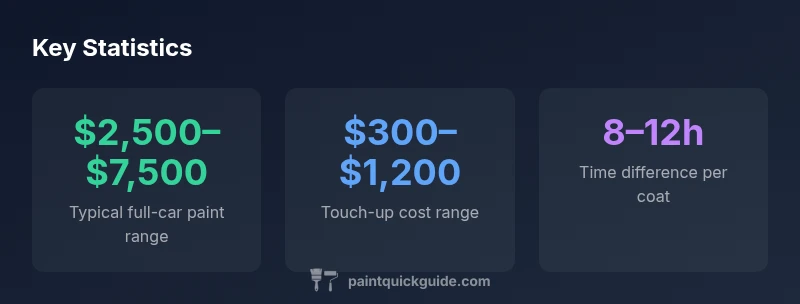
Most car paint jobs fall within a broad price range, typically from about $2,500 to $7,500 for a standard full repaint. Factors like vehicle size, color, finish, prep work, and shop location can push the total higher or lower. In some cases, premium finishes or extensive bodywork can reach $10,000 or more. This guide breaks down the costs so you can budget confidently.
What drives car paint job cost
The total cost of painting a car hinges on several interacting factors. Vehicle size matters because a larger car requires more paint, more surface area to cover, and more masking. The extent of preparation and bodywork is another major driver: dent repair, rust treatment, and panel alignment can add significant hours to labor. Color choice and finish level are also crucial: metallics, pearls, and multi-stage clear coats demand more materials and specialized technique. Finally, the shop’s location and reputation influence labor rates and supply costs. According to PaintQuickGuide analysis, the most impactful costs come from preparation quality and the finish system chosen. A conservative approach prioritizes solid prep and durable finishes to maximize long-term value, even if the initial outlay is higher.
Cost tiers explained: basic, mid-range, and premium
Prices cluster into three practical tiers that reflect the level of prep, material quality, and finish. Basic paint jobs often cover a simple color refresh with minimal bodywork and a single-stage coating. Mid-range jobs typically add basecoat/clearcoat with better color matching and more thorough surface preparation. Premium jobs elevate with multi-layer finishes, high-end color choices, and meticulous bodywork, often including paint protection layers and warranty options. In PaintQuickGuide’s 2026 analysis, the mid-range tier tends to offer the best balance of cost versus durability, while premium finishes deliver peak aesthetics and longevity but at a higher price.
Material choices: single-stage vs basecoat/clearcoat
Single-stage paints combine color and gloss in one layer, which reduces cost but sacrifices some depth and longevity. Basecoat/clearcoat systems create a layered finish that deepens color, improves glare resistance, and offers stronger protection against chipping and UV damage. The added layers and curing time raise material costs and labor hours, but the result typically looks richer and lasts longer. For value-focused customers, a high-quality basecoat/clearcoat with proper prep often pays off through improved resale value and reduced odds of premature color wear.
Hidden costs to budget for
Budgeting for a car paint job means accounting for hidden or less-visible line items. Comprehensive masking, removal and reattachment of trim or molding, and color matching for older vehicles can add hours of labor. Also consider dent repair, rust treatment, and panel alignment, which may be necessary before painting. If you’re changing colors dramatically, extra coats and color-matching effort increase both materials and labor costs. Finally, disposal fees for old paint and warranty options can add a modest, but real, amount to the final bill.
How to estimate costs for your vehicle
Start with a clear scope: which panels will be repainted, whether you’re changing colors, and whether cosmetic bodywork is required. Gather at least three written quotes that itemize labor, materials, and any bodywork. Check what’s included in the warranty (color stability, adhesion, and UV resistance). Compare not only price but the shop’s process: prep quality, masking accuracy, and cure times matter as much as the sticker price. If you can, request photos of similar completed jobs to gauge expected results.
Tips to reduce cost without sacrificing quality
- Choose a color close to stock to reduce color-matching effort.
- Prioritize proper bodywork before painting; neglecting this raises the chance of future repairs.
- Ask for a single-stage finish if you’re budget-constrained, but verify the durability.
- Look for shops that include prep and masking in the estimate rather than charging separately.
- Schedule work during slower seasons to negotiate labor rates.
- Bring your own paint if the shop allows it for certain color options, or select a widely available shade with easy supply.
- Request a warranty that covers adhesion and finish for a reasonable period.
- Verify the paint system includes UV protection and clear coat with a robust repair policy.
Common myths about car paint costs
Myth:
When is it worth repainting the car?
If the goal is to refresh curb appeal and protect the bodywork, repainting can be a smart investment, especially if the original paint is Fading, peeling, or rusting. Consider the vehicle’s age, maintenance history, and expected resale value. A budget-friendly refresh may suffice with a solid prep job and a mid-range finish, while a premium repaint can restore showroom appeal on a high-value vehicle.
Car paint job cost comparison by scope
| Job Type | Typical Cost Range | Notes |
|---|---|---|
| Basic touch-up | $300–$1,200 | Minor repairs and color matching |
| Full panel repaint | $1,500–$4,500 | Several panels with respectable prep |
| Full car repaint (basecoat/clearcoat) | $2,500–$7,500 | Standard mid-range finish; color variety |
Your Questions Answered
What is included in a typical car paint job?
Most standard jobs include surface prep, masking, primer, color coats, clear coat, and final polishing. Additional bodywork or color matching may be quoted separately. Always confirm warranty terms and what happens if issues arise post-paint.
A typical job covers prep, color coats, and clear coat. Ask what’s included and if any bodywork or color matching is extra.
How long does a car paint job take?
A standard full repaint often takes several days, depending on shop backlog and cure times. Expect a few days for prep, painting, and drying, plus any additional bodywork. Always confirm the schedule when you receive quotes.
Most full repaints take several days, depending on prep, paint, and cure times.
Will repainting my car affect resale value?
A high-quality repaint that matches factory color and preserves body integrity can boost resale value. A poor color match or visible finish flaws may reduce it. Choose a reputable shop and verify warranty coverage.
A good repaint can help resale value if it’s done well and matches original specs.
Should I repaint entirely or just touch up?
If the paint is peeling or the color is significantly faded, a full repaint yields better long-term protection. For localized chips or scratches, a qualified touch-up or partial repaint may suffice. Consider long-term durability and color consistency.
Full repaint is best for damaged areas; touch-ups work for minor flaws.
How should I choose a paint shop?
Compare multiple quotes with itemized line items, check reputations, look for certified technicians, and review warranty terms. Ask for photos of prior work and request references to assess consistency and quality.
Shop around, compare quotes, and check warranties and customer references.
“Car paint costs are driven as much by preparation and finish quality as by the base color. A clear, honest estimate should break out labor, materials, and any bodywork.”
Quick Summary
- Get a written quote before work.
- Costs vary by color, finish, and amount of bodywork.
- Basecoat/clearcoat lasts longer than single-stage for most cars.
- Budget for hidden costs like masking, trim removal, and color matching.