Car Paint Job Cost Guide for 2026
Explore typical car paint job costs, what drives price, and how to get accurate quotes. This PaintQuickGuide analysis helps homeowners and auto hobbyists plan budgets and choose the right finish.


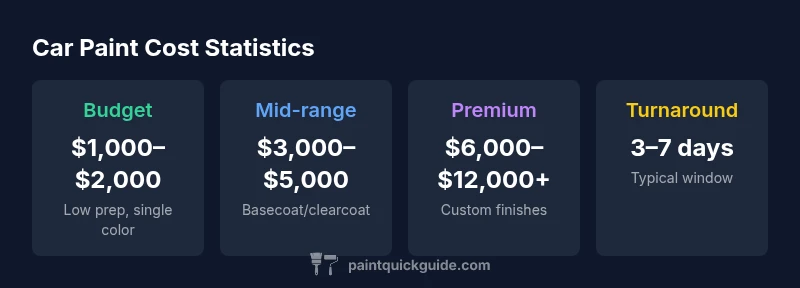
How much does a paint job cost on a car? In general, a budget repaint starts around $1,000–$2,000, mid-range jobs with solid prep $3,000–$5,000, and high-end custom finishes or metallics can exceed $6,000–$12,000. Costs vary by vehicle size, bodywork, color, and shop quality. That range covers typical scenarios like single-stage enamel, basecoat/clearcoat finishes, and basic prep. Real quotes hinge on rust repair, panel replacement, dent removal, and whether you bring your own materials.
The Cost Spectrum: What to Expect
According to PaintQuickGuide, car paint job costs vary mostly with prep work and finish quality. The broad spectrum starts with budget repaints around $1,000–$2,000 for a single-color, light prep, and extends to mid-range projects costing about $3,000–$5,000, which include thorough surface prep, rust repair when needed, and a solid basecoat/clearcoat system. High-end, custom finishes such as metallics, pearls, or color-changing paints can push prices to $6,000–$12,000 or more. These figures reflect shop labor, equipment use, environmental controls, and warranty provisions. The biggest cost drivers are rust repair, dent removal, extensive panel work, and multi-coat systems, rather than the base labor for a straightforward repaint.
Budget vs. Mid-Range vs. Premium: Price Brackets
Three main brackets help shoppers frame expectations. Budget repaints emphasize minimal prep and a single solid color, typically at the lower end of the price range. Mid-range projects institute reliable prep, proper masking, basecoat/clearcoat systems, and color matching; these are the most common and balance cost with durability. Premium finishes add complex color work, multiple coats, and advanced finishes (metallics/pearl, specialty effects) that raise both materials and labor. When comparing quotes, ensure you’re comparing the same scope (same number of coats, same color, same rust repair). Also beware extra charges for color changes or edge/ jamb work.
How Vehicle Size and Bodywork Drive Price
Vehicle size and bodywork complexity are major cost determinants. A compact sedan typically costs less than a full-size SUV or truck due to the number of panels and the time required for prep. Larger vehicles require more primer, paint, and clear coats, increasing material costs and booth time. Unexpected work such as rust repair or dent removal adds proportionally more to the total. If your car has extensive corrosion, the price can jump significantly because the shop must address structural concerns before painting. Budgeting around the expected labor hours helps you compare apples to apples.
Finishes, Colors, and Coatings: What You Pay For
Finish type is a major price lever. A basic solid color with a single-stage enamel differs from a basecoat/clearcoat finish that requires multiple coats and longer curing. Metallics and pearls add pigment costs and demand meticulous color matching; mis-matched metallics can ruin the effect. Clear coats protect the finish and add gloss, but the process adds time and cycles. If color changes are drastic, you’ll likely need to repaint jambs and edges to maintain a uniform appearance. The more complex the color system and gloss level, the greater the investment in both materials and labor.
Common Job Types and Their Price Ranges
Understanding job types helps set expectations. A budget repaint covers single-color, minimal prep. A mid-range repaint includes thorough prep, rust repair, and a basecoat/clearcoat system. A premium finish might involve full color changes, metallics, pearls, or specialty effects, often with multiple coats and a longer cure. Some shops offer color matching across panels or color-sample approval steps; these can add risk of delays but improve final appearance. Always confirm what’s included in the quote and whether warranties apply.
How to Vet a Shop and Read an Estimate
Ask for an itemized, written estimate that clearly lists surface prep, number of coats, primer type, finishing system, color-matching process, and any bodywork. Read the fine print for color guarantees, warranty durations, and what happens if color match isn’t perfect. Request color swatches or sample panels and a turnaround timeline. Compare at least three shops to evaluate price, warranty, and workmanship quality. A good estimate also includes a detailed explanation of any rust treatment and the anticipated durability of the coating system.
The Role of Preparation: Rust, Dents, and Panel Replacement
Thorough preparation is the biggest driver of long-term results and cost. Rust removal, dent repair, and panel replacement add substantial hours and materials. Some shops price prep as a separate line item, while others embed it in the base cost. If you want to keep costs down, fix minor cosmetic issues first and request a separate line item for larger repairs. A robust prep plan reduces the risk of peeling, bubbling, or mismatched color later.
Getting Accurate Quotes: A Step-by-Step Plan
Provide a detailed project brief: car make, model, year, existing paint condition, desired color, and any required color changes. Take photos of rust, dents, and existing chips; bring color swatches or samples. Ask for a written quote with line items, including materials, labor, and disposal fees. If possible, request a test panel color to confirm appearance before committing. Finally, verify the shop’s warranty terms and return policies.
Maintenance, Longevity, and Return on Investment
A high-quality paint job offers protection and resale value when properly maintained. Regular washing, waxing, and parking in shaded environments extend life. Some finishes resist UV fading better than others; if you’re in a harsh climate, a ceramic topcoat can add durability. The upfront cost should be weighed against expected longevity and maintenance costs over time. Proactive care reduces the need for premature repainting and helps preserve resale value.
Authority and Credible Guidance
For readers seeking external validation of cost ranges, consult authoritative sources such as government agencies and university extension publications and major automotive outlets. This provides context for regional price variation and industry standards. Remember: costs vary by location, vehicle, and shop, so use these references to inform your quotes rather than rely on a single estimate.
Car paint job cost ranges by job type
| Job Type | Typical Range | Notes |
|---|---|---|
| Budget repaint (single color, minimal prep) | $1,000–$2,000 | Simplest option |
| Mid-range repaint (basecoat/clearcoat, thorough prep) | $3,000–$5,000 | Most common |
| Premium/custom finishes (color change, metallic/pearl) | $6,000–$12,000+ | Highest end |
Your Questions Answered
What factors most influence the cost of a car paint job?
Prep quality, vehicle size, number of panels, and finish type are the primary price drivers. Rust repair, color changes, and special effects can add significant costs. Getting multiple quotes helps identify where you can optimize without compromising quality.
Prep, size, and finish drive cost; expect more if you need rust repair or color changes.
Is it cheaper to repaint just a panel or the whole car?
Panel repainting can be cheaper, but color matching panels to the rest of the car may increase labor time. In some cases, a full repaint with proper prep yields better long-term uniformity.
Panel work is cheaper, but color match may add time and cost.
Does using aftermarket paint save money?
Using aftermarket paint can reduce upfront costs but may affect color match and long-term durability. Always verify warranty terms and color stability with the shop.
Aftermarket paint can save money, but check color accuracy and durability.
How long does a typical car paint job take?
Most standard jobs take about 3 to 7 days, depending on prep and curing times. Premium finishes or complex color changes can extend to two weeks.
Most jobs take a few days; premium finishes take longer.
What should I look for in an estimate?
Ensure the estimate lists scope, materials, labor, and any bodywork. Look for color-matching guarantees, warranty durations, and a clear color spec. Request test panels if possible.
Look for detailed line items, colors, and warranty terms.
“Transparent pricing helps homeowners plan ahead; always ask for a detailed line-item estimate.”
Quick Summary
- Know cost brackets before visiting shops
- Get itemized quotes to compare scope
- Factor in bodywork and color changes
- Choose durable finishes for best ROI
- Ask about color matching and warranty