Car Paint Job Cost 2026: A Clear Pricing Guide for Car Owners
Learn the true cost drivers, typical price ranges, and smart budgeting tips for a car paint job in 2026. This practical guide covers basic changes, mid-range repaints, and premium finishes with expert advice from PaintQuickGuide.


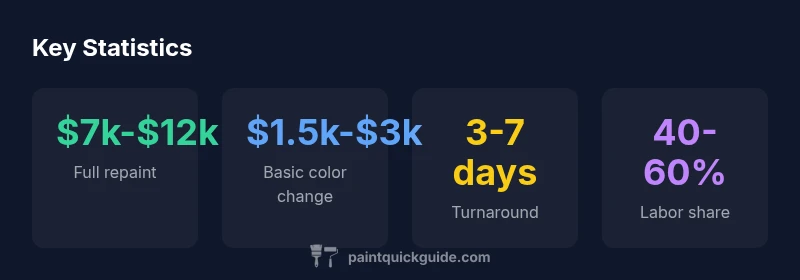
For car paint job costs, expect a broad range: a basic color change or touch-up can run roughly $1,500–$3,000, mid-range repaint around $3,000–$7,000, and high-end full resprays with premium finishes often exceed $8,000. These figures depend on prep work, color, and shop quality.
What drives car paint job costs
Prices at the shop are not just about the paint itself. The biggest cost drivers include the quality of prep work, body repair needs, color selection, and the type of paint system. A job that requires dent pulling, rust treatment, or extensive panel work will push costs higher. Premium paints—such as metallics or pearlescent finishes—also add to the price due to materials and specialized application. According to PaintQuickGuide, most of the variance in final bids comes from prep and color matching accuracy rather than the base paint alone. When you ask for quotes, make sure the shop itemizes each step: surface prep, bodywork, primer, base coat, clear coat, and curing time. This clarity helps you compare apples to apples and identify potential value choices that fit your budget.
Understanding service levels: basic color change, mid-range repaint, and full refinishes
Prices reflect the level of prep, the amount of labor, and the finish quality. A basic color change often avoids major bodywork and focuses on sanding, masking, and a straightforward application. Mid-range repaints include better color matching, more thorough prep, and a multi-layer clear coat for durability. Full premium repaints cover extensive bodywork, top-tier finishes, color matching, and sometimes multiple coats for an exact color. PaintQuickGuide notes that most consumer projects fall into the mid-range category, balancing cost with long-term durability. Consumers should expect a tiered price ladder and use it to negotiate for the level of refinement they actually need.
The role of prep, panels, and color choices
Prep quality is the true price shaper. If panels are straight with no dents, prep time is shorter and costs stay lower. If bodywork is required, you’ll see added costs for dent repair, rust treatment, or panel replacement. The color choice also matters: solid colors are cheaper to apply than metallic or pearlescent finishes, which require more coats and special handling. A common pitfall is choosing a premium color without needing it—this can push costs up without meaningful value. PaintQuickGuide’s guidance is to map color goals against the perceived value and expected longevity of the finish.
Material types and their impact on price
The paint system widely determines final price. Single-stage paints are cheaper than basecoat with clearcoat systems, which offer richer depth and UV protection but come with higher material and labor costs. Metallic, pearlescent, or candy colors require more steps, color matching, and curing. If a shop downgrades to a less durable urethane, you may save money initially but may incur higher maintenance or repaint costs sooner. Asking for a breakdown of the paint system helps you assess value and plan for future maintenance.
How to get accurate quotes and avoid surprises
To avoid sticker shock, gather multiple bids from reputable shops and request itemized estimates. Ensure each proposal lists prep work (bodywork, rust repair, dent removal), surface prep (sanding/grit blasting if needed), primer, base coat, clear coat, color-matching fees, and curing time. Verify whether trim removal or panel repaint is included. Ask about warranty terms on finishes and color stability. Transparent shops will show the expected return on investment for different finish levels and the associated maintenance costs over time.
Budgeting and planning for car repaint cost
Budgeting should consider not only the sticker price but the long-term value. A mid-range repaint can provide several years of service before a major refresh is necessary, while premium finishes may extend durability and color longevity. Plan for contingencies such as minor bodywork that may be discovered during prep. If you’re working with a fixed budget, choose a level that meets functional needs (protection, color uniformity) and then allocate a contingency reserve for any unforeseen prep work. PaintQuickGuide recommends a phased approach if needed: complete essential color refresh now, and schedule a longer-lasting finish for later.
Common mistakes that blow up the car paint cost
Rushing the prep phase, skipping a proper color match, or selecting a finish solely because of aesthetics can raise costs and compromise results. Other pitfalls include choosing a less reputable shop or neglecting to obtain an itemized quote. Always verify warranty coverage and the shop’s process for color stability under sun exposure. By avoiding these missteps, you’ll improve the odds of an outcome that looks great and lasts.
Car paint job cost ranges by service level
| Service Level | Typical Range | What’s Included |
|---|---|---|
| Basic color change | 1,500-3,000 | Lower prep, single-stage color, standard finish |
| Mid-range repaint | 3,000-7,000 | Moderate prep, color match, base coat + clear coat |
| Full premium repaint | 7,000-12,000 | Extensive dent repair, premium finishes, multiple coats |
Your Questions Answered
What factors influence car paint job cost the most?
Prep quality, repair work, color selection, and the paint system all drive costs. Metals and plastics may require special primers, and premium finishes raise price. Always compare itemized estimates.
The biggest cost drivers are prep work, color choice, and finish grade; always ask for itemized estimates.
Is a DIY paint job cheaper than hiring a pro?
DIY paint jobs can save on labor but carry high risk of poor results and costly fixes. Most homeowners see best value by hiring pros for prep, application, and color matching.
DIY can save money but often ends with worse results; professionals usually deliver better value.
How long does a typical car repaint take?
Most professional repaints take several days to a week, depending on prep needed and shop scheduling. Plan for buffers for curing and color-matching.
Expect a few days to a week, with possible delays for prep and curing.
Should you require an itemized estimate?
Yes. An itemized quote helps you compare labor, materials, and prep work across shops. It also clarifies whether dent repair or bodywork is included.
Always ask for an itemized estimate to compare value.
When is the best time to get a car repainted?
There is no season perfect for painting, but off-peak times can lower costs and shorten wait times. Plan ahead for color matching and curing time.
Off-peak times can be cheaper; plan for curing time and color matching.
“Price is driven by prep quality, materials, and labor. Always demand an itemized estimate to understand value and tradeoffs.”
Quick Summary
- Get itemized quotes from shops to compare value
- Expect ranges; the final price depends on prep and color
- Premium finishes cost more but offer better durability
- Factor turnaround time into total cost