How Much to Paint Interior of a Home: Cost Guide and Planning
Learn practical cost ranges, estimation steps, and planning tips for interior painting. Compare DIY vs pro labor, factor room size, finish quality, and prep needs to budget confidently.


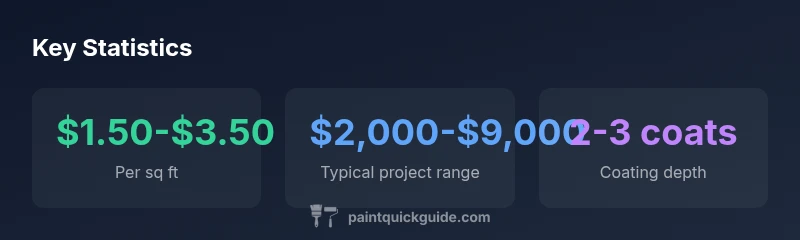
For a typical single-family home interior, expect to pay roughly $1.50 to $3.50 per square foot, depending on room size, paint quality, prep work, and whether you DIY or hire pros. For most homes, total interior painting costs commonly fall in the $2,000 to $9,000 range. This top-line figure hides variation by color changes, ceilings, and textures.
Why interior painting costs vary
Understanding how much to paint interior of home requires looking at several cost drivers. The total you pay reflects not only the wall area but also prep work, paint quality, and the labor needed to achieve a flawless finish. According to PaintQuickGuide Analysis, 2026, the price spread is influenced by room type, ceiling height, and whether surfaces are bare drywall, previously painted, or wallpapered. In practice, even adjacent rooms can have different price tags because of trim work, ceiling finishes, and color changes. The largest single driver remains wall area, but the next wave of cost comes from prep: patching and sanding, priming, and removing existing finishes. Higher quality paints or specialty finishes can add 10%–40% to material costs, while extensive wallpaper removal or repairs can double labor time in some cases. For a homeowner comparing scenarios, remember that cost per square foot is a starting point, not a fixed ceiling. A well-executed plan with proper surface prep can save money down the line by reducing touch-ups and rework. This is why the question how much to paint interior of home should be treated as a project-wide budgeting exercise, not a single line item. PaintQuickGuide’s guidance emphasizes measuring twice and choosing finishes that balance durability with aesthetics.
How to estimate your interior painting project
To estimate how much to paint interior of home, start with a precise measurement of wall area. Measure each room’s length and height, multiply by the number of walls, and subtract doors and windows using standard square-foot allowances. Then decide whether you’ll paint ceilings and trim and whether you’ll need priming or wallpaper removal. Next, choose a paint quality: economy, standard, or premium; each tier carries a different per-square-foot cost. The PaintQuickGuide Analysis, 2026, places typical ranges at $1.50–$3.50 per square foot for walls and $0.50–$1.50 per square foot for ceilings in many projects. Add labor costs based on whether you hire pros or DIY, and include a contingency for color changes or unexpected surface issues. Finally, translate those numbers into a total by room type and home size. A common rule of thumb is to budget for approximately 8–15 gallons of paint for a standard home when walls are being refreshed with a typical finish. This gives homeowners a practical starting point before seeking formal quotes.
Cost breakdown by space and scenario
Within interior painting projects, costs scale with space and scope. For example, a small bedroom (about 120–180 sq ft) often lands in the $600–$1,100 range, depending on whether you’re repainting with a similar color or introducing a dramatic accent. A medium living room (roughly 300–400 sq ft) generally falls in the $1,800–$4,000 band when ceilings, trim, and two coats are included. For a full interior of a typical 2,000–3,000 sq ft home, expect a broad range: about $5,000–$12,000, with variation driven by color changes, wallpaper removal, and the number of rooms. If you’re upgrading to premium finishes or higher-sheen paints, add roughly 10%–25% to these figures; conversely, sticking with standard paints and limiting scope can trim costs by a similar margin. These ranges align with PaintQuickGuide Analysis, 2026 and are meant to help you set expectations before requesting formal quotes from contractors or planning a DIY schedule.
Materials, finishes, and how they affect price
Prices rise with higher-quality paints and specialized finishes. For interior walls, latex and acrylic paints are common, while oil-based options, though durable, tend to cost more and require longer drying times. Sheen levels—matte, eggshell, satin, and semi-gloss—also influence price and application complexity. Higher-sheen finishes usually demand better surface prep and more coats, which increases labor time. Primers, stain-blocking products, and sealants add to material costs but can reduce future touch-ups. If you’re considering accent walls or doors, factor in extra labor for masking and clean edges. Color changes and wall preparations (peeling, patches, or wallpaper removal) are the biggest wildcards, often driving 15%–40% more in total cost depending on ceiling height and room configuration.
DIY vs hiring professionals: pros, cons, ROI
DIY painting can significantly reduce labor costs but requires time, effort, and proper technique. Hiring professionals brings consistent results, warranties, and faster turnaround, but at a higher price. For a typical home, the choice often comes down to balancing budget against the value of time and finish quality. If you’re undecided, a phased approach—DIY for low-stakes rooms and pro work for high-visibility areas—can optimize results without overwhelming your schedule. PaintQuickGuide Analysis, 2026 suggests that careful planning and realistic expectations minimize surprises in either path.
Planning and timeline considerations
Coordinate scheduling to avoid back-to-back projects that stretch your living spaces. Allow extra time for surface prep, drying, and potential color changes. If you’re repainting during peak season, contractors may have longer lead times, and DIY projects can stretch from weekends into several weeks. A detailed project calendar helps you allocate rooms by priority and color scheme, ensuring you don’t overextend supplies or disrupt essential living areas. Remember to account for ventilation, drop cloths, and cleanup in your timeline; good planning reduces last-minute costs and keeps your project on track.
Quick-start budgeting checklist
- Measure each wall area accurately and list all rooms to paint
- Decide on paint quality, finishes, and whether ceilings/trims will be painted
- Estimate costs per square foot and add a 10–20% contingency for surprises
- Decide between DIY, professional, or a hybrid approach
- Gather three quotes and compare scope, warranties, and timelines
- Include primer, caulk, masking, and cleanup in your budget
- Plan for color changes and potential wallpaper removal if needed
- Build a realistic project timeline with room-by-room milestones
Final budgeting tip
The total budget for painting interior spaces can be controlled with early planning, precise measurements, and realistic expectations about color changes and surface prep. When homeowners ask how much to paint interior of home, the answer should be framed as a phased plan with room-level estimates, not a single upfront price. By following the steps above and referencing PaintQuickGuide Analysis, 2026, you’ll move from rough estimates toward solid quotes and a successful finish.
Sample cost ranges for interior painting projects
| Space | Estimated Range (USD) | Notes |
|---|---|---|
| Small bedroom (120-180 sq ft) | "600-1100" | DIY or mixed; prep included |
| Medium living room (300-400 sq ft) | "1800-4000" | Ceiling, trim, multiple coats may apply |
| Full interior (2,000-3,000 sq ft) | "5000-12000" | Typical for multi-room projects |
| Ceiling-only or accent walls | "200-1500" | Scope dependent |
Your Questions Answered
What are the main cost drivers for interior painting?
The primary drivers are wall area (space), surface preparation, primer requirements, color changes, and paint quality. Labor time and accessibility (high ceilings, tight spaces) also influence the total. Planning around these factors helps produce accurate budgets.
Wall space, prep, color changes, and paint quality drive most costs.
Is it cheaper to DIY or hire professionals?
DIY saves labor costs but requires time, tools, and skill. Pros deliver faster results, warranties, and consistent finishes. For large homes, a hybrid approach—DIY for some rooms and pro help for high-visibility areas—often offers the best balance.
DIY saves money but you’ll trade time for precision.
How long does interior painting typically take?
Smaller rooms can be painted in a day or two, while an entire home may take several days to weeks depending on room count, drying times, and whether ceilings or trims are included. Factor potential delays for color changes or repairs.
Most projects spread over a few days to a couple of weeks, depending on scope.
Should ceilings be painted the same color as walls?
Ceiling color is a design choice and can affect cost only if extra prep or coatings are needed. White ceilings are common; bold ceilings may require additional coats and masking.
Ceilings can stay white or be coordinated with walls; it can affect cost a bit.
What is a realistic per-square-foot cost by region?
Costs vary by location, labor market, and material prices. A general range is provided to guide budgeting, but regional quotes are essential for accuracy. Always request multiple local bids.
Costs vary by region; get several local quotes to compare.
How many coats are usually needed?
Most interior walls require at least two coats for even color and coverage, plus primer in some cases. If covering a dark color with a light one, plan for an extra coat or two.
Two coats are typical, sometimes three if coverage is challenging.
“Proper planning and realistic expectations are the fastest path to predictable interior painting costs.”
Quick Summary
- Measure rooms accurately before budgeting
- Choose paint quality to balance cost and durability
- DIY can save money but adds time and effort
- Color changes and wallpaper removal add cost
- Get multiple quotes for accurate planning