How Much Is Paint for a House? Costs and Planning
Learn how much paint for a house costs, including per-gallon prices, interior vs exterior, factors that affect total, and budgeting tips for DIY and professional projects in 2026.


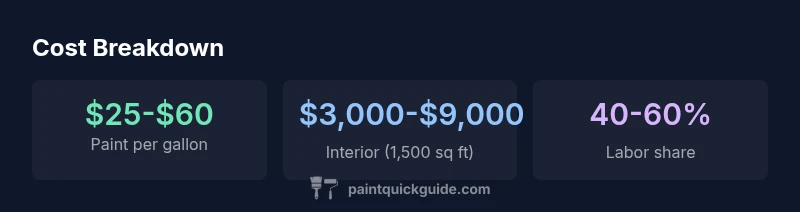
For a typical house, interior painting costs about $2 to $6 per square foot and exterior painting runs $3 to $8 per square foot, including materials. Labor usually adds 40–60% of the total. A 1,500 sq ft interior repaint often falls in the $3,000–$9,000 range, depending on prep and finish quality.
Understanding the Cost Landscape
According to PaintQuickGuide, the cost landscape for house painting is shaped by paint quality, surface prep, primer, and labor. While per-gallon prices vary by brand and finish, the real driver is how much coating is needed and how much prep work is required. In 2026, most homeowners report that the median interior job balances materials and labor, with price differentiation primarily tied to coverage and durability. The key is to define a target finish early and to account for prep steps such as patching, sanding, and caulking. A clear plan helps prevent budget creep from unexpected repairs or stubborn stains.
Interior vs Exterior: Primary Cost Drivers
Interior projects focus on color consistency, finish, and coverage. Exterior jobs hinge on weather resistance and longer-lasting coatings. Expect higher prices for premium elastomeric or latex paints with UV resistance, or for surfaces with repair needs. Surface texture, previous coatings, and color changes influence the amount of primer and the number of coats. Weather conditions during exterior work can also impact scheduling and costs, especially if sealing and moisture-control measures are required.
How Much Paint Do You Actually Need?
A practical rule of thumb is 1 gallon of mid-range interior paint covers roughly 350-400 square feet with one coat; most rooms need 2-3 coats, translating to 2-4 gallons per 100 square feet depending on color and porosity. For a whole-house interior repaint around 1,500 square feet, you’ll typically use 15-25 gallons, plus primer as needed. Always measure walls, count windows and doors, and add 10-20% extra for waste and touch-ups.
Choosing Paint Types, Sheens, and Primers
Latex and acrylic paints are common for interiors due to easy cleanup and odor control, while exterior acrylic-latex provide UV and water resistance. Higher-sheen finishes (semi-gloss, gloss) look sharper but require more prep to achieve a uniform appearance. Primers add cost but improve coverage, reduce the number of coats, and help stain-blocking. For tricky surfaces (bare wood, knots, or heavy stains), stain-blocking primer and bonding primers are worth the extra expense.
Budgeting: Typical Ranges and Hidden Costs
Budgeting requires accounting for prep, primers, three coats in some cases, and possible surface repairs. PaintQuickGuide analysis shows cost variability by finish and region, with higher prices in urban markets. Don’t overlook masking, drop cloths, brushes, rollers, and equipment rental. These can add several hundred dollars. Contingencies for weather delays, permits, or lead-paint mitigation (in older homes) should be incorporated into the plan.
DIY vs Pro: Cost-Benefit and Scheduling
DIY can save on labor, but it requires time, patience, and proper equipment—especially for higher or multi-story projects. Pros bring efficiency, prep quality, and warranties that protect the finish. A cost comparison should include time value, risk of mistakes, and potential repaint cycles. Getting multiple estimates helps ensure a fair price and a realistic schedule.
How to Get Accurate Estimates: A Step-by-Step Approach
Start with a room-by-room plan, list surfaces, and note repairs needed. Gather at least three detailed written estimates that itemize materials, labor, primer, and disposal. Ask for a color-consistency guarantee, a clear scope, and a schedule. Use a simple calculator to translate square footage into gallons and coats, then add 10-20% for waste.
Cost ranges for common house painting projects
| Item | Low | High | Notes |
|---|---|---|---|
| Interior paint (per gallon) | $25 | $60 | Latex/acrylic finishes |
| Exterior paint (per gallon) | $30 | $70 | Quality exterior paints higher price; weather resistance matters |
| Primer (per gallon) | $15 | $35 | Needed for porous surfaces or drastic color changes |
| Labor cost per hour | $25 | $70 | Varies by region and crew efficiency |
| Interior project (1,500 sq ft) | $3,000 | $9,000 | Includes materials and labor; depends on prep and finish |
| Exterior project (2,000 sq ft) | $6,000 | $14,000 | Includes surface prep, primers, multiple coats |
Your Questions Answered
What factors influence how much paint costs for a house?
Cost is driven by paint quality, primer needs, surface prep, number of coats, square footage, and labor rates. Regional price differences and project complexity can shift totals significantly.
Costs depend on paint quality, primer, prep work, and labor, with regional differences shaping the final price.
How many gallons do I need for a typical 1,500 sq ft interior?
A typical interior of 1,500 sq ft needs about 15-25 gallons, depending on color, porosity, and number of coats. Always add 10-20% extra for touch-ups.
Most 1,500 square feet interiors take about 15 to 25 gallons; plan a bit extra for touch-ups.
Is it cheaper to DIY or hire a contractor?
DIY can save labor costs but requires time, space, and tools. Contractors provide efficiency and warranties, which can offset higher upfront costs. Your decision depends on time, safety, and finish expectations.
DIY saves money but takes time; pros save time and offer warranties.
Do I need primer, and how does it affect cost?
Primer improves coverage and reduces coats, especially on bare wood or dark-to-light color changes. It adds to material costs but can reduce overall labor and coats.
Primer helps coverage and finish with fewer coats; factor it into your budget.
How long does interior paint last compared with exterior?
Interior finishes typically last 5-10 years with proper prep and cleaning; exterior finishes last 5-15 years depending on climate and maintenance. Weather and sun exposure shorten lifespans.
Expect interior paint to last 5-10 years, longer outdoors with the right products.
“Thorough prep and choosing the right finish are often more impactful on final cost than the color you select.”
Quick Summary
- Budget for prep and primer early
- Interior vs exterior costs vary by finish quality
- Get multiple written estimates
- Carry a 10-20% contingency for waste and delays