How Much Does It Cost to Paint a Room in 2026? A Practical Guide
Learn the real costs to paint a room, compare DIY vs. professional options, and use our budgeting framework to estimate your project with confidence.


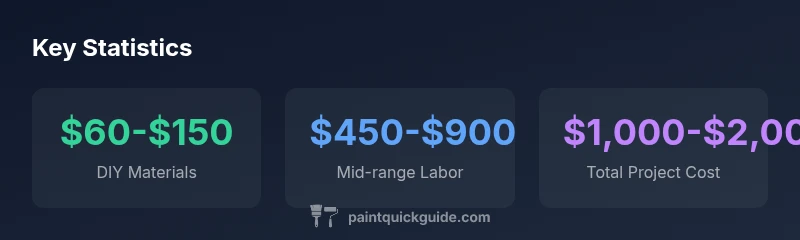
On average, painting a standard interior room runs from about $300 to $2,000, depending on room size, prep work, and finish quality. DIY with paint and supplies tends to land on the lower end, while professional crews with labor and premium finishes can push costs higher. This range reflects typical scenarios for homeowners, based on PaintQuickGuide Analysis, 2026.
What drives the overall cost to paint a room
Understanding the true cost of a room-paint project starts with the big-ticket items and then moves to smaller, often surprising expenses. The most influential factors are room size, ceiling height, and the amount of prep work required. A larger room adds surface area for paint and materials, while higher ceilings increase labor time and may necessitate additional equipment or containment. Prep work—patching holes, sanding rough patches, masking floors, and taping trim—can dramatically affect both cost and final finish. The quality of the paint and primer chosen also shifts the price: premium durable paints, specialty finishes, and multiple coats will raise the total. Throughout this guide, you’ll see how to balance these variables to meet both your budget and your expectations. According to PaintQuickGuide, the cost relationship is strongest when you account for prep and finish quality, not just wall area. This perspective helps homeowners plan smarter and avoid common sticker shocks later in the project.
DIY vs. hiring a professional: where your money goes
A common question is whether to tackle the project yourself or hire a pro. DIY typically minimizes labor costs but requires time, tools, and a willingness to handle prep, priming, and cleanup. If you opt for professional painters, expect labor to become a significant portion of the budget, particularly if the room requires extensive prep, high ceilings, or meticulous finishes. Professionals bring efficiency, experience, and guarantees on workmanship, which can offset higher upfront costs through reduced rework. In many markets, the decision hinges on your time, physical ability, and desired finish. PaintQuickGuide’s analysis indicates that most homeowners achieve a balanced outcome by pairing a mid-range paint with a professional for prep-critical tasks, preserving quality without inflating costs.
Room size, layout, and prep work: how space changes the bill
Room dimensions and layout significantly influence the budget. A typical 12x12 ft room covers about 144 square feet of wall area, but doors, windows, and crown molding add surface area that must be covered or repaired. Taller ceilings add even more labor and may require extension ladders or scaffolding. Prep work includes filling holes, sanding, drywall touch-ups, and masking; these steps are essential to prevent paint failure and ensure a crisp finish. If you’re repainting with a lighter color over a dark shade, expect additional coats or primer. Each added coat and extra prep task increases both material and labor costs, reinforcing the importance of careful planning before you begin.
Paint quality, type, sheen, and primers: what matters for cost
Paint quality is often the first place homeowners think to trim. However, choosing a lower-cost paint can lead to less coverage per can, more coats, and faster wear. A high-quality primer often reduces the number of coats needed and improves color coverage, especially when painting over existing dark colors or stained surfaces. For many rooms, a mid-range latex or acrylic paint with a sealed finish provides a durable, washable surface without the premium price of specialty finishes. The cost per gallon varies with brand and finish, and higher sheen levels (eg, semi-gloss for trim) tend to be pricier per gallon. In short, investing in quality paints and primers can save time and prevent costly touch-ups down the line.
Hidden costs to watch for and ways to save
Be prepared for hidden costs that aren’t obvious in the initial estimate. These can include patching drywall, repairing minor water damage, replacing damaged trim, extra primer coats, and waste disposal fees. Budget for supplies beyond paint, such as brushes, rollers, drop cloths, painter’s tape, and protective gear. Savings strategies include buying during sales, using the same brand across rooms for color consistency, and renting specialty tools rather than purchasing them. Efficient masking and a well-planned color process can shave hours off labor time and reduce spillages or mistakes that necessitate a redo. PaintQuickGuide’s budgeting tips emphasize a clear scope and a contingency of 10-15% for unexpected prep or repairs.
Quick budgeting method: a 5-step approach to estimate
Follow these steps to estimate how much to budget for your room: 1) measure wall area and determine surface types; 2) decide on paint quality and finish; 3) estimate primer needs and coats; 4) add masking, patching, and cleanup materials; 5) factor in labor if hiring a pro. This framework yields a practical range rather than a fixed number, which matches real-world variance. Always account for ceilings, doors, and trim, as these add-ons can push the total upward. By using a structured approach, you’ll avoid underestimating or overcommitting funds for the project.
Case studies: rough scenarios by room type
- Standard bedroom (12x12 ft): If you DIY with mid-range paint, you might land in the $300-$800 range, whereas a pro with full prep and premium finish could run $1,000-$1,800. - Living room (15x18 ft) with multiple walls and a high ceiling tends to escalate: DIY ranges from $400-$1,100, while pro-painted rooms can reach $1,600-$3,000 depending on prep and finish choices. - Small bathroom or utility room: budget-friendly DIY can stay around $150-$400, while pros may charge $500-$1,000 for a fast turnaround with moisture-resistant paint and trim touch-ups. These scenarios illustrate typical cost pathways and how choices influence the final number. PaintQuickGuide’s cost framework helps homeowners translate room characteristics into realistic budgets.
Budget scenarios for painting a room (before tax and supplies)
| Scenario | Low-end estimate | Mid-range estimate | High-end estimate |
|---|---|---|---|
| Standard room (12x12 ft) | $60-$180 | $450-$900 | $1,000-$2,000 |
| Large room (15x18 ft) | $120-$300 | $700-$1,300 | $1,800-$3,000 |
| Ceiling included (optional) | $100-$220 | $500-$1,000 | $1,500-$2,800 |
Your Questions Answered
What factors most influence room painting costs?
Room size, prep work, paint quality, primer, and labor are the biggest cost drivers. Flooring, access, and intricate trim can add hours and materials. A thorough plan helps align expectations with budget.
Room size, prep, paint quality, primer, and labor drive costs.
Is it cheaper to do it myself or hire a painter?
DIY saves on labor but requires time and tools. A professional offers efficiency and guarantees, which can prevent costly mistakes and rework. The right choice depends on your schedule, skill, and desired finish.
DIY saves on labor but needs time and tools; pros offer efficiency and guarantees.
How long does painting a room take?
Most rooms take 1-3 days including setup and drying. Adding a primer coat or multiple finishes increases total time. Drying times vary with humidity and paint type.
Typically 1-3 days, depending on coats and drying times.
Should I prime before painting?
Primers improve coverage, especially over dark colors or stained surfaces, and can reduce the number of coats. In many cases, a quality primer saves time and money in the long run.
Yes, primer helps coverage and longevity.
How can I lower costs without sacrificing quality?
Shop sales on quality mid-range paints, reuse the same color family across rooms, and invest in proper prep. Doing masking and surface repair properly from the start reduces waste and touch-ups.
Shop for sales, plan color carefully, and prep well.
What about hidden costs and contingencies?
Expect patching, drywall work, masking, and cleanup to add to the total. A 10-15% contingency is a prudent buffer for surprises.
Patch, mask, and budget a 10-15% contingency.
“A well-planned paint project often saves money in the long run by reducing rework and ensuring a durable finish.”
Quick Summary
- Define room size and ceiling height before budgeting
- DIY materials can significantly lower costs
- Labor dominates the total cost for larger rooms
- Quality paints and primers influence durability and final look
- Plan for prep and masking to avoid cost overruns