How Much Is Paint for a Room? 2026 Cost Guide
Learn realistic ranges for interior room painting costs, including materials, primer, tools, and labor. This PaintQuickGuide guide covers DIY budgets and professional options for 2026.


According to PaintQuickGuide, a typical interior room painting project splits into materials and optional labor. DIY costs usually run about $150–$300 for paint, primer, and supplies. Premium paints or extra coats can raise materials to around $350–$450. Hiring a professional typically totals $400–$1,100 per room, depending on room size, finishes, and prep work.
Understanding What the Question Really Costs
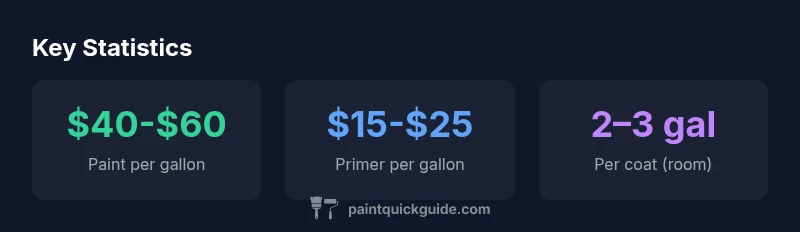
If you're asking how much is paint for a room, you're not just buying a can of color. The total cost reflects several moving parts: the room’s size, the number of coats, the paint type, primer needs, and whether you hire a pro. This section explains what to include in your budget and how prices break down across DIY and professional options. By working through a realistic scenario, you’ll see how a few choices can swing the final total. According to PaintQuickGuide Analysis, 2026, the cost picture splits into materials and labor. The most common interior paints cost between $20 and $60 per gallon, and primer typically runs $15-$25 per gallon, depending on brand and stain-blocking properties. Coverage varies by product and surface texture; most interior latex paints yield about 350-400 square feet per gallon, but actual results depend on prep work, porosity, and application technique. If you’re changing colors or painting high-traffic areas, plan for extra primer and at least one additional coat. The goal is a realistic budget that avoids runouts or wasted supplies, especially when you’re painting multiple spaces in one project.
Step-by-step Cost Breakdown: Materials, Tools, and Hidden Costs
Breaking down the budget into line items helps prevent sticker shock later. Start with the basics: paint and primer. Expect paint costs in the $20–$60 per gallon range for interior latex, with primers often $15–$25 per gallon. Don’t forget tools: brushes and rollers ($5–$25 each), trays ($3–$8), and reusable accessories like paint edgers. Add tape ($3–$8 per roll), drop cloths or plastic sheeting ($5–$20), caulk or spackle for prep ($3–$10), and sanitary cleaners for touch-ups. Don’t overlook optional items such as stain-blocking primer for knots, sheen-changing topcoats, and odor-control products. If you’re hiring a professional, labor is the dominant variable—per-room totals typically escalate with room size, prep needs, and finish choices. Budget a buffer for incidental costs like extra primer, color samples, or patching drywall. A carefully planned shopping list reduces trips to the store and minimizes waste.
Paint Types and Coverage: How They Impact Price and Yield
Choice of paint type and finish is a major cost lever. Water-based latex remains the most common interior option due to low odor, fast drying, and easy cleanup. Oil-based or alkyd paints offer durability in high-traffic areas but come with higher initial costs and longer cleanup times. Finishes range from flat/matte to satin and semi-gloss; higher sheens usually cost a bit more per gallon and provide easier soiling resistance. Coverage varies by brand and finish, but a typical latex interior paint covers about 350–400 square feet per gallon. If you’re repainting from a dark color to a light one or vice versa, you’ll often need extra coats and perhaps a tinted primer to avoid multiple topcoats. Low-VOC formulas are widely available and can affect price slightly while offering improved indoor air quality and comfort during the project.
Room Size, Coats, and Coverage Calculator: a practical method
A practical budgeting method is to translate room size into gallons, then multiply by the number of coats. Step 1: measure wall area. For a rectangular room, perimeter = 2*(length + width); wall area = perimeter * height. Step 2: subtract doors and windows. Step 3: divide the adjusted wall area by coverage per gallon to estimate gallons per coat. Step 4: multiply by coats (usually 2). Finally, add 10–15% for waste and touch-ups. Example: an 11x12 ft room with 8 ft ceilings has about 368 sq ft of wall area. At 350–400 sq ft per gallon, one coat needs ~0.92–1.05 gallons; two coats would require ~1.84–2.1 gallons (round up to 2–3 gallons). Include primer if color changes or surfaces aren’t uniform. Contingencies like peeling paint or repaired drywall can raise needs by 0.5–1 gallon. This method keeps you from underbuying or overbuying supplies.
DIY vs Professional: Costs, Timelines, and Quality
DIY projects typically save labor costs but demand time and effort. Materials for two coats in a standard room can run roughly $70–$300, depending on paint quality and brand. Premium paints and multiple coats push materials into the $350–$450 range, especially when adding stain-blocking primers or specialty finishes. Professional painters charge for labor, which often makes the total per room range from $400–$1,100 or more, depending on room size, ceiling height, prep requirements, and whether doors or trim are included. Professionals may also bring efficiency, color-matching, and surface preparation skills that yield a more uniform finish in less time. For a busy homeowner, a hybrid approach—DIY walls with a professional for trim and ceilings—can be a cost-saving compromise.
Money-saving Tips and Common Traps
To maximize value, plan ahead and shop smart. Request color samples and test patches before committing to a full color. Buy a little extra paint for touch-ups later, but avoid overbuying by using the same batch after confirming color consistency. Opt for mid-range paints that balance coverage and price, and choose a high-quality roller and cut-in brush to reduce labor time. If repainting a previously painted surface, consider a stain-blocking primer only where needed. Schedule multiple rooms in one trip to reduce travel costs if you hire help, and negotiate with contractors for a bundled price in exchange for multiple spaces. Finally, factor in ventilation and drying time, especially if you need to work around household members or pets.
Practical Scenarios: Small, Medium, and Large Rooms Compared
- Small room (about 120 sq ft walls): DIY materials typically run roughly $70–$180, while pro services can push total to $350–$600 depending on finish and trim work. A single coat may suffice with a good primer, but most projects use two coats for even color.
- Medium room (200–250 sq ft walls): DIY budgets usually fall in the $120–$260 range for materials, with total DIY costs around $260–$550 including a second coat. Hiring a painter often brings the total to about $450–$900, reflective of complexity and whether ceilings are included.
- Large room (350–400 sq ft walls): DIY costs can reach $180–$400 for materials; total DIY around $420–$800 when two coats are required. Pro estimates commonly fall between $750 and $1,200, depending on prep, beams, and trim. These ranges reflect typical market conditions in 2026 and assume standard interior latex paints with a satin or eggshell finish.
Cost ranges by room size and coat count
| Room size | Coats | Estimated paint | Primer | Labor (pro) |
|---|---|---|---|---|
| Small room (120 sq ft) | 2 coats | $25-$60 | $15-$25 | $200-$350 |
| Medium room (200-250 sq ft) | 2 coats | $40-$75 | $20-$35 | $280-$520 |
| Large room (350-400 sq ft) | 2 coats | $60-$100 | $25-$40 | $420-$700 |
Your Questions Answered
What factors affect paint costs the most?
Room size, number of coats, paint type and finish, and whether you need primer or extra prep work drive the bulk of the cost. Labor, if hired, adds a predictable but variable amount.
Room size, coats, and paint quality drive most of the cost; primer and labor add the rest.
How many gallons do I need for a typical room?
Estimate wall area by multiplying length by height for each wall, sum, subtract doors and windows, then divide by expected coverage per gallon. Multiply by coats.
First measure wall area, then divide by coverage per gallon and multiply by coats.
Is primer necessary?
Primer improves coverage and color uniformity, especially on stained, new, or porous surfaces. It can save paint and prevent blotchy results.
Yes. Primer helps with coverage and color evenness on rough or new surfaces.
Premium or budget paint?
Premium paints often cover better and last longer, which can reduce the total cost per wall. Budget paints are fine for quick refreshes or rental properties.
Premium paints usually mean less cost over time due to better coverage, but you can save with budget options for simple jobs.
Are low-VOC paints worth it?
Low-VOC paints reduce odors and improve indoor air quality. They may cost a bit more upfront but can ease cleanup and drying times.
Low-VOC paints are worth it for homes sensitive to odors; they cost a bit more but have cleaner indoor air.
“Accurate room painting costs hinge on surface prep and paint quality. Higher-quality products often deliver better coverage and durability, reducing the need for frequent touch-ups.”
Quick Summary
- Estimate room size and coats first
- Factor primer into the budget
- DIY saves labor but may take longer
- Premium paints raise per-gallon cost but may improve coverage
- Plan for waste and misc costs