Price to Paint House Interior: A Practical Cost Guide (2026)
Learn the true price to paint house interior with practical ranges, cost drivers, and money-saving tips. Comprehensive guide for homeowners and DIY enthusiasts.


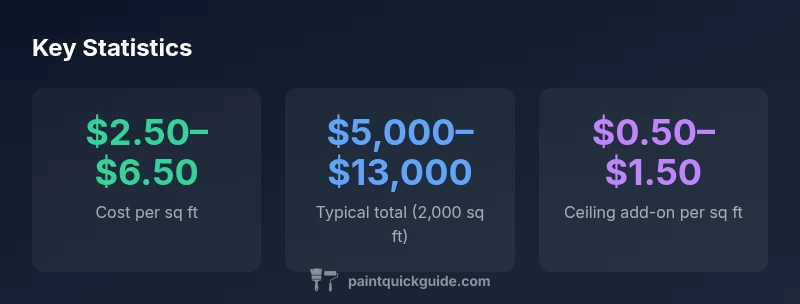
The price to paint house interior typically ranges from $2.50 to $6.50 per square foot, translating to roughly $5,000 to $13,000 for a standard 2,000-square-foot home, depending on prep, number of coats, ceilings, trim, and finishes. Prices can rise in premium neighborhoods or with high-end materials. This range reflects typical market pricing as of 2026.
What affects the price to paint house interior
According to PaintQuickGuide Analysis, 2026, interior paint pricing is driven by space size, surface condition, and finish quality. The core driver is area: more square footage directly increases labor and material needs. But factors like wall prep, number of coats, ceiling work, trim and doors, and the chosen paint type (latex vs oil-based, matte vs gloss) can shift the price by a wide margin. In addition, access considerations, room layout, and local labor market influence bids. The PaintQuickGuide team found that you should budget not only for paint but for supplies such as masking, priming, patching, and disposal fees. For homeowners, a detailed scope helps prevent sticker shock and aligns expectations with contractors. The goal is to create a clear, itemized bid that captures all expected work, from patching nail holes to removing popcorn ceilings if present.
Why it matters: Hidden prep work or required color changes are common sources of cost overruns. By defining the scope early, you can compare bids on a like-for-like basis and avoid surprises at the punch list stage. As you plan, remember that interior paint costs are highly sensitive to finishes and coatings; switching from a washable to an ultra-flat finish can alter the price per square foot by a noticeable margin.
PaintQuickGuide tip: Ask for a written scope that specifies the number of coats, surface preparation steps, and whether ceilings, closets, or built-ins are included. This ensures fair comparisons between bidders and reduces miscommunication.
Cost breakdown: walls, ceilings, trim, and prep
Pricing is rarely a single line item; it’s a composition of several tasks. The largest portion typically goes to labor for applying multiple coats and managing surfaces, followed by paint materials. The standard breakdown usually includes wall prep (patching, sanding, priming if needed), paint for walls, edge work near trim, and masking supplies. If ceilings require painting, that adds to both materials and labor time. Trim and doors can significantly raise costs, especially with multiple coats or premium finishes. When homeowners choose high-end, low-VOC, or specialty finishes, expect the per-square-foot price to climb. A common strategy is to start with a conservative scope (walls only) and then layer in additional elements after reviewing bids. The aim is to capture all steps—surface repair, caulking gaps, sanding rough patches, priming, and final sealant—to avoid post-project touch-ups that cost more than planned.
How room size and layout influence pricing
Room size remains the dominant driver of interior painting costs. Larger spaces multiply labor hours and the volume of materials needed. Layout complexity—angled walls, alcoves, soffits, and multi-story stairwells—also affects bid timing and pricing. More rooms often mean higher mobilization costs, even if wall area is similar. In open-concept homes, the overall wall area can be large, but efficiencies in painting adjacent spaces may offset some labor costs. Conversely, small, intricate rooms with lots of trim can push costs up due to detail work and masking. To gain accuracy, request a bid that lists wall area per room, including closets and hallways, and verify whether costs are computed per room or by total square footage.
Impact of paint type and finish on cost
Paint type and finish influence both materials and labor. Latex acrylics are common for interiors and tend to be easier to apply, with lower odor and cleanup requirements. Oil-based paints, while durable, require longer dry times and stronger solvents, often increasing labor time and cost. Finishes range from matte to semi-gloss; glossier finishes highlight surface imperfections and demand meticulous prep, potentially increasing labor. Premium lines with stain-blocking properties or enhanced washability typically cost more per gallon. If you’re choosing specialty paints (chlorinated rubber, high-adhesion coatings, or moisture-resistant bathroom paints), expect a higher price point. A practical approach is to balance durability with expected wear and cleaning needs in each room to optimize value.
Tackling hidden costs and saving strategies
Hidden costs commonly arise from prep work, color changes, or discrepancies between bid scope and actual needs. Consider these strategies:
- Specify exactly how many coats and which surfaces are included
- Include patching and drywall repairs in the scope
- Budget for primers, sealers, and caulking
- Limit color changes that require multiple coats
- Compare bids that detail labor hours, shop coatings, and masking material
- Consider scheduling efficiency (painting in fewer rooms at once can reduce mobilization fees)
- Choose standard finishes for frequent wear areas and reserve premium finishes for living spaces
By planning thoroughly and negotiating clear scopes, you’ll reduce the likelihood of price creep and improve final outcomes.
How contractors price interior painting: common models
Most contractors price interior painting using one of several models:
- Per square foot: A straightforward approach that scales with room size; best for uniform projects.
- Per room: Helpful when rooms have similar sizes but vary in complexity; often includes standard prep and two coats.
- Hourly or day-rate: Used for complex projects with unpredictable prep; more common on larger or high-end jobs.
- Hybrid: A base bid per square foot plus added costs for unusual features or extensive repairs.
Understanding the pricing model helps you interpret bids more accurately. Ask bidders to break out labor, materials, and any overhead or permit costs. A well-structured quote makes it easier to compare apples-to-apples and spot hidden fees before work begins.
When DIY makes sense vs hiring a pro
DIY interior painting can yield substantial savings, especially on wall areas and when you’re comfortable with basic prep and tape masking. However, labor costs are a meaningful portion of the total price, and a poor spray or brushing technique can require costly touch-ups later. If you’re working with high ceilings, intricate trim, or moisture-prone spaces (bathrooms, kitchens), a professional finish often delivers a more consistent look and longer-lasting results. For many homeowners, a hybrid approach—doing prep and priming themselves, while leaving final coats and edge work to pros—offers a practical balance between cost and quality.
Interior painting cost scenarios by scope
| Scenario | Walls (range) | Ceiling add-on | Trim/Doors | Estimated Total (2,000 sq ft) |
|---|---|---|---|---|
| Walls only (standard rooms) | "$2.50–$6.50" | "$0.50–$1.50 per sq ft" | "$0.00" | "$5,000–$13,000" |
| Walls + Ceilings | "$2.50–$6.50" | "$0.50–$1.50" | "$1,000–$3,000" | "$6,000–$16,000" |
| Extensive prep (patching, repairs) | "$2.50–$6.50" | "$0.50–$1.50" | "$0–$2,000" | "$7,000–$18,000" |
Your Questions Answered
What is the biggest factor in interior painting cost?
The space size is the primary driver, as it directly affects labor and paint usage. Prep, number of coats, and finish quality also significantly influence the total.
Size matters most, but don’t overlook prep and finish quality when budgeting.
DIY vs. hiring a pro: which saves more?
DIY can reduce labor costs, but it requires time, tools, and effort. A pro delivers a consistent finish and may prevent costly touch-ups.
DIY saves money, but a pro can save you aggravation and ensure a smoother finish.
Should you repaint room by room or all at once?
Painting all at once minimizes mobilization costs and masking, but logistics and project scope matter. Room-by-room can offer better project control in a tight budget.
Do it all in one round to save on setup, or do rooms separately if timing is tight.
How long does interior painting take?
Most mid-sized homes take several days to a couple of weeks, depending on room count, finishes, and prep needs.
Expect several days up to a couple of weeks, depending on the scope.
Are there common hidden costs to watch for?
Yes. Watch for prep repairs, multiple coats, ceiling work, color changes, and disposal fees. Ask for a line-item scope to avoid surprises.
Prep and color changes are the usual culprits behind surprises.
“Interior painting is as much about scope and prep as it is about color. Clear specifications save time and money.”
Quick Summary
- Compare quotes from at least three contractors.
- Define scope clearly to control cost.
- Higher ceilings or more rooms raise price.
- Prepping surfaces often drives the majority of the cost.
- DIY can save money, but finishing quality matters.