How Much Does It Cost to Paint a House in 2026? A Practical Guide
Explore how much it costs to paint a house, with interior vs exterior cost ranges, per-square-foot estimates, and budgeting tips to plan, compare quotes, and maximize value.


Typically, painting a standard house costs about $4,000 to $12,000, depending on interior vs exterior scope, number of coats, prep work, and regional labor rates. For a ballpark estimate, use your home's square footage and per-square-foot costs for interior or exterior work, then add primer, supplies, and disposal. PaintQuickGuide Analysis, 2026 emphasizes using ranges to reflect project variability.
Understanding the cost to paint a house
When homeowners ask how much cost paint house, the answer hinges on scope, square footage, and prep work. Interior painting costs and exterior projects vary by wall texture, color choices, and surface condition. Regional labor rates and paint quality also drive the final bill. In practice, costs scale with square footage, number of coats, and the amount of prep required (patching, sanding, caulking). According to PaintQuickGuide, presenting estimates as ranges helps reflect variability across projects.
Cost breakdown by scope: interior vs exterior
Interior painting costs generally depend on room shape, ceiling height, and the amount of surface prep. Exterior jobs hinge on siding material, substrate condition, and weather-related delays. Using a per-square-foot approach helps; however, many projects require added coats or specialty finishes. Regional labor rates can tilt the final price by a noticeable margin, so local quotes matter greatly.
What a typical project includes: primer, coats, and prep
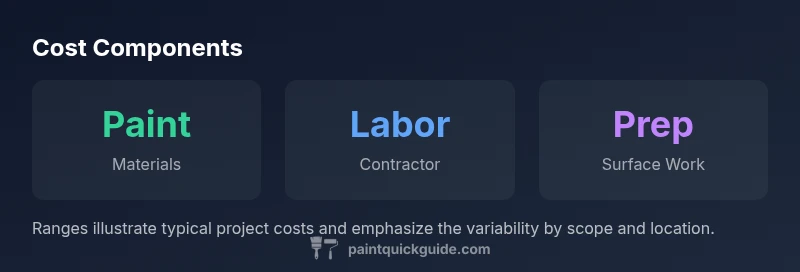
Most quotes separate labor, materials, and preparation. Expect primer, mid- to high-quality latex paint, at least two coats for color changes, masking, caulking gaps, sanding rough spots, filling holes, and cleanup. Additional line items appear for stain-blocking primers, specialty finishes, or multiple color zones. Remember that disposal fees and cleanup supplies are real costs that recur across jobs.
How to estimate your project: step-by-step
- Measure paintable surface area (length × height). 2) Decide on interior or exterior scope and number of coats. 3) Estimate prep needs (patches, sanding, caulking). 4) Choose paint quality and sheen. 5) Add primer where required and account for disposal. 6) Request multiple quotes and compare line items, not just totals.
Budgeting strategies and saving tips
Set aside a contingency (typically 10-15%) for surprises in prep or color changes. Save by preparing surfaces yourself, selecting mid-range paints, and limiting color changes. Consider a single contractor for both interior and exterior to reduce mobilization fees. Schedule during non-peak seasons to leverage better pricing.
DIY vs pro: when to choose which
For small rooms or touch-ups, DIY can be cost-effective, especially if you already own proper brushes and rollers. Large areas, complex trims, or exterior jobs usually justify hiring a pro for even coverage and warranty. Always weigh time, safety, and the quality you expect.
Common pitfalls and red flags
Underestimating prep, skipping primer, or assuming contractor discounts equal quality can blow budgets. Don’t overlook disposal fees or permits where required, and avoid low-bid traps that rely on cheaper materials or hurried work. Demand a detailed, line-item contract.
Breakdown of typical cost components
| Cost component | Typical range | What affects cost |
|---|---|---|
| Paint & primer (materials) | $25-$60 per gallon; coverage 350-400 sq ft/gal | Quality, sheen, color changes |
| Labor (contractor) | $20-$60 per hour | Region, experience, job complexity |
| Prep & repairs | variable | Surface condition, patching, sanding |
| Disposal & cleanup | 50-$500 | Waste rules, accessibility |
Your Questions Answered
What is the typical cost range to paint a house?
Prices vary by scope and size, but expect a broad range that reflects interior vs exterior work, coats, and prep. Always obtain multiple quotes to capture regional differences.
Costs vary by scope and size. Get several quotes to compare.
Do interior and exterior painting costs differ significantly?
Yes. Interior work often costs per square foot and focuses on finishes, while exterior work adds weatherproofing and surface prep for siding materials.
Interior and exterior differ; expect different prep and materials.
How long does a house painting project usually take?
Timeline depends on surface area and number of coats. A typical 2,000 sq ft home can take several days to complete, accounting for prep, coats, and dry time.
Most projects take several days, depending on scope.
Is DIY painting cheaper than hiring a pro?
DIY can save on labor for small jobs, but larger or complex projects often benefit from a pro for even coverage and warranties.
DIY saves labor but may risk quality on big jobs.
What factors most impact the final price?
Scope, square footage, prep needs, paint quality, number of coats, and regional labor rates drive the final price.
Scope, prep, and paint choice matter most.
“"Thorough preparation and choosing a durable finish are the two biggest drivers of value in any painting project."”
Quick Summary
- Get multiple quotes from licensed pros.
- Measure accurately and plan for prep work.
- Balance paint quality with budget by choosing mid-range finishes.
- Budget 10-15% contingency for surprises.
- Request line-item quotes to compare labor and materials.