Cost to Paint Per SF: A Practical 2026 Budget Guide
Learn how to estimate the cost to paint per sf for interior and exterior projects, including key factors, realistic ranges, and budgeting tips backed by PaintQuickGuide Analysis (2026). Plan smarter with actionable steps and data-driven insights.


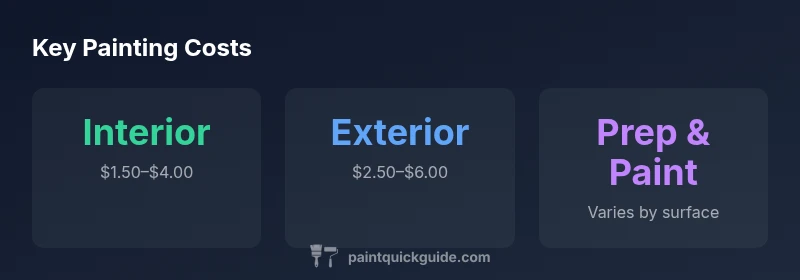
Interior painting typically ranges from $1.50 to $4.00 per square foot, while exterior work runs from $2.50 to $6.00 per sf. Costs vary with prep, surface condition, and paint type. Premium finishes or extensive prep can push prices higher. PaintQuickGuide Analysis, 2026, provides these ranges as a baseline for standard homes.
Understanding the cost to paint per sf
According to PaintQuickGuide, the cost to paint per sf is a practical way to compare quotes, but it masks the real drivers behind the price. In most homes, interior work costs range lower than exterior projects because environmental exposure, weather-related prep, and surface types differ. The per-square-foot approach helps homeowners estimate the budget, but it should be paired with a project scope that lists prep, the number of coats, and whether primers are included. This article breaks down how to read per-sf estimates, the typical variables, and how to sanity-check numbers against your space and local market conditions. The goal is to empower homeowners with a transparent framework rather than accepting a one-size-fits-all quote.
Key cost drivers at a glance
Prices per sf are pulled by several levers that often interact. Core drivers include the type of surface (drywall, masonry, wood, siding), the amount of prep required (patching, sanding, mold remediation), the number of coats, the quality of paint, and whether a primer is included. Labor rates vary by region, and weather or climate can impact exterior schedules and prep needs. Geographic proximity to skilled painters also nudges the final figure. In short, the per-sf figure is a useful starting point, but the total project cost is a function of scope, materials, and local market conditions.
Interior vs exterior: common ranges
Most homeowners see a gap between interior and exterior per-sf costs. Typical ranges are interior $1.50–$4.00 per sf and exterior $2.50–$6.00 per sf, depending on surface type, existing condition, and climate. Interiors often benefit from detailed prep on walls, ceilings, and trim, while exteriors can trigger weather-related prep, power washing, and moisture repairs. Use these ranges as a baseline to benchmark quotes, then adjust for your home’s unique surfaces and geometry.
The role of prep, coverage, and paint quality
Prep work is a major cost driver. Patching holes, sanding rough areas, removing wallpaper, and priming can add a substantial amount to the per-sf price. Coverage quality—whether you need multiple coats or premium, low-VOC products—also shifts the total. Higher-end finishes (gloss or enamel) typically demand more time and specialty tools, raising per-sf costs. For budgeting, distinguish between base coats and topcoats, and verify whether primers are included in the quoted price.
Calculating per-square-foot costs: a step-by-step method
- Measure the total paintable area (walls, ceilings, and any accent surfaces). 2) Classify each surface type by interior or exterior and note the required coats. 3) Choose paint quality and whether a primer is included. 4) Apply the estimated per-sf ranges for each surface (use interior or exterior as appropriate). 5) Sum areas and apply an overall multiplier for contingency (typically 5–15%) to account for surprises like repairs. 6) Convert the total to a per-sf average by dividing by the total paintable area.
Regional differences and market norms
Cost per sf can shift by region due to labor supply, material availability, and climate. Urban markets may see higher labor costs and quicker turnover, while rural areas might offer more competitive bidding. Seasonal demand can also push quotes up in peak painting seasons. Treat regional data as a guide and request multiple quotes to capture local norms.
Scenarios: budgeting tips with realistic examples
Scenario A: A 1500 sf interior repaint with standard walls and one coat of primer plus two topcoats. Using mid-range per-sf estimates, you might expect a price in the mid to upper range for this interior project. Scenario B: A 1,800 sf exterior refresh with power washing, minor siding prep, and premium paint. Expect the higher end of the exterior range depending on surface condition and climate. Always round quotes up to include contingencies for unanticipated prep.
What not to skip: safety, disposal, and warranties
Do not overlook safety protocols, especially when working on exteriors or ladders. Confirm that disposal fees are included or budgeted separately, and review the warranty on workmanship and paint performance. Ask about maintenance routines and touch-up plans to extend the life of your investment.
Comparison of interior vs exterior paint costs per sf
| Project Type | Cost per sf range | Notes |
|---|---|---|
| Interior painting | $1.50–$4.00 | Includes walls and ceilings; priming varies by surface |
| Exterior painting | $2.50–$6.00 | Includes prep and weather considerations; climate matters |
Your Questions Answered
What factors most influence cost per sf for interior painting?
Interior cost per sf is driven by surface condition, prep needs, number of coats, paint quality, and whether priming is included. Larger or more complex spaces can increase time and materials, while premium finishes raise the per-sf price.
Interior costs depend on prep, coats, and paint quality; bigger spaces or complex surfaces raise the per-sf price.
Is it cheaper to paint multiple rooms at once?
Yes. Batching rooms often reduces setup time and can lower overall labor costs per sf, especially if the same color family is used. Expect potential savings, but confirm any added prep or touch-up fees.
Painting several rooms together can save time and money if the scope is consistent.
How accurate are quoted per sf estimates?
Per-sf quotes provide a useful baseline but depend on a detailed scope. Final costs may adjust for unseen repairs, primer needs, and weather-related delays, so request a line-item breakdown.
Per-sf quotes are a good guide, but expect some adjustments after a detailed inspection.
Should I factor in primer in per sf estimates?
Primer is often treated as a separate cost unless the quote states it’s included. If surfaces are stained or have adhesion issues, primer adds to per-sf costs and can improve final finish durability.
Primer adds to cost if not bundled, especially on problematic surfaces.
Does finish type affect cost per sf?
Yes. High-gloss and specialty finishes typically require more labor and careful application, pushing the per-sf price higher than flatter, simpler finishes.
Specialty finishes cost more due to extra labor and precision.
“A clear scope and accurate measurements are the best cost controls for any painting project.”
Quick Summary
- Start with regional ranges, then adjust for prep and paint quality
- Interior and exterior costs differ due to environment and prep needs
- Always factor a contingency (5–15%) into your per-sf estimate
- Clarify whether primers and multiple coats are included in quotes