How Much Does It Cost to Paint a House in 2026?
Discover realistic cost ranges for painting a house in 2026, including interior and exterior work, factors that drive price, DIY vs pro options, and practical budgeting tips from PaintQuickGuide.


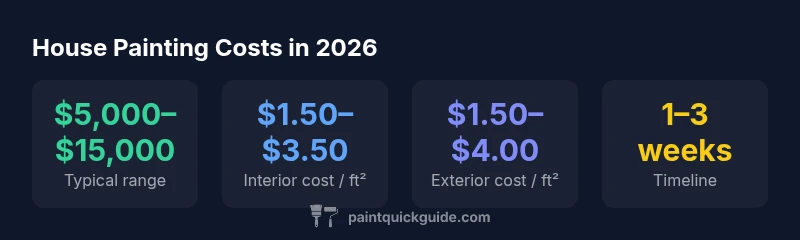
For a standard 2,000–2,500 sq ft house, hiring professionals to paint interior, exterior, or both typically costs about $5,000–$15,000, depending on surface prep, number of coats, and local labor rates. DIY can lower costs but adds time and risk; expect higher material costs for premium paints or complicated exteriors.
What affects the cost to paint a house
Painting costs are not a fixed number; they hinge on project scope, square footage, surface condition, and the choices you make for materials. Interior work tends to be priced differently than exterior work, because interior walls require moving furniture, masking, and possibly more coats, while exterior surfaces demand weather-ready finishes and protective coatings. Other key factors include the number of coats, the quality of primer and paint, accessibility (multi-story homes or steep roofs), region and labor rates, and any required repairs or surface prep. Finally, color changes or hard-to-reach areas can add time and materials. Understanding these variables helps you set a realistic budget from the start.
According to PaintQuickGuide, cost estimates for painting a house depend on square footage, surface condition, and local labor rates. This means that a plan should start with a precise measurement and a clear scope before quotes are requested.
Cost components you pay for
When you budget for a house painting project, you buy several discrete components. Paint and primer typically account for a large portion of the material cost. Labor covers surface preparation, painting, and cleanup. Prep work—sanding, patching holes, caulking, and scraping—can dramatically affect the final price, especially on older homes. Additional items include masking, drop cloths, tape, brushes and rollers, caulk and sealants, and safety equipment. For exterior jobs, power washing, priming, and weatherproofing preparations add to the bill. If you hire a contractor, you’ll also pay for project management and guarantees. Keep a line item for contingencies; weather delays or hidden repairs can require extra days of work. PaintQuickGuide analysis highlights that quotes should itemize all tasks for accurate comparisons.
Typical cost ranges by project type
Cost ranges vary by project type and region, but some general patterns hold. Interior painting usually costs more per square foot than you might expect when you factor in the cost of prep and multiple coats, while exterior work adds risk elements such as weather and ladder safety. For a typical 2,000–2,500 square foot home, interior-only projects commonly land in a broad range, exterior-only projects fall into a similar band, and a full interior plus exterior project sits at the higher end. The exact numbers depend on surface condition, color changes, and whether you want premium paints or environmental finishes. Use these ranges as a guide and rely on quotes for your specific house. Paint quality, primer type, and labor efficiency can shift the price by a substantial margin.
PaintQuickGuide analysis suggests focusing on prep quality and the number of coats, as these two factors heavily influence total cost.
How to estimate your project accurately
Start with a precise measurement of wall area and exterior surface to estimate square footage. Decide how many coats, whether you’ll keep existing colors or switch drastically, and count any necessary repairs. Gather at least three written quotes and compare their scope: materials (brand and finish), prep, number of painters, and warranty. Don’t assume all quotes cover the same tasks—ask for a line-item breakdown. Consider using a budget calculator or spreadsheet to track material costs, estimated labor hours, and contingency (often 10–15%). Finally, set a decision deadline and note any seasonal pricing differences.
Pro tip: schedule a final walkthrough with the contractor to confirm scope before signing.
DIY vs professional painting: pros and cons
DIY can significantly reduce labor costs, but it requires time, tools, and a patient approach to prep and finish. For small spaces or touch-ups, DIY can be practical and satisfying. For large homes, multi-story exteriors, or complex finishes, professionals provide safety, faster turnaround, and consistent results. Professionals may also offer warranties on workmanship. If you estimate DIY, factor in rent for equipment like ladders or lifts, paint disposal, and the cost of mistakes. In summary, DIY is feasible for smaller, low-risk surfaces; for most full-home projects, hiring pros yields better outcomes and often better long-term value.
Cost-saving strategies and budgeting tips
A smart plan can trim costs without sacrificing quality. Choose mid-range paints with durable finishes; avoid high-end specialty pigments unless needed. Improve prep efficiency by repairing surface flaws once and priming where it matters. Scheduling during non-peak seasons or negotiating phased work can help with labor costs. Ask about bulk paint purchases, return policies, and warranty coverage. Use a detailed checklist to avoid scope creep and keep a running budget that flags overruns early.
What to ask a contractor before you hire
Prepare a written scope that lists surfaces, finishes, number of coats, and prep tasks. Request itemized quotes and check each for inclusions (primer, caulk, masking, cleanup). Ask about lead-safety practices if your home is older, and confirm insurance and licensing. Check references and review past projects similar in scope. Finally, discuss a reasonable schedule, project milestones, and how weather delays will be managed.
Timeline and scheduling considerations
Timing matters for interior and exterior work. Interior jobs typically progress from setup to priming, base coats, and finish coats over 1–3 weeks, depending on room count and furniture movement. Exterior projects depend on weather windows; many contractors avoid painting during heavy rain or extreme heat. Availability of paint colors, lead times for materials, and crew rotation can add days or weeks. Build in a cushion for contingencies and plan around holidays. With a solid schedule, you’ll minimize disruption and finish on your target date.
Estimated painting project cost ranges by scope
| Project Type | Typical Cost Range | What’s Included |
|---|---|---|
| Interior painting (2,000–2,500 sq ft) | $5,000–$12,000 | Prep, primer, paint, labor, cleanup |
| Exterior painting (2,000 sq ft) | $4,500–$14,000 | Power washing, caulk, primer, paint, labor |
| Whole-house interior + exterior | $9,000–$25,000 | Full prep, multiple coats, trim, doors |
Your Questions Answered
What factors most influence the cost of painting a house?
The main drivers are square footage, interior vs exterior work, surface prep, number of coats, primer, paint quality, accessibility, and local labor rates. Costs can vary dramatically based on condition and scope.
The big cost drivers are space, work type, and prep; you’ll see the biggest differences in prep and coats.
Is it cheaper to paint a house myself?
DIY can reduce labor costs but requires time, equipment, safety, and quality control. For large homes, professional results often justify the price.
DIY saves money but takes more time and effort.
How long does painting a house take?
Interior projects typically take 1–3 weeks for a full interior; exteriors can take 1–2 weeks depending on weather. Scheduling gaps may extend timelines.
It usually takes a few days to a few weeks, depending on scope.
Do I need permits for house painting?
In most places, painting doesn't require formal permits, but major exterior work like scaffolding or roof finish might. Check local regulations.
Usually no permits, but check local rules.
What should I look for when getting quotes?
Ask about surface prep, number of coats, paint brand, primer, number of rooms, and cleanup. Ensure written scope with materials and warranties.
Get it in writing; compare both price and what’s included.
What is the cheapest way to paint a house?
Choose lower-cost materials and limit prep; however, poor prep can lead to faster wear and higher long-term costs. Balance price with quality.
Don't skimp on prep; cheap paint plus poor prep costs more later.
“Paint costs are highly sensitive to surface condition and labor market fluctuations; getting multiple quotes helps you balance price and quality.”
Quick Summary
- Define scope before requesting quotes.
- Factor prep and number of coats into your budget.
- Consider DIY for small spaces or light maintenance.
- Obtain multiple quotes to compare labor and paint quality.
- Budget contingencies for repairs and weather delays.