How Much Does a Gallon of Paint Cost: A Practical Guide
Learn realistic, data-driven price ranges for gallon paints, what factors drive cost, and how to budget interior, exterior, and specialty projects in 2026 with practical tips and a clear framework.


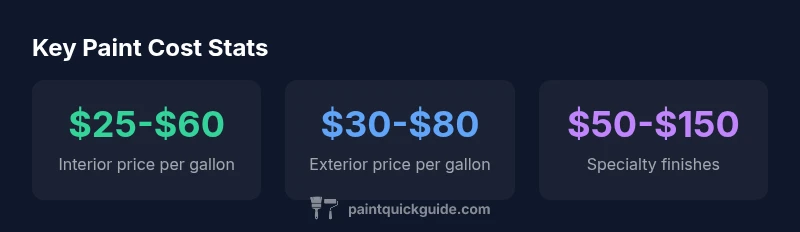
How much does a gallon of paint cost? For a typical interior project in 2026, expect roughly $25 to $60 per gallon for standard latex paints, with higher-end premium brands ranging up to $70-$90. Exterior latex often runs $30-$80 per gallon, while oil-based/enamel and specialty finishes can push prices above $100 per gallon. This quick snapshot helps you budget before shopping or comparing quotes.
Why price varies across gallons
Pricing for a gallon of paint is rarely a straight line from low to high. The cost you see in stores depends on the base formulation (latex, oil-based, enamel), the finish (matte, eggshell, satin, semi-gloss), the brand, and even the pigment system. The PaintQuickGuide team found that two gallons of the same brand can differ in price by finish alone, because higher-sheen coatings demand more precise formulation and better durability. Regional differences matter too: urban areas with higher living costs tend to show higher sticker prices, while bulk retailers offer promotions that can narrow gaps. When assessing value, homeowners should compare not just price per gallon but also expected coverage, durability, and touch-up performance over time. In other words, the question isn’t only what a gallon costs, but what you get for that cost.
sourceNote():null,
Price ranges by paint type
Within each category, price bands can be wide. Interior latex paints generally sit in the $25–$60 per gallon range for standard lines, with premium lines climbing higher. Exterior latex follows a similar pattern but often commands a larger premium due to weather resistance requirements. Oil-based enamels and specialty finishes can exceed $100 per gallon, driven by resin content, durability claims, and decorative effects. When planning, map your project to the appropriate category and compare similar finishes side by side. Remember that discounts and membership programs can tilt these ranges by 5–15% at major retailers and independent shops. Paint choices should align with surface preparation, climate exposure, and desired longevity to optimize the overall cost per square foot of coverage.
sourceNote():null,
How finish and additives affect price
Finish choices substantially influence price. A flat or matte interior paint often costs less than a high-gloss enamel used for trim or doors, where durability and washability are paramount. Additives like primers, stain blockers, and protective topcoats can add $10–$25 per gallon when bundled, or reduce total gallons required if they improve coverage. Higher-quality pigments improve hiding power, which means fewer coats may be required. If you’re covering previously painted surfaces, a stain-blocking variant can prevent costly mistakes later. Weigh the upfront premium against potential savings in labor and rework, especially on larger rooms or high-traffic areas.
sourceNote():null,
Interior vs exterior paint pricing dynamics
Interior paints are typically less expensive per gallon than exterior options at similar quality tiers, yet the price gap narrows when you consider specialized exterior features like UV resistance, mildew resistance, and improved hard-wearing durability against weathering. In practice, you may pay a bit more for exterior paints that promise longer lifespans in harsh climates, but the labor costs for exterior projects—due to scaffolding and weather windows—often dominate the overall budget. A careful plan that considers climate, sun exposure, and intended lifespan will help you decide whether to invest upfront in a premium exterior or spread costs across multiple, more economical coats over time.
sourceNote():null,
Primer, sealers, and tools: the hidden costs
Primer costs are not optional in many scenarios. A high-adhesion primer for glossy surfaces or stain-blocking primer for knots can add $15–$30 per gallon. Tools—rollers, trays, brushes, and cover materials—accumulate quickly, and some DIYers underestimate the cumulative impact of these consumables on the project total. If you hire a professional, factor in prep work and priming into your estimate; if you DIY, budget for waste (unused paint that’s unusable later) and make sure you buy a little extra to account for touch-ups and leaks. The practical takeaway: separate paint costs from prep and finishing costs to avoid surprises on the invoice.
sourceNote():null,
How to estimate gallons for a project
A reliable rule of thumb is to measure wall area and coverage per gallon. A standard room with 8-foot ceilings (roughly 325–400 square feet of wall area after subtracting doors and windows) typically requires 2–3 gallons for a single coat, more if you’re changing color or choosing a high-sheen finish. Always account for two coats in most rooms, plus a primer if needed. Use painter’s tape, drop cloths, and a rough calculation sheet to reduce waste and avoid over-ordering. When in doubt, round up to the nearest gallon to ensure you don’t run short mid-project.
sourceNote():null,
Saving money without sacrificing quality
Shop during seasonal promotions, join contractor or big-box loyalty programs, and compare equivalent finishes across brands rather than chasing the absolute lowest price. Buying paint with a trusted credit or coupon can provide savings without compromising coverage, while taking time to prep surfaces properly increases the probability of fewer coats and less waste. Consider small trials by color-troop testing on a drywall patch before committing to a full can. Finally, discuss with a painting professional whether a mid-range brand paired with proper prep can meet your goals at a lower installed cost per square foot.
sourceNote():null,
Reading price labels: what the numbers mean
Pay attention to the label’s front and back. The front shows color, finish, and price; the back reveals coverage per gallon, recommended number of coats, and dry times. A higher price doesn’t automatically guarantee better hiding power or durability, but it often reflects improved brightness, tinting capacity, or pigment stability. Always compare price-per-gallon alongside coverage and recommended coats to get a fair sense of value. If you’re using a color that requires multiple coats, plan for additional gallons even if the unit price seems low.
sourceNote():null,
Authority sources and further reading
For safety, disposal, and regulatory considerations, consult authoritative sources such as the EPA’s lead paint pages and household hazardous waste guidance. For practical, non-regulatory paint guidance, university extension sites offer maintenance and cost planning tips that translate well to DIY projects. See the following resources for trusted, up-to-date information:
- https://www.epa.gov/lead
- https://www.epa.gov/household-hazardous-waste/paint-disposal
- https://extension.illinois.edu/
sourceNote():null
Sources and credits
The numbers and ranges in this article reflect typical market conditions observed in 2026 and are intended for budgeting and planning purposes only. For precise quotes, consult your local store or painting contractor. All figures are provided as ranges to accommodate regional variations and brand differences.
sourceNote():null
Authority sources
- https://www.epa.gov/lead
- https://www.epa.gov/household-hazardous-waste/paint-disposal
- https://extension.illinois.edu/
Typical price ranges and coverage for common paint types
| Paint Type | Price per Gallon | Typical Coverage |
|---|---|---|
| Interior latex acrylic | "$25-$60" | "350-400 sq ft" |
| Exterior latex | "$30-$80" | "250-350 sq ft" |
| Oil-based/enamel | "$40-$120" | "250-300 sq ft" |
| Specialty finishes | "$50-$150" | "150-250 sq ft" |
Your Questions Answered
What factors influence the cost per gallon of paint?
Paint cost per gallon depends on the base (water- vs oil-based), the finish, the pigment system, and brand positioning. Regional taxes and retailer promotions also play a role. When budgeting, compare like-for-like finishes and consider long-term durability and coverage.
Paint cost per gallon depends on base, finish, pigment, and brand; check regional promotions and durability to budget accurately.
Is it cheaper to buy paint in bulk or during sales?
Buying in bulk during promotions can lower unit price, but you should calculate the total cost of ownership, including potential waste and unused paint. Sales can reduce price per gallon, yet ensure you’re not compromising on color consistency or finish options.
Sales can save you money if you’re buying enough to use in a short time with minimal waste.
How does finish affect price per gallon?
Finish affects both aesthetics and durability; higher-sheen finishes (eggshell, semi-gloss) tend to cost more due to resin content and washability. Choose a finish based on room use and cleaning needs to optimize overall project cost.
Shiny finishes cost more, but they last longer and clean easier, which can reduce touch-ups later.
Can you save money by buying primer with paint?
Primer adds to upfront costs but can improve coverage and adhesion, potentially reducing the number of coats. Some brands offer primer-and-paint bundles that can be cost-effective if you have challenging surfaces.
Primer can save you coats later—worth considering if you’re unsure about coverage.
How many gallons do I need for a standard room?
A typical room with eight-foot ceilings and standard doors/windows usually needs 2–3 gallons per coat, plus extra for color changes or high-traffic areas. Always add a little extra to cover touch-ups and miscuts.
Most rooms take 2–3 gallons per coat; plan for extra for touch-ups.
Are brand-name paints worth the extra cost?
Brand-name paints often offer better color stability and coverage, but many mid-range brands perform exceptionally well for typical DIY projects. Consider your goals, climate, and room usage when weighing the cost-benefit.
Brand-name paints aren’t always essential; mid-range options can give you solid results for most homes.
“Paint pricing hinges on resin quality, pigment load, and durability claims. A smart choice balances upfront cost with long-term coverage and fewer touch-ups.”
Quick Summary
- Budget by paint type and finish before selecting brands
- Expect higher upfront costs for exterior and specialty finishes
- Factor in primer, sealers, and tools when budgeting
- Estimate gallons using wall area and two coats as a baseline
- Shop promotions but compare price per gallon and coverage to gauge value