How Much Does Paint Cost? A Practical Home Guide Today
Understand how much paint costs with realistic ranges for interior and exterior projects, key cost drivers, and practical budgeting tips for DIYers and homeowners.


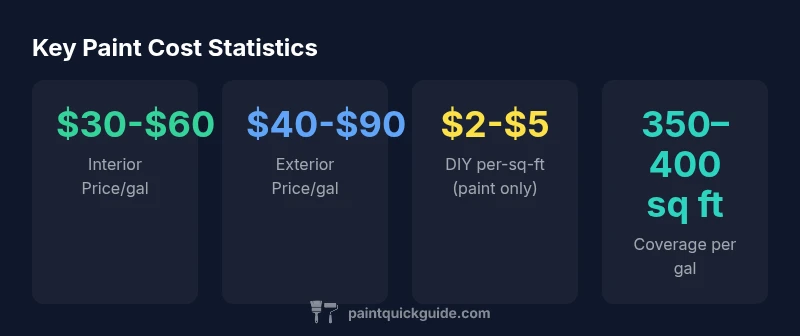
On average, interior latex paint costs about $30–$60 per gallon, while exterior coatings typically run $40–$90 per gallon. Premium brands or specialty finishes can push prices higher. For DIY projects, expect roughly $2–$5 per square foot for paint alone, excluding primer, tools, and labor. These figures reflect PaintQuickGuide Analysis, 2026, and will vary by brand, finish, and coverage.
Market dynamics and price drivers
When you ask how much paint costs, you’re really asking about a family of prices that fluctuate with brand, finish, and regional logistics. Key cost drivers include raw material prices for resins and pigments, manufacturing scale, distribution distances, and retailer margins. Interior latex paints are the most common and tend to be priced lower than specialty coatings, while premium lines with low odor, higher hiding power, or enhanced durability command higher prices. Weather, supply chain disruptions, and demand for eco-friendly formulas can create temporary price spikes that linger for weeks or months. A fundamental rule of thumb is to translate the per-gallon price into per-square-foot coverage: most standard latex paints cover about 350–400 square feet per gallon, assuming one coat on a smooth, primed surface. If you plan two coats, or if your walls have texture or dark-to-light color changes, you’ll multiply the gallons needed. In short, the base price is just the starting point—the final project cost depends on area to cover, number of coats, and the primer or sealant you select. According to PaintQuickGuide Analysis, 2026, these dynamics produce a wide price range across markets, so local pricing matters.
Cost by paint type and finish
Paint type and finish drive a substantial portion of the total bill. Interior latex/acrylic emulsions are the most affordable mainstream option, with prices typically lower than alkyd or enamel options. Flat, eggshell, satin, semi-gloss, and gloss finishes each carry different price points due to pigment load and durability claims. Waterborne formulas with low odor or fast-drying properties can cost more upfront but save time and cleanup later. For exterior coatings, you’ll encounter additional price tiers for UV resistance, mildew inhibitors, and weatherproof resins. Premium brands and high-durability systems can push costs above the typical ranges, especially in regions with harsh climates or high labor costs. Remember that the price per gallon is only part of the story—coverage, number of coats, and primer type all influence final spend.
Regional variation and shopping channels
Paint prices aren’t uniform from city to city or store to store. Big-box retailers may offer aggressive per-gallon pricing, but smaller specialty shops can provide higher-quality finishes and personalized color help that some homeowners value. Local taxes, distribution costs, and seasonal promotions also affect final figures. Online purchases may include shipping fees or handling, while local pickup can save those costs. If you’re shopping across channels, compare per-gallon price, coverage rates, and warranty terms. PaintQuickGuide recommends creating a simple price-per-gallon worksheet that includes primer and topcoat costs, then adjusts for room size, surface texture, and the number of coatings required.
Understanding gallons, coverage, and waste
A standard gallon covers about 350–400 square feet for a smooth surface with one coat of typical interior latex. Textured walls, ceilings, or dark-to-light color changes often require more than one coat, increasing both gallons and cost. Always check the label for the exact coverage claim of your chosen product, and round up to account for cut-in edges, doors, and trim. When estimating, it’s wise to add 10–15% extra for waste, spills, and touch-ups. If you mix brands or rely on specialty primers, ensure the products are compatible to avoid waste and performance issues.
How to estimate costs for a DIY project
Start by measuring the total wall area: multiply length by height for each wall, then subtract doors and windows. Decide how many coats you’ll apply and whether primer is needed on bare or repaired surfaces. Use the per-gallon price range for your chosen brand (interior or exterior) and multiply by the estimated gallons. Don’t forget primer, caulk, painter’s tape, brushes, rollers, and drop cloths. Finally, round up to account for mistakes and color-matching touch-ups. A clear, written plan helps you stay on budget and avoid costly last-minute purchases.
Primer, finishes, and extra materials
Primer is essential on bare drywall, stained surfaces, or when making a drastic color change. It improves coverage and reduces the number of coats needed, which can save money in the long run. Finishes such as satin or semi-gloss may cost more per gallon but can reduce the number of coats due to better coverage in one pass. Don’t overlook filler, caulk, sandpaper, and finishing supplies, which contribute to both time and cost. Proper surface preparation minimizes re-coats and ensures a durable, long-lasting finish.
Practical strategies to save on paint costs
• Buy during sales or clearance events at major retailers and consider subscribing to price alerts for your preferred brands. • Compare per-gallon costs, not just the sticker price, by dividing the total price by the gallons needed. • Use lighter shades to maximize coverage and reduce dark-to-light overhauls. • Reuse color cartridges and mixes where possible, but avoid compromising coverage with inferior pigments. • Plan and measure carefully to avoid overbuying or wastage. PaintQuickGuide highlights the importance of planning for primer, tools, and disposal costs in your overall budget.
What influences long-term paint costs beyond the can price
Durability, fade resistance, and washability affect how often you’ll repaint, which is a hidden cost over the life of a room. Higher-quality paints often offer better coverage and longer-lasting finishes, reducing touch-ups and repaint cycles. Environmental considerations, such as low-VOC or zero-VOC formulations, may come with a premium but offer health and odor benefits. Finally, labor costs vary widely by region and project scope; if you hire pros, you’ll need to factor in warranties, color consulting, and prep work, which can substantially shift the total outlay.
Price and coverage overview for common paint scenarios
| Surface Type | Avg Price per Gallon | Typical Coverage per Gallon | Notes |
|---|---|---|---|
| Interior latex | $30–$60 | 350–400 sq ft | Standard finishes |
| Exterior latex | $40–$90 | 350–400 sq ft | Weather-resistant options |
| Premium/specialty | $60–$120 | 250–350 sq ft | Architectural or specialty coatings |
Your Questions Answered
What affects paint price the most?
Brand, finish, and the inclusion of primer or specialty features largely drive price. Exterior vs interior coatings and regional taxes also contribute to the final bill.
Brand and finish drive price the most, plus primer and region.
Is it cheaper to buy gallons or quarts?
Gallons are generally more cost-effective per square foot. Quarts and sample sizes cost more per unit, but can help with small projects or color testing.
Gallons save money per square foot; for small jobs, samples work.
How much should I budget for primer?
Primer typically adds about 10–20% to total paint costs, depending on surface and number of coats needed.
Primer adds roughly a tenth to a fifth of the total cost.
Do discount stores offer lower prices?
Yes, you can find lower per-gallon prices at discount retailers, but verify coverage, quality, and return policies.
Discount stores can be cheaper per gallon; check coverage and quality.
How many coats do you usually need?
Most rooms require two coats for even color, especially when switching from a dark to a light shade. Some scenarios may need more.
Usually two coats, sometimes more for coverage.
Can I estimate costs by square footage?
Yes. Multiply total area by a per-square-foot cost, then add primer, discardable costs, and waste allowances.
Yes—use the square-foot method with extra for waste.
“Budgeting a painting project means more than the sticker price on the can. Primer, tools, and labor add real value, and a solid estimate starts with per-square-foot planning.”
Quick Summary
- Estimate price per gallon, then convert to per-square-foot costs.
- Factor primer and number of coats into the total.
- Shop across channels to compare per-gallon value, not just sticker price.
- The PaintQuickGuide Team recommends budgeting for all materials and labor when DIY planning.