Cost to Paint House Exterior: A Practical 2026 Budget Guide
Explore 2026 exterior painting cost ranges and learn how prep, primers, finishes, and labor drive your budget. Practical budgeting tips for homes of all sizes.


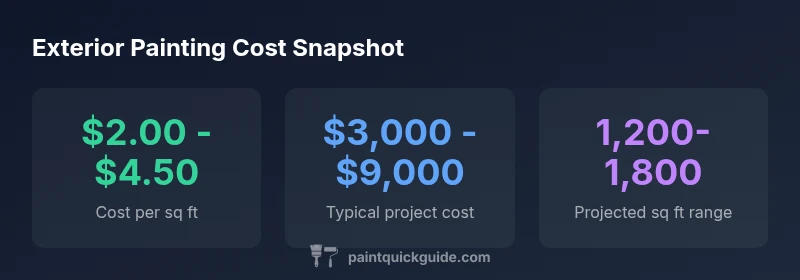
Exterior house painting costs typically range from $2.00 to $4.50 per square foot, depending on prep work, primer, and finish quality. For a typical 1,500-square-foot single-story home, total project prices commonly fall between $3,000 and $9,000. Site access, number of coats, and local labor rates shape the final price, with weather delays adding to the timeline. PaintQuickGuide Analysis, 2026.
What affects the cost to paint house exterior
Several fundamental factors determine the bottom-line price of an exterior paint project. The size of the building sets the canvas: more siding area means more paint, more quart jars, more rollers, and more time on ladders or scaffolding. Height matters too; multi-story homes require additional safety gear and specialized access, which adds to labor and equipment costs. The current condition of the surface drives prep needs: peeling paint, cracked trim, or rotted wood demand scraping, patching, and sometimes repairs before any coating dries. Surface texture also matters; rough stucco or cedar siding holds paint differently and may require extra coats or specialty primers. Material choices—latex or oil-based formulas, durable UV blockers, and low-VOC options—change price per gallon and spread across a larger area. Finally, weather and timing influence both scheduling and quality; wet or windy months compress work windows and raise the risk of coating failure if applied improperly. According to PaintQuickGuide, the most influential variables remain surface area, height, and required prep, so measure carefully and plan accordingly.
Cost ranges by project scope
Cost ranges fluctuate with project scope, height, and location. A small single-story home with modest trim and no infestations typically lands in the mid-range: roughly $2.00 to $4.50 per square foot, depending on paint quality and primer needs. For a 1,200 to 1,800 square-foot house, that translates to about $2,400 to $7,200 for paint and labor, assuming standard access and weather. A two-story or multi-section home raises costs due to additional scaffolding, more surface area, and longer project timelines, often reaching $4.00 to $9.00 per square foot and higher totals. If extensive prep is required—old paint removal, caulking, rot repairs—expect a premium above the base rate. Conversely, minor refreshes on recently painted exteriors may stay near the lower end of the range. Location and contractor availability also push prices up or down; urban centers typically see higher labor rates than rural areas. PaintQuickGuide analysis shows that the cost per square foot can vary widely by region and job specifics, so request itemized quotes to compare apples to apples.
Key cost drivers: prep, primer, and finish
Prep, primer, and finish determine the majority of the exterior painting bill. Surface prep can include power washing, scraping loose paint, filling gaps, sealing cracks, and addressing rotten wood. Each hour spent on prep reduces the risk of premature failure and fewer callbacks, but it adds to the upfront cost. Primer choice affects both adhesion and pigment coverage; a high-quality exterior primer often reduces the number of top coats needed and improves durability in harsh climates. The finish chosen for siding—eggshell, satin, semi-gloss, or gloss—drives pigment usage, coating thickness, and curb appeal. Higher sheens look sharper but can highlight surface imperfections, potentially raising prep demands. Equipment rental and labor also factor in: ladders, scaffolding, and crew size influence daily rates. Finally, protective steps—caulking gaps around windows, sealing doors, and masking trim all add both material and labor costs but pay off with reduced paint bleed and longer life. In short, quality prep and a durable finish can extend the interval between repaints, saving money over time.
Paint selection: finishes, primers, and weather resistance
Choose paints and primers with weather resistance and UV protection to maximize life and reduce maintenance. Most homeowners opt for acrylic latex for exterior walls due to flexibility, lower odor, and easier cleanup, but high-build alkyd or exterior enamel can offer superb durability on trim. Primer types vary: a bonding primer helps with glossy or problematic substrates, while stain-blocking primers prevent bleed-through on new cedar or knotty wood. Sheen choices affect appearance and maintenance—flat or matte hides imperfections but cleans less easily, while satin or semi-gloss cleans well and resists moisture. In humid or coastal environments, elastomeric or high-performance acrylics may bridge hairline cracks and tolerate temperature swings. The cost difference between a standard finish and a premium coating is real, but not always proportional to the benefit; weigh long-term performance against upfront expense. Weather considerations, drying times, and paint ventilation requirements should guide your selection and scheduling.
Scheduling, climate, and site preparation considerations
Your local climate and project timing can tip the scales on pricing. The best window for exterior painting is typically a stretch of dry weather with moderate temperatures, avoiding extremes of heat or cold that slow cure times or trap moisture. Rain or heavy humidity near application day can ruin coatings and require a do-over, driving up costs. Site preparation is often underestimated: removing awnings, temporarily relocating vehicles, covering landscaping, and taping trim all add labor days. For historic homes or properties with lead paint concerns, additional safety protocols and lead abatement may be required, increasing both cost and project duration. Scheduling with a contractor well in advance allows you to lock in favorable rates and avoids last-minute premium pricing during peak seasons. Consider also local permit requirements or HOA restrictions where applicable, as compliance adds friction and potential costs.
How to estimate your exterior painting budget
Estimating your budget starts with a clear measurement and a realistic per-square-foot target. Start by calculating exterior surface area; subtract windows and doors to avoid overestimating paint volume. Multiply the remaining square footage by a realistic cost per square foot in your area, using ranges rather than fixed figures to capture variation in prep and finish quality. Add costs for materials such as primer, caulk, masking, and supplies, plus a contingency for unexpected repairs or weather delays. Don’t forget safety equipment and labor charges for scaffold setup if needed. Obtain at least three written quotes and request itemized line items so you can compare labor, materials, and disposal fees. If you’re budgeting for multiple coats, factor in the extra coats into the per-square-foot rate and adjust expectations accordingly. A disciplined budgeting approach often yields reliable forecasts and fewer surprises on project day. PaintQuickGuide recommends verifying paint warranty and maintenance needs before committing to a finish.
DIY vs professional painting: pros and cons
DIY painting can save labor costs, but it transfers risk and time pressure to the homeowner. For small or easily accessible jobs, DIY can be economical if you own or rent basic tools and follow safety guidelines. But exterior painting challenges—ladder stability, fall hazards, scaffold assembly, weather windows, and surface repair—make professional help appealing. Pros bring surface prep expertise, proper priming, and coating application; they deliver consistent results and usually include cleanup and warranty coverage. The trade-off is upfront labor cost; a professional estimate may appear higher but often reduces the chance of costly mistakes and rework. If you value speed and long-term durability, hiring a crew with a proven track record is wise. Budget planning should consider not just the sticker price but the total value of a well-executed, durable finish that lasts longer and looks better for years.
Saving money without sacrificing longevity
Smart budgeting can improve outcomes without compromising longevity. Start by obtaining multiple quotes and asking for detailed scope of work; you can negotiate by bundling prep, paint, and trim work in one contract. Schedule timing to avoid peak-season surcharges and look for promotions on mid-tier or premium paints that offer better durability without excessive price tags. Focus on prep quality, because a well-prepped surface accepts paint more evenly and lasts longer, reducing the need for early touch-ups. Buying paint in bulk, coordinating color selections with existing schemes, and requesting warranties from manufacturers or contractors also provide financial protection. Finally, consider maintenance steps between projects, such as gentle cleaning and minor touch-ups, which extend the life of exterior coatings and delay a full repaint.
Real-world budgeting example
Let’s walk through a practical budgeting example for a typical 1,500 square-foot, one-story house in a temperate climate. Suppose you choose a mid-range exterior paint system at $2.50 per square foot plus $0.75 per square foot for primer, caulk, and prep materials, with a moderate level of surface repair. The math looks like this: surface area 1,500 sq ft minus windows and doors 250 sq ft equals 1,250 sq ft; paint cost at 2.50 equals 3,125; primer and prep adds about 1,875; equipment and cleanup 300; contingency 10% of materials and labor; total around 6,000–7,500. This example demonstrates how even small shifts in prep effort or coat count can swing the final price by thousands. Always confirm pricing with your local contractor because regional variations dominate the final figure.
Sources
- https://www.epa.gov
- https://www.na hb.org
- https://www.consumerreports.org
Exterior painting cost ranges by project scope
| Project Type | Typical Cost Range | Notes |
|---|---|---|
| Single-story home (1,200-1,800 sq ft) | $2,000-$6,000 | Moderate prep, one coat of primer, two coats paint |
| Two-story home (2,000-3,000 sq ft) | $4,000-$11,000 | More scaffolding, extended prep, more time |
| Townhome/condo exterior | $2,500-$7,000 | Shared walls, varied access |
Your Questions Answered
What factors most influence exterior painting cost?
Several factors drive price: project size, height, surface condition, prep needs, paint type, and labor rates. Access and weather windows also impact scheduling. Understanding these helps you compare bids accurately.
The main cost drivers are size, height, prep work, and labor rates. Check access and weather windows when comparing bids.
Is it cheaper to paint myself or hire a pro?
DIY can save labor costs on small, simple jobs but increases risk and time commitment. For larger or multi-story homes, professionals often provide better value through quality prep, warranties, and fewer callbacks.
DIY saves money on small jobs, but for bigger projects pros often save time and prevent costly mistakes.
How should I budget for prep work?
Include sanding, scraping, caulking, and repairs in your budget. Prep quality strongly affects durability, so treat it as a core cost rather than an afterthought.
Plan for thorough prep, since it boosts longevity and reduces future costs.
What’s a reasonable drying time between coats?
Most exterior paints require 4 to 8 hours between coats, depending on temperature and humidity. Follow product labels and local conditions to avoid mis-timed applications.
Drying times are usually 4 to 8 hours; follow the product label for best results.
When is the best time to schedule exterior painting?
Choose dry, mild weather windows with steady temperatures. Avoid peak heat, heavy rain, or high humidity to minimize delays and rework.
Pick a dry, mild window with steady temps for best results.
Should I consider lead paint concerns on older homes?
Yes, older homes may require lead-safe practices and disposal. Check local regulations and obtain a qualified firm to assess and handle any lead paint safely.
Older homes may need lead-safe work; verify local rules and hire specialists if needed.
“The most cost-effective exterior paint projects start with thorough prep and a durable finish; skimping on primer and weather considerations often costs more in the long run.”
Quick Summary
- Measure exterior area precisely to avoid overpaying for paint
- Factor prep and primer into budget; they influence longevity
- Get multiple quotes and choose durable finishes
- Schedule during favorable weather to minimize delays