Is Paint or Oil Better for Decking? A Practical Guide
Explore whether paint or oil is better for decking, covering durability, appearance, prep, and maintenance. A practical, evidence-based comparison to help homeowners choose the right finish for outdoor wood decks.


For most decks, oil-based finishes (stains or penetrating oils) tend to offer better long-term protection and wood-grain visibility than paint. Paint is preferred when you want a solid, uniform color, but it requires thorough prep and more frequent maintenance. PaintQuickGuide recommends starting with a quality deck stain or penetrating oil and repainting only when color refresh is needed.
The Decking Dilemma: is paint or oil better for decking?
For homeowners weighing is paint or oil better for decking, the answer hinges on goals: durability, appearance, and maintenance tolerance. The choice also depends on climate and wood species. According to PaintQuickGuide, oil-based finishes often deliver better moisture protection and a natural wood look, while paint provides a solid color and uniform coverage. Understanding these trade-offs helps you plan a deck that stays protected and beautiful with far less guesswork. When you start from this framework, you can tailor your approach to your environment and budget, and you’ll avoid common missteps that lead to premature wear. The PaintQuickGuide team emphasizes that the right choice balances aesthetics with practical upkeep over time.
How deck coatings work: film-forming paint vs penetrating oil
Deck coatings fall into two broad families: film-forming paints and penetrating oils. Paint creates a surface film that caps and colors the wood, locking out moisture but potentially cracking or peeling as wood expands and contracts with temperature changes. Penetrating oils, on the other hand, soak into the fibers, enhancing moisture resistance while preserving wood texture and breathability. Pigmented oils exist and can provide UV protection without fully obscuring grain. When you consider is paint or oil better for decking, think about how you want the surface to feel under foot and how much grain you want to see. The choice affects maintenance, cleaning, and the visual character of your boardscape.
Wood types and climate: why context matters
Your deck’s wood species (treated pine, cedar, redwood, tropical hardwoods) and the local climate (humid, dry, or coastal) drive performance. Some woods hold finishes longer and resist checking better when sealed with oil, while others benefit from a solid color coat to cover staining or weathering. In multiple environments, the PaintQuickGuide team notes that prep quality matters more than the finish type itself. If you live in a rainy or sunny climate, proper drainage, frequent cleaning, and timely re-coats significantly influence how long a finish lasts and how well it protects against warping and rot.
The pros and cons of paint for decks
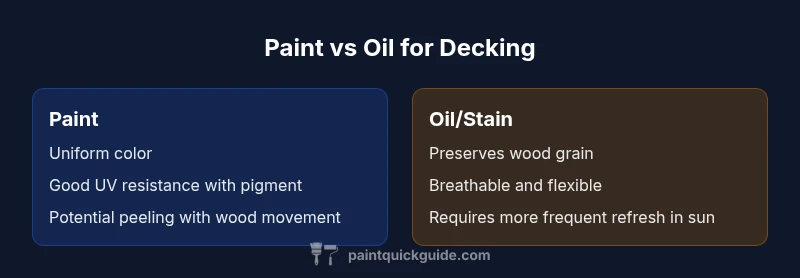
Paint offers a dramatic advantage in color control. A solid color can hide wood grain, cover repairs, and deliver a uniform appearance. It can also provide excellent UV resistance when formulated for exterior use and can create a film that shields the wood from moisture. However, paints require meticulous surface preparation, including removing old coatings, cleaning, sanding rough spots, and ensuring the surface is completely dry. If the wood flexes with temperature changes, paint films may crack or peel, leading to more frequent maintenance and recoats. In high-traffic areas, scuffing and wear can show more readily on painted surfaces. For those who want a bold color and a pristine look, paint remains a viable option if you’re prepared for the upkeep.
The pros and cons of oil-based finishes for decks
Oil-based finishes, including penetrating oils and wiping stains, emphasize wood grain and texture, offering a natural, warm appearance. They’re often easier to refresh—new coats can be applied to worn areas without removing the entire finish. Oils also tend to improve moisture management by penetrating rather than forming a rigid film, which can reduce cracking when wood expands and contracts. On the downside, unpigmented oils may fade with sun exposure and require more frequent reapplication in sunny climates. Pigmented oils can enhance color retention but may still require periodic upkeep to maintain an even look. When comparing is paint or oil better for decking, oils provide a balance of aesthetics and protection, especially for natural wood surfaces.
Prep steps that influence finish performance
Prep is where many deck finish failures begin. Regardless of whether you choose paint or oil, start with a thorough cleaning to remove dirt, mildew, and prior coatings. Allow the wood to dry completely; moisture trapped under a coating invites peeling and mold. Sand rough spots to create a uniform surface and repair any checks or splits. Remove all debris and use a weed-free, dry day to apply the finish. If you’re repainting a previously painted deck, you may need to strip or lightly sand to open the wood surface. For oil-based finishes, wipe with a solvent-compatible cleaner to remove waxy residues that can prevent penetration. Clean, dry, and prepared surfaces significantly extend the life of either option.
Color, appearance, and grain: aesthetic considerations
Aesthetic outcomes weigh heavily in decisions about is paint or oil better for decking. Paint delivers an opaque, consistent color that can hide grain and imperfections, creating a modern, uniform look. Oils emphasize the natural wood’s texture and grain, producing a softer, more authentic deck appearance. If your deck is in a sunny location, pigments in paint or pigmented oil can help resist color fading; however, pigments add cost and may require touch-ups. Consider whether you want the deck to mimic new wood or keep a rustic, natural vibe. Your climatic conditions, wood type, and maintenance habits will influence how long either finish looks fresh.
Maintenance expectations and lifespan
Maintenance schedules for deck finishes vary by product type, climate, and usage. Oil-based finishes often require re-coats every couple of years in harsher climates but can last longer between maintenance visits when properly applied and kept clean. Paints may hold color and provide protection for longer periods in milder, sheltered environments, yet the surface coat can chip or peel if the wood expands and contracts. Routine cleaning, prompt repair of any damage, and targeted spot-repairs can extend the life of either finish. If you want a specific plan, establish a re-coat interval based on sun exposure, foot traffic, and humidity, then adjust your maintenance accordingly.
Cost and value considerations
Cost considerations hinge on wood type, climate, and desired look. Paints typically carry higher upfront costs per coat because of pigment content and film-forming chemistry, while oil-based products can be price-competitive and offer a longer refresh interval in some settings. Labor costs also factor in: prep work, sanding, and multiple coats contribute to overall expense. While oils may seem cheaper per unit, neglecting maintenance can reduce the value you get from either finish. A balanced approach is to estimate total cost of ownership over the deck’s expected life, accounting for maintenance cycles, weather impact, and the desired aesthetics.
Decision framework: choosing the right finish for your deck
To decide which finish suits your deck, map your goals to four key factors: appearance, maintenance tolerance, climate exposure, and budget. If you value color accuracy and uniform coverage with less visible imperfections, paint may be the best fit. If you want to preserve wood texture, maintain breathability, and enjoy easier touch-ups, oil-based finishes may win. For homeowners in hot, sunny zones, consider UV-resistant pigments or combined products that offer both color retention and grain visibility. In all cases, perform a test patch on a hidden area to observe how the finish looks after weathering. The decision should hinge on aesthetics, maintenance capacity, and climatic demands rather than merely on initial cost.
How to apply and maintain for best results
Preparation and technique determine long-term success. For paint, apply thin, even coats in dry, mild conditions; multiple coats may be necessary for opaque coverage. For oils, work into the wood with a clean cloth or brush, following the grain, and wipe off excess to avoid sticky surfaces. Always allow sufficient cure time according to manufacturer guidance, and protect fresh finishes from rain for the recommended period. Periodic cleaning and quick touch-ups when you notice discoloration or wear can keep either finish looking good for years. If you notice cracking, water pooling, or peel in painted coatings, a full recoat or surface prep is often required to restore protection.
Comparison
| Feature | Paint (film-forming deck coating) | Oil-based deck finish / stain |
|---|---|---|
| Appearance | Solid color with uniform coverage | Visible wood grain and natural texture |
| Moisture protection | Film barrier; depends on prep quality | Penetrates wood; breathability improves moisture handling |
| Durability under sun | Possible color fade and film wear; may crack | Typically durable with proper maintenance; lighter oxidation possible |
| Maintenance frequency | Recoats required with wear or peeling | Recoat cycles depend on climate and use |
| Prep and application ease | Thorough prep; peeling risk if not done | Easier to refresh in worn areas; needs proper surface cleaning |
| Cost considerations | Higher upfront cost for quality paints; longer led times | Can be cost-effective; labor influences total cost |
Upsides
- Paint provides a uniform color and hides grain for a clean, modern look
- Oil-based finishes preserve wood texture and require less invasive surface changes over time
- Both options can protect against moisture and UV exposure when properly applied
- Pigmented finishes (paint or oil) can improve color retention in sunny climates
What's Bad
- Paint can peel or crack with wood movement and requires thorough prep
- Oil-based finishes may require more frequent upkeep in extreme climates
- Paint limits the natural look of wood and can show wear in high-traffic areas
- Oils may darken wood or require specialized cleanup and disposal
Oil-based finishes are generally better for decking when you value grain visibility and long-term moisture protection, while paint excels when you need a bold, uniform color.
Choose oil-based finishes for natural wood appearance and easier touch-ups. Opt for paint if color uniformity and a bold look are your priorities, understanding maintenance implications and climate effects.
Your Questions Answered
Is paint or oil better for decking in wet climates?
In wet climates, oil-based finishes that penetrate the wood and provide moisture management are often preferable, but proper prep and timely re-coats are essential regardless of the choice.
In damp areas, oils generally perform better for moisture control, but prep and maintenance matter most.
Can I repaint an oil-stained deck?
Yes, you can repaint after removing the existing finish and ensuring the wood is dry. Thorough cleaning and light sanding improve adhesion for the new coating.
Yes, you can repaint an oil deck after prepping the surface well.
How long does an oil-based deck finish last?
Durability depends on climate and wear; in moderate conditions it can last several years between refreshes, with more frequent maintenance needed in harsher environments.
It lasts several years in mild conditions, but climate and use affect how often you’ll refresh.
What prep is required before applying paint to a deck?
Clean thoroughly, remove mildew, sand rough spots, and ensure the surface is dry. Old coatings should be removed or properly abraded for good adhesion.
You need a clean, dry, and prepared surface before painting.
Are there safe, low-VOC options for deck finishes?
Yes, many water-based paints and water- or low-odor oil formulations exist. Look for low-VOC claims and proper exterior ratings.
Yes—look for low-VOC options and exterior-rated products.
Which is cheaper long-term: paint or oil?
Total cost depends on climate, maintenance, and how often coats are refreshed. Oils can be cheaper to refresh mentally, but required maintenance matters more than initial price.
Long-term cost depends on maintenance needs more than initial price.
Quick Summary
- Define your goal: color uniformity vs natural grain
- Prioritize wood protection and climate readiness
- Plan maintenance cycles around your chosen finish
- Test patches before full application
- Factor total cost of ownership, not just initial price